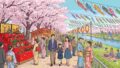














Spring in Japan is not merely a change in weather; it is a complete cultural reset that dictates the rhythm of daily life, especially in the kitchen. But here is the truth that most travel guides miss: If you only come for the photos, you are missing half the experience.
To truly understand the Japanese soul, you must taste it.
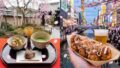
Welcome to the definitive Tokyo spring food guide. While millions of tourists flock to the capital for the visual spectacle of the cherry blossoms (sakura), the elite traveler knows that the real magic lies in the seasonal Japanese ingredients that arrive for only a few fleeting weeks. From the bitter “mountain vegetables” that wake up the palate to the sweet, pink-hued confections found in Asakusa street food stalls, Tokyo offers a culinary landscape that is as complex as it is delicious.
This is not just a list of restaurants. This is a deep dive into the philosophy of Shun (seasonality) and a practical roadmap for your palate.
In this comprehensive guide, you will discover:
- The “Shun” Philosophy: Why eating bamboo shoots and first bonito is a status symbol in Japanese culture.
- The Sweet Side of Sakura: The critical difference between Tokyo and Kyoto style Sakura Mochi (and why you should eat the leaf).
- 3 Curated Walking Routes: Step-by-step itineraries for the best eats in Asakusa, Nakameguro, and Yanaka Ginza.
- The Art of the Hanami Bento: How to distinguish a high-end seasonal lunch box from a tourist trap.
Ready to move beyond the convenience store egg salad sandwich? Let’s unlock the authentic flavors of Tokyo’s most beautiful season.
🌸 Planning a trip across Japan? This article focuses on Tokyo, but the flavors change depending on where you are. Check out our Ultimate Japan Spring Food Guide for the complete list of seasonal specialties (Shun) across Tokyo, Kyoto, Osaka, and regional hidden gems.
- The Philosophy of Shun (旬): Why Seasonality Matters
- The Spring Pantry: Ingredients You Must Know
- The Sakura Sweet Tooth: Iconic Spring Confections
- The Art of Hanami: Culture & The Bento Box
- Walking Route 1: The Traditionalist (Asakusa & Sensoji)
- Walking Route 2: The Modernist (Nakameguro & Meguro River)
- Walking Route 3: The Nostalgic (Yanaka Ginza)
- Tasting the Ephemeral
The Philosophy of Shun (旬): Why Seasonality Matters
To eat like a local in Japan, one must understand the concept of Shun (pronounced ‘shoon’). In the West, seasonality often simply means “what is fresh.” In Japan, it is a rigid, celebrated timeframe—sometimes lasting only ten days—when an ingredient is considered to be at the absolute peak of its flavor and nutritional value.
Japanese chefs and gourmands divide the season into three distinct sub-phases, a nuance often missed by visitors:
- Hashiri (走り): The “run-up” or the very first arrival of the season’s produce. These ingredients are often smaller, more tender, and expensive due to their scarcity. Eating Hashiri is a status symbol, showing you are ahead of the curve.
- Shun (旬): The peak. The ingredient is abundant, rich in flavor, and most affordable. This is the optimal time for consumption.
- Nagori (名残): The “remains” or the end of the season. Flavors are often deeper or more mature. Eating Nagori is a poetic act, a way to say goodbye to the season until next year.
In spring, the Shun menu is designed to wake up the body. After a winter of heavy root vegetables and hot pots, spring foods are characterized by bitterness and vitality, believed to detoxify the body and stimulate metabolism.
The Spring Pantry: Ingredients You Must Know
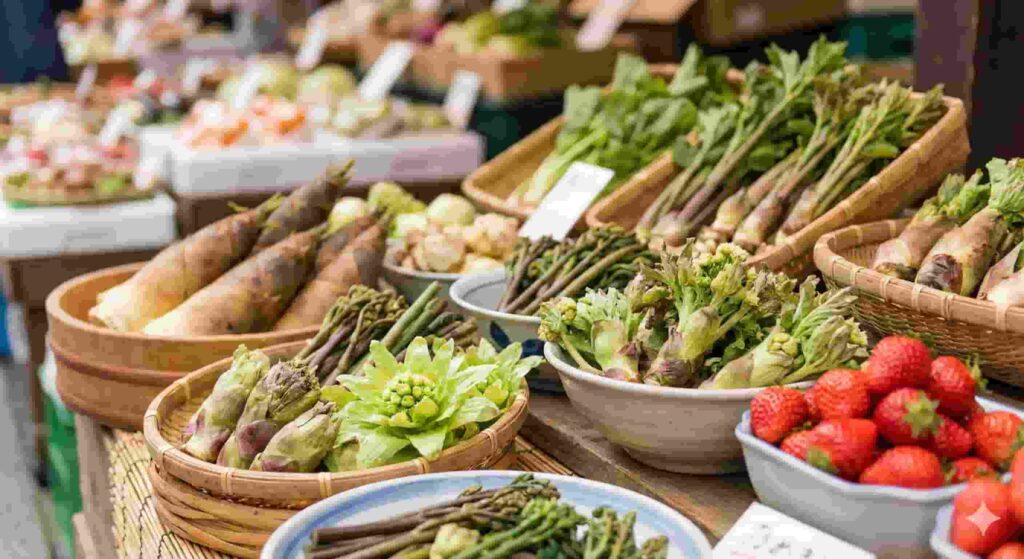
Before you step into a restaurant or a street stall, you must know what to look for. Authentic Japanese menus will feature these heavy-hitters during spring.
1. Takenoko (Bamboo Shoots)
Takenoko literally translates to “children of bamboo.” They grow incredibly fast, meaning their Shun is short.
- The Taste: Crisp, fibrous yet tender, with a subtle earthy sweetness similar to baby corn but more complex.
- How to Eat It: Look for Takenoko Gohan (bamboo shoots steamed with rice and dashi). It is the quintessential aroma of a Japanese spring home.
2. Sansai (Mountain Vegetables)
This is the category that defines the “bitter spring.” These are wild vegetables foraging from the mountains.
- Fukinoto (Butterbur Sprout): A flower bud that appears before the snow fully melts. It is intensely bitter and aromatic, usually served as Tempura or mixed into miso (Faki-miso).
- Tara-no-me (Angelica Tree Bud): Known as the “King of Sansai.” It has a rich, creamy texture when fried in tempura batter.
- Warabi (Bracken): Fern-like shoots often boiled and marinated in dashi or served on soba noodles.
3. Hatsugatsuo (First Bonito)
Bonito (Skipjack Tuna) migrates along the Pacific coast. The “first catch” (Hatsugatsuo) that arrives in spring is lean and fresh, unlike the fatty autumn bonito.
- Cultural Significance: In the Edo period, it was said that a man would “pawn his wife” just to afford the first slice of Hatsugatsuo (a hyperbolic saying illustrating its value).
- How to Eat It: Tataki style—seared on the outside, raw inside, sliced thick, and buried under garlic, ginger, and ponzu sauce.
4. Iwa-gaki (Rock Oysters) & Asari (Clams)
While winter is for Pacific oysters, spring is the start of the Iwa-gaki season, which are massive, creamy “rock oysters.” Furthermore, Asari (littleneck clams) are plumpest in spring, usually served steamed in sake (Sakamushi) or in miso soup.
5. Strawberries (Ichigo)
Japan treats fruit as luxury. The “Amaou” variety from Fukuoka or “Tochiotome” from Tochigi are ubiquitous in spring. They are incredibly sweet and form the backbone of the spring dessert scene.
The Sakura Sweet Tooth: Iconic Spring Confections
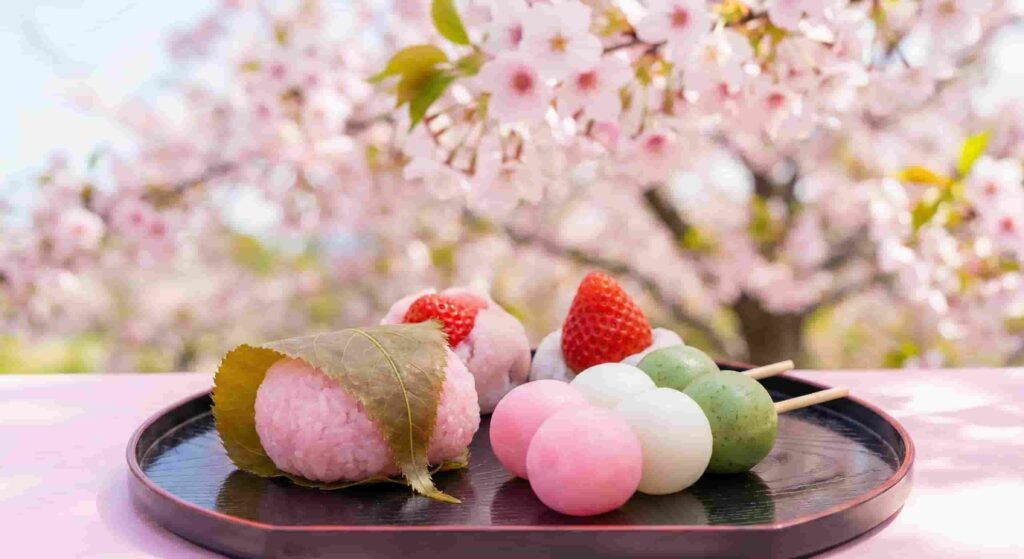
Japanese sweets (Wagashi) are art forms that mirror nature. In spring, the palette turns exclusively pink and green.
Sakura Mochi: The Kanto vs. Kansai Divide
If you order Sakura Mochi in Tokyo, you will get something totally different than in Kyoto.
- Kanto Style (Tokyo): Also called Chomeiji. It resembles a small crepe or pancake made of flour, folded like a taco around red bean paste.
- Kansai Style (Osaka/Kyoto): Also called Domyoji. It is made from coarsely ground glutinous rice (sticky rice), resembling a ball of pink rice grains with a chewy texture.
- The Leaf: Both are wrapped in a salt-pickled cherry blossom leaf. Yes, you should eat the leaf. The saltiness of the leaf provides a critical counterpoint to the sugary bean paste.
Hanami Dango
The icon of spring snacking: three dumpling balls on a skewer.
- Pink (Top): Represents the cherry blossom buds.
- White (Middle): Represents the remaining winter snow (or the fully bloomed flower).
- Green (Bottom): Represents the new leaves growing underneath.
- The Saying: “Hana yori Dango” (Dumplings over Flowers). This famous proverb pokes fun at the reality that for many, the food is more important than the actual flower viewing.
The Art of Hanami: Culture & The Bento Box
Hanami (flower viewing) is not just a picnic; it is a ritual with roots in the Nara period (710–794), originally focused on plum blossoms before shifting to cherry blossoms in the Heian period.
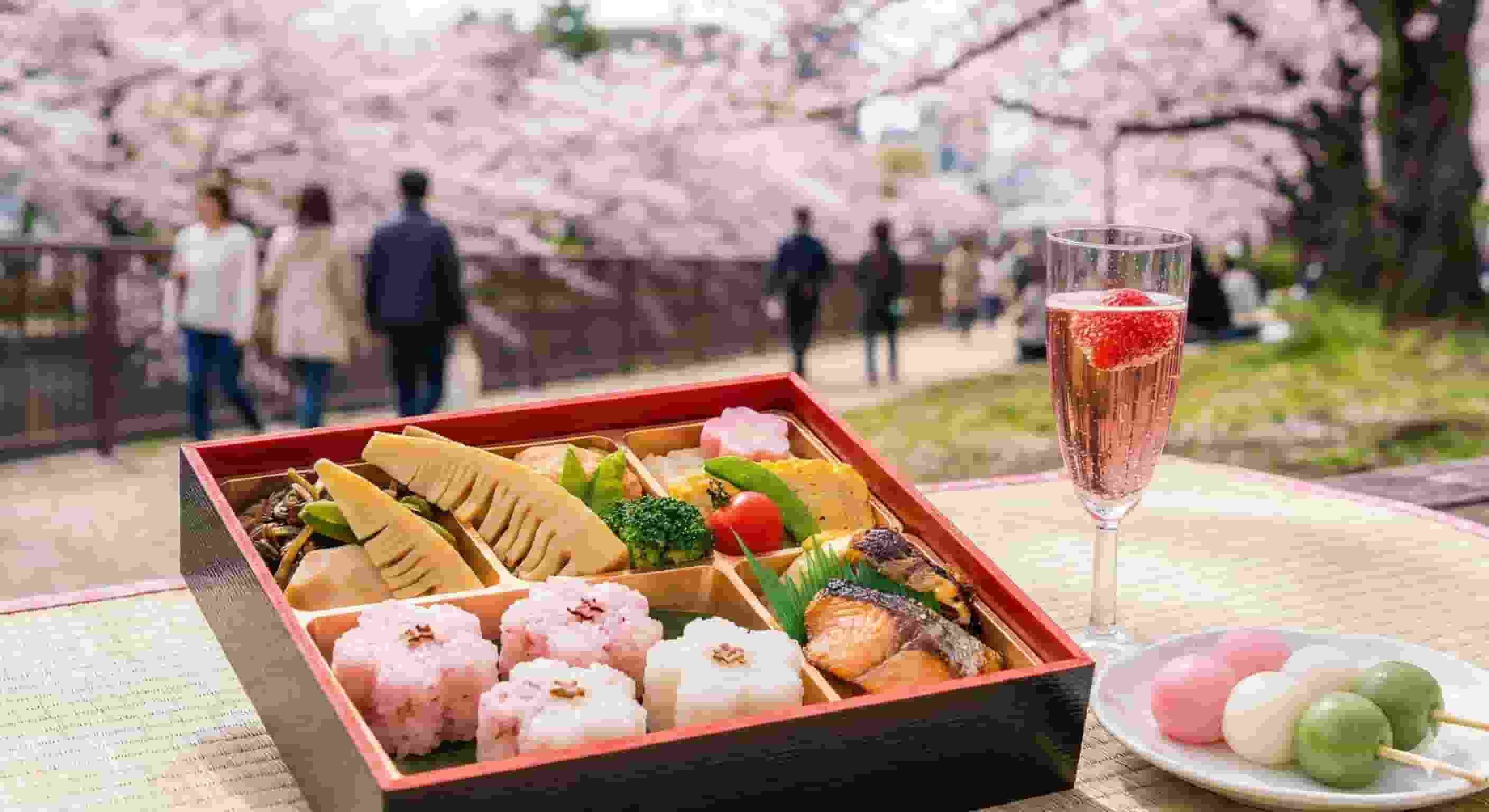
The Hanami Bento is the centerpiece of this ritual. Historically, these were lacquered tiered boxes (jubako). Today, department store basements (Depachika) compete fiercely to produce the most beautiful spring bento.
- Common Components:
- Tamagoyaki (sweet rolled omelet).
- Kamaboko (pink and white fish cake).
- Ebi (shrimp) symbolizing longevity.
- Chirashi-zushi (scattered sushi) topped with pink denbu (sweet fish flakes) and yellow egg.
For more information on Tokyo’s cherry blossom viewing spots, click here!
Tokyo’s Best Cherry Blossom Spots: 5 Must-Visit Locations for Spring 2026
Walking Route 1: The Traditionalist (Asakusa & Sensoji)
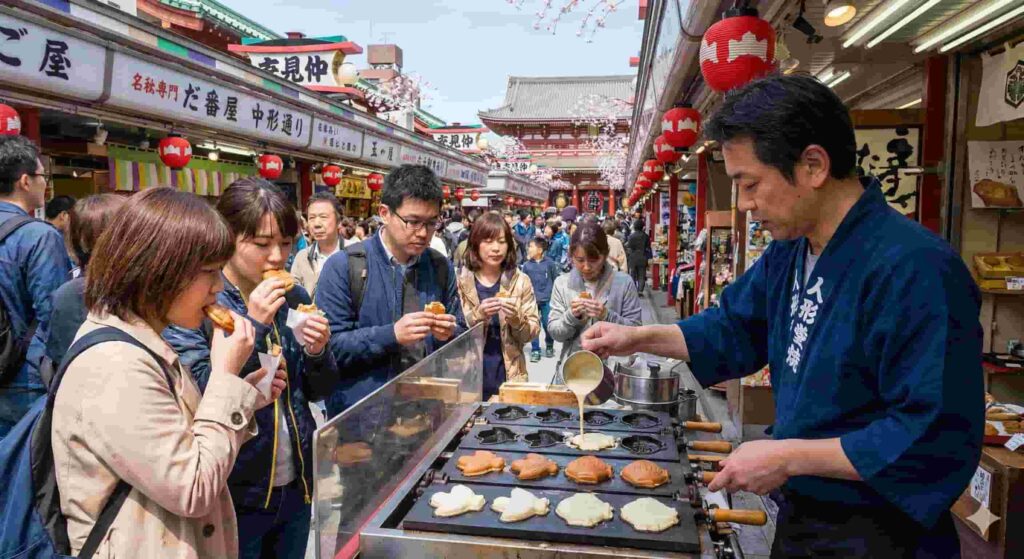
Vibe: Historic, Bustling, Street Food Heaven. Best Time: Early Morning (9:00 AM) to beat the crowds, or Dusk (5:00 PM) for lantern views.
Asakusa is the spiritual home of the Edo atmosphere. The approach to Sensoji Temple, known as Nakamise Dori, is arguably the most famous food street in Tokyo. However, the best stuff is often found just off the main strip.
The Route:
- Start at Kaminarimon (Thunder Gate): Snap your photo, but don’t linger. Pass through the gate.
- Nakamise Dori (The Main Strip):
- Stop 1: Kibidango Azuma. Look for the rabbit logo. These are soft, warm millet dumplings dusted in soybean flour (kinako). They serve them with cold amazake (sweet fermented rice drink) in spring. Note: You must eat standing in their designated area; walking and eating is frowned upon here.
- Stop 2: Kimura-ya Ningyo-yaki. The oldest shop on the street. Watch the craftsmen pour batter into iron molds shaped like doves, pagodas, and lanterns. Buy the ones with red bean paste (an-iri). They are best eaten hot when the sponge cake is fluffy.
- Stop 3: Asakusa Kokonoe. Located right before the second gate (Hozomon). They sell Agemanju (deep-fried buns). In spring, go for the Sakura flavor (filling contains salted sakura leaves) or the Matcha flavor. The batter is tempura-crispy, the inside soft.
- Detour: The Melon Pan King.
- Take a left turn just before Hozomon gate toward the western side streets.
- Stop 4: Asakusa Kagetsudo. Famous for Jumbo Melon Pan. It is not melon-flavored; it is a sweet bun with a cookie-dough crust resembling a melon skin. It is enormous, fluffy as a cloud, and has a fermentation process of 3 hours.
- Lunch Option: Asakusa Unana.
- Located on a side street parallel to Nakamise. They serve Unagi Onigiri (grilled eel rice balls). The eel is charcoal-grilled and glazed with sweet soy sauce. It is a luxurious street snack.
- Finish at Sensoji Main Hall: Cleanse your hands at the fountain and offer a coin.
Walking Route 2: The Modernist (Nakameguro & Meguro River)
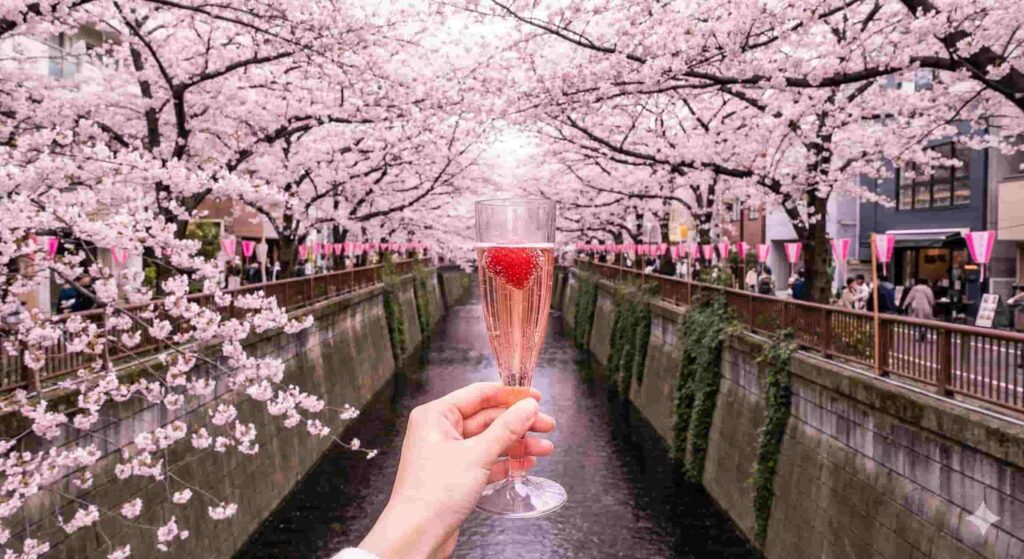
Vibe: Trendy, Romantic, Instagram-Famous. Best Time: Weekday afternoons. Weekends are gridlock.
Nakameguro is the “fashionable” face of Hanami. The canal is lined with 800 cherry trees that form a pink tunnel over the water. The food here is less “traditional stall” and more “pop-up chic.”
The Route:
- Start at Nakameguro Station. Cross the street to the main river canal.
- The Pink Champagne Walk: During Sakura season, makeshift stalls along the river sell Pink Champagne and Rosé sparkling wine in plastic flutes with strawberries inside. It is the signature drink of Nakameguro.
- Stop 1: Starbucks Reserve Roastery Tokyo. One of only a few in the world. Even if you don’t go in (the queue can be 3 hours), the architecture by Kengo Kuma is stunning. They offer exclusive Sakura-themed cocktails and pastries like Sakura Allure tea.
- Stop 2: Daiwa Super. A fruit sandwich specialist. Look for their Amaou Strawberry Sandwich. Huge strawberries and whipped cream between fluffy white bread. It’s visual perfection.
- Stop 3: Green Bean to Bar Chocolate. An artisan chocolate shop offering limited edition Sakura Eclairs or macarons.
- Dinner Option: Seirinkan. One of Tokyo’s most legendary pizza spots (famous from “Ugly Delicious”). Or, for a seasonal twist, try Hashidaya for their chicken hot pot, popular in the cool spring evenings.
Walking Route 3: The Nostalgic (Yanaka Ginza)
Vibe: “Shitamachi” (Old Downtown), Local, Retro, Cats. Best Time: Late afternoon (Sunset).
If Asakusa is for tourists, Yanaka is for locals. It survived the WWII bombings, preserving the narrow lanes and low buildings of old Tokyo.
The Route:
- Start at Nippori Station (North Exit). Walk toward the “Yuyake Dandan” (Sunset Stairs).
- Stop 1: Yanaka Shippoya. Located on the main strip. They sell doughnuts shaped like Cat Tails. In spring, look for the “Sakura” cat tail pattern (white dough with pink spots).
- Stop 2: Niku-no-Suzuki. A butcher shop famous for Menchi-katsu (minced meat cutlets). Historically, this was a cheap, hearty snack for local workers. It is juicy, crispy, and costs barely 200 yen.
- Stop 3: Echigo-ya Honten. A liquor store where you can buy a draft beer or sake and sit on a milk crate outside. Pair it with fresh oysters or clams grilled right in front of the shop during spring weekends.
- The Sakura Tunnel: Walk through Yanaka Cemetery. It sounds morbid, but it is one of Tokyo’s most serene Hanami spots. The central path is lined with massive, ancient cherry trees, and the atmosphere is quiet and respectful—a stark contrast to the parties at Ueno Park.
Tasting the Ephemeral
Japan’s spring food culture is a lesson in mindfulness. The bitterness of the sansai, the short availability of takenoko, and the fleeting pink of the sakura mochi all remind us that time is passing.
To visit Tokyo in spring and eat only a convenience store sandwich is to miss the point of the season. Whether you are biting into a hot, sweet fried manju on the crowded streets of Asakusa or sipping pink champagne by the Meguro River, you are participating in a centuries-old ritual of welcoming the warmth and life that spring brings.
Japan’s spring charms are still abundant!! Be sure to check them out here!
Japan’s Most Spectacular Green Views: The Ultimate Guide to Spring Rice Terraces (Tanada)
Best Cherry Blossom Spots in Japan: A Journey Through Pink Petals and History
Spring Skiing Japan: Where to Find the Best Snow from March to May