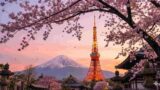











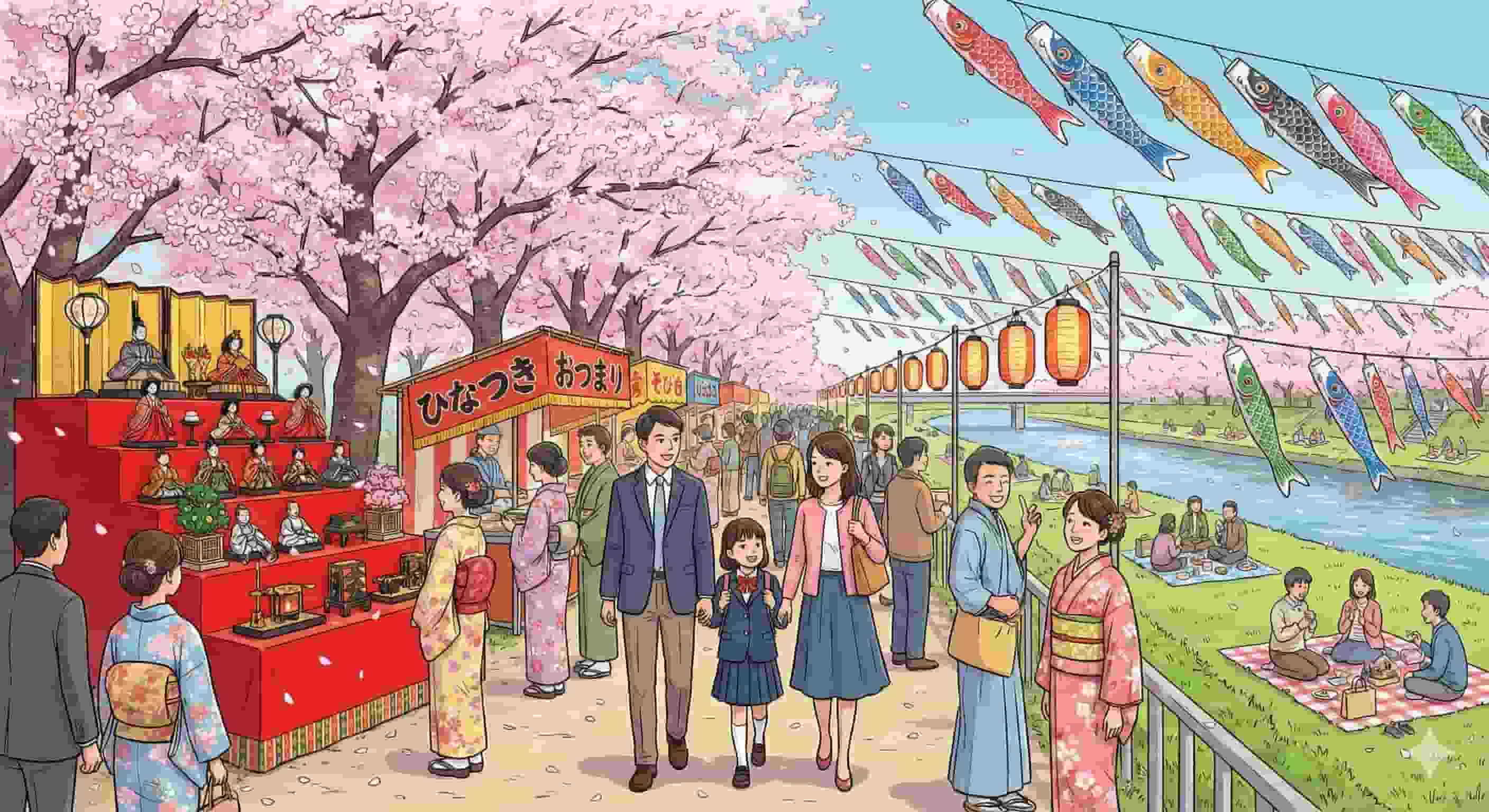
When you think of spring in Japan, the iconic image of cherry blossoms (Sakura) likely springs to mind. However, for the Japanese people, the season spanning March to May represents something far more profound than just pink petals. It is a deeply emotional season characterized by the concept of Deai to Wakare—”Encounters and Partings.”
Unlike the West, where the new year begins in January, the Japanese fiscal and academic year resets in April. This makes spring a psychological turning point for the entire nation. It is a time of sentimental goodbyes at graduation ceremonies and hopeful beginnings at entrance ceremonies.
If you are planning a trip to Japan during this vibrant season, you are in for a treat. From quiet family rituals to adrenaline-pumping festivals, this guide provides an in-depth look at Japanese spring culture, going beyond the guidebooks to help you experience the season like a local.
Planning the rest of your trip? This article is just one part of the season. To get the full picture—including the 2026 Cherry Blossom Forecast, Golden Week survival tips, and Skiing advice—check out my main guide:
👉 Read the Ultimate Guide to Spring in Japan 2026
1. The Unique Characteristics of the Japanese Spring
To truly appreciate the events listed in this guide, it is essential to understand the atmosphere that permeates Japan during these three months.
The Season of Transitions (Meeting and Parting)
In Japan, the rhythm of life is dictated by the spring calendar.
- March is for Goodbyes: As the school year ends, students graduate, and employees are often transferred to new cities. The air is filled with a sense of gratitude and bittersweet farewells.
- April is for Hellos: The fiscal year begins. Students start new grades, and “freshmen” employees (Shin-shakaijin) enter the workforce. A positive atmosphere of Shinki Itten (turning over a new leaf) covers the country.
Resonating with Nature: The Sakura Front
The Japanese pay close attention to the San-kan Shi-on phenomenon—a weather pattern of “three cold days followed by four warm days”—which signals the gradual shift from winter.
This warming trend triggers the Sakura Zensen (Cherry Blossom Front). This “front” is a meteorological forecast tracking the opening of Somei-Yoshino cherry blossoms as they sweep from the tropical south to the snowy north. The blossoming timeline dictates travel plans and party schedules across the nation.
The Contrast of “Static” and “Dynamic”
Spring events in Japan fall into two distinct categories:
- Static (Quiet/Family): Interior events like Hina Matsuri (Doll Festival) where families pray for their children’s health.
- Dynamic (Active/Community): Outdoor events like Mikoshi (portable shrine) parades and dancing festivals that celebrate the vitality of the season.
2. March: Gratitude and Departure (Yayoi)
Key Themes: Graduation, introspection, and the first signs of warmth.
March acts as the bridge between the harsh winter and the blooming spring. It is a month heavily focused on family and social obligations.
Hina Matsuri (The Doll Festival)
- Date: March 3rd
- Who it celebrates: Young girls.
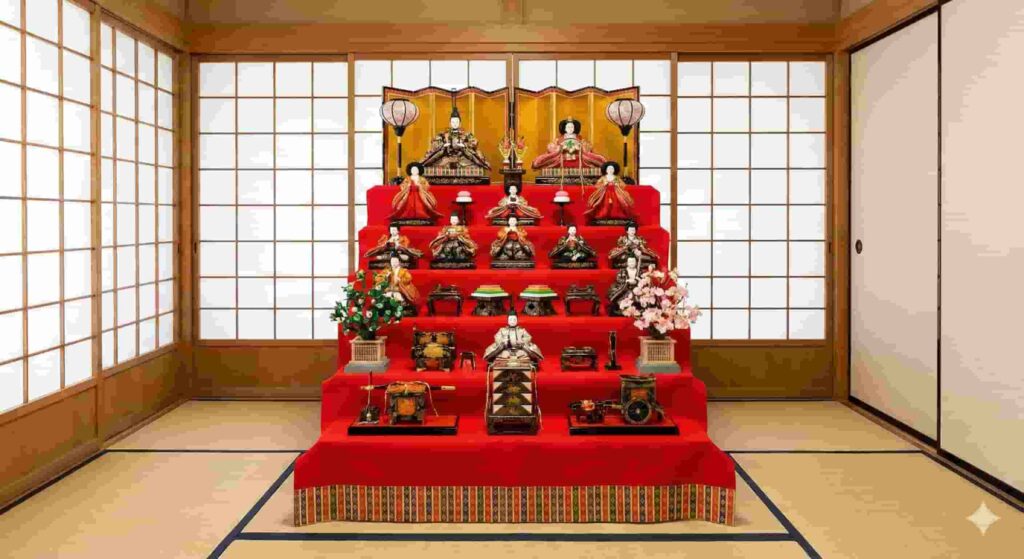
Cultural Insight: Also known as Momo no Sekku (Peach Festival), this day is dedicated to praying for the health and happiness of young girls. Families display elaborate sets of Hina-ningyo (ornamental dolls) representing the Emperor, Empress, and their court from the Heian period (794–1185).
Origins & Superstition: The festival originates from an ancient practice called Nagashi-bina, where paper dolls were floated down rivers to carry away bad luck and illness. Today, a modern superstition persists: “If you do not put away the dolls immediately after March 3rd, your daughter’s marriage will be delayed.” This leads to a frantic cleanup in households across Japan on March 4th!
Traditional Foods:
- Chirashi-zushi: “Scattered sushi” topped with colorful ingredients like shrimp and egg.
- Hamaguri (Clams): Clam shells are a symbol of a joined couple, representing a happy marriage.
White Day
- Date: March 14th
- Cultural Context: The Japanese answer to Valentine’s Day.
In Western cultures, Valentine’s Day is mutual. In Japan, Valentine’s Day (February 14th) is exclusively for women to give chocolates to men. Exactly one month later, on White Day, men are expected to return the favor.
The Rule of “Sanbai Gaeshi”: There is an unspoken social pressure known as Sanbai Gaeshi (Triple Return). Men are often expected to give a gift worth three times the value of the chocolate they received. Popular gifts include marshmallows, cookies, white jewelry, and high-end sweets.
Vernal Equinox Day (Shunbun no Hi)
- Date: Around March 20th
- Significance: A National Holiday celebrating nature.
Astronomically, this is when day and night are of equal length. Culturally, it marks the middle of Ohigan, a Buddhist week of honoring ancestors.
What Locals Do: Families visit ancestral graves (Ohaka-mairi) to clean the tombstones and offer flowers and incense. They eat Botamochi, a sweet sticky rice ball covered in red bean paste. The red bean is believed to ward off evil spirits, while the sticky rice symbolizes bringing the ancestors and the living together.
3. April: New Beginnings and The Cherry Blossom Frenzy (Uzuki)
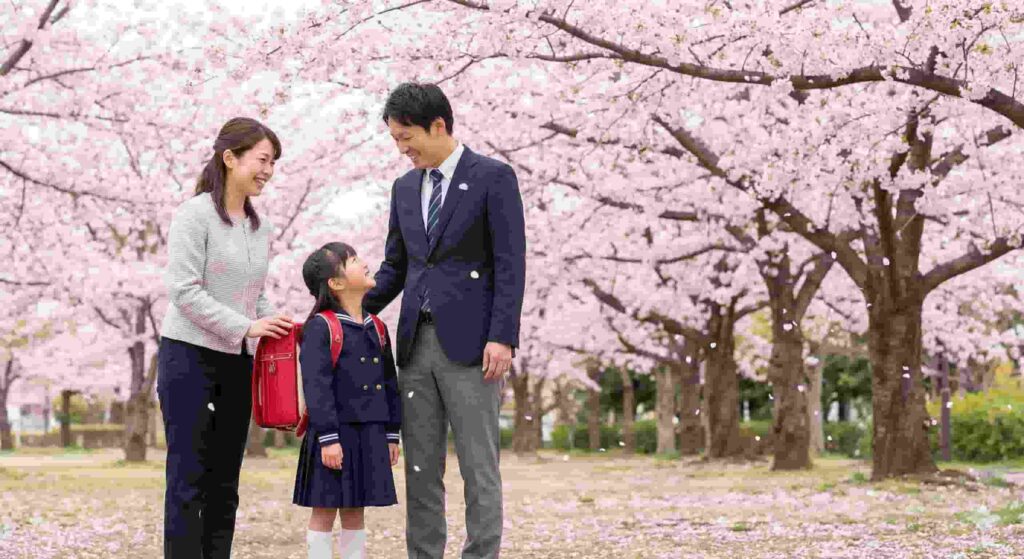
Key Themes: Sakura, corporate culture, and drinking under the trees.
April is the most visually stunning month in Japan. The country turns pink, and the streets are filled with fresh energy.
April Fools’ Day
- Date: April 1st
While imported from the West, Japan has embraced April Fools’ with a unique corporate twist. Major Japanese brands (like airlines, car manufacturers, and food chains) often release high-budget, elaborate “fake news” press releases or products on their websites for 24 hours. It is a rare moment where stiff corporate culture loosens up.
Entrance Ceremonies (Nyugakushiki / Nyushashiki)
- Date: Early April
If you travel in early April, you will see a specific demographic on the trains: young people in ill-fitting, brand-new black suits. These are the fresh university graduates attending their Nyushashiki (Company Entrance Ceremony). Simultaneously, parents dress in formal wear to accompany children to school entrance ceremonies. It is a solemn, formal rite of passage that defines the Japanese spring.
Hanami (Flower Viewing)
- Date: Late March to Early April (varies by region)
Hanami is the definitive event of Japanese spring. It dates back to the Nara period (710–794), originally influenced by Chinese plum viewing, but shifted to cherry blossoms in the Heian period.
How to “Hanami” like a Local: It is not merely walking past trees. It is a picnic—often a rowdy one.
- The Blue Tarp: Locals stake out their territory in parks (like Ueno Park in Tokyo) early in the morning using blue plastic tarps.
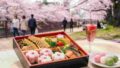
- The Food & Drink: Convenience stores stock special “Hanami Bento” boxes, pink dumplings (Hanami Dango), and seasonal Sakura-flavored beer.
- Yozakura: Viewing “Night Sakura” is equally popular. Lanterns are hung in the trees to illuminate the blossoms against the night sky, creating an ethereal atmosphere.
Pro Tip for Travelers: Famous Hanami spots become overcrowded. To avoid the crush, visit temples or shrines early in the morning (before 9:00 AM) for a peaceful photo opportunity.
Easter
- Status: Emerging Event
Unlike Christmas or Halloween, Easter is not yet a major cultural phenomenon in Japan. However, theme parks like Tokyo Disney Resort and Universal Studios Japan have begun aggressive Easter campaigns, introducing egg hunts and bunny-themed merchandise. It is becoming a commercial “Spring Festival” for families.
4. May: Golden Week and Growth (Satsuki)
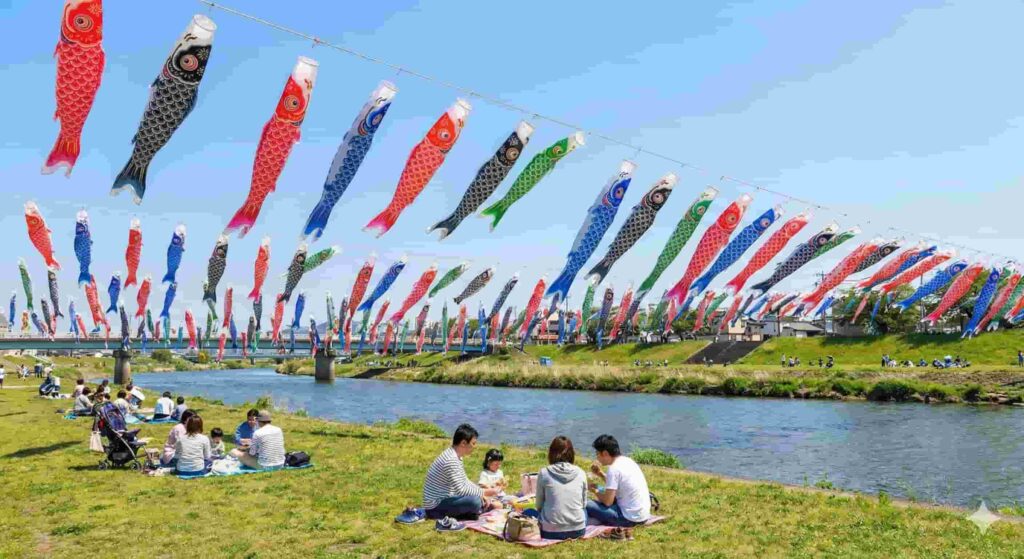
Key Themes: Travel, children, and lush greenery.
As the cherry blossoms fade, the “Fresh Green” (Shinryoku) season arrives. May is characterized by the longest holiday period in the Japanese calendar.
Golden Week (GW)
- Date: Late April to May 5th
Golden Week is a collection of four national holidays occurring within seven days.
- Showa Day (April 29): Celebrating the birthday of the Showa Emperor.
- Constitution Memorial Day (May 3).
- Greenery Day (May 4).
- Children’s Day (May 5).
Travel Warning: During GW, Japan goes on vacation. Shinkansen (bullet trains) are booked out, highway traffic jams stretch for 40 kilometers, and hotel prices skyrocket.
Traveler Advice: If you visit during GW, stay in one city (like Tokyo) rather than trying to travel between cities. Tokyo is surprisingly empty and pleasant as residents leave for the countryside.
Children’s Day (Kodomo no Hi)
- Date: May 5th
- Symbolism: Koinobori (Carp Streamers).
Originally Tango no Sekku (Boys’ Festival), this day now celebrates the happiness of all children (though traditions still lean toward boys).
The Carp Streamer Significance: You will see colorful fish windsocks flying from balconies and poles. These represent carp (Koi). Chinese legend states that a carp that swims upstream and leaps a waterfall turns into a dragon. Thus, the flags symbolize the parents’ wish for their children to be strong, resilient, and successful against life’s current.
Traditions:
- Kabuto: Families display samurai helmets (Kabuto) to inspire bravery.
- Kashiwa-mochi: Rice cakes wrapped in oak leaves. Oak leaves do not fall until new shoots appear, symbolizing the prosperity of descendants and an unbroken family line.
- Shobu-yu: Bathing in water with floating iris leaves (shobu). The word shobu sounds like the word for “victory” or “military spirit.”
Mother’s Day
- Date: Second Sunday of May
Similar to the West, red carnations are the standard gift to express gratitude to mothers.
5. Active Japan: 4 Must-See Spring Festivals
(Curated based on ANA Travel Planner Recommendations)
While cherry blossoms are beautiful to look at, Japanese spring also offers “Active Festivals” where you can feel the heat, energy, and rhythm of the local culture. Here are four dynamic festivals that define the season.
1. Hirosaki Cherry Blossom Festival (Aomori Prefecture)
- When: Late April – Early May
- Vibe: Scenic & Majestic
Hirosaki Park is widely considered one of the top three cherry blossom spots in Japan. It boasts approximately 2,600 trees.
- The Highlight: The Sakura Tunnel creates a ceiling of pink, but the true magic happens when the petals fall. The fallen petals blanket the castle moat completely, turning the water into a solid pink carpet known as Hanaikada (Floral Raft).
- Experience: Unlike the rowdy parties in Tokyo, this festival includes traditional Tsugaru Shamisen (three-stringed instrument) performances and boat rentals to row through the pink moats.
2. Ushibuka Haiya Festival (Kumamoto Prefecture)
- When: Mid-April
- Vibe: Rhythmic & Participatory
Located in Amakusa, a region famous for its hidden Christian history and fishing culture, this festival celebrates the Haiya Bushi—the root of many Japanese folk songs.
- The Highlight: The “Sodori” (Grand Dance). Over 3,000 dancers parade through the narrow port town streets. The dance movements simulate the actions of fishermen: bending to pull nets and worrying about the wind.
- Why Go: It is incredibly welcoming. There are crash-course lessons available for tourists, allowing you to jump into the parade and dance alongside the locals.
3. Naha Hari (Okinawa Prefecture)
- When: Early May (During Golden Week)
- Vibe: Competitive & Oceanic
While mainland Japan is celebrating spring, Okinawa (Japan’s tropical south) is already feeling like early summer. The Hari is a dragon boat race praying for safe voyages and bountiful fishing.
- The Highlight: The races utilize Sabani, traditional Okinawan fishing boats adorned with colorful dragon carvings.
- Experience: This is the largest Hari festival in Okinawa. Unlike smaller local rituals, Naha Hari allows tourists to board the dragon boats and experience paddling after the main races. It is a high-energy event filled with the sound of gongs and cheers.
4. Shirone Giant Kite Battle (Niigata Prefecture)
- When: Early June (Technically early summer, but the culmination of spring preparation)
- Vibe: Dangerous & Spectacular
This is not your average kite flying. It is a combat sport with a 300-year history.
- The Highlight: Two teams on opposite banks of a river fly massive kites—some as large as 24 tatami mats (approx. 40 square meters).
- The Battle: The objective is to crash your kite into the opponent’s kite mid-air, entangle the ropes, and then engage in a tug-of-war until the opponent’s rope snaps.
- Impact: The sound of the giant kites crashing and the wind roaring through the ropes is visceral. It demonstrates the rugged spirit of the Niigata people.
Conclusion: Why You Must Experience Spring in Japan
Japanese spring is a narrative of emotional progression. It begins in March with the tearful “farewell” of graduation and the quiet prayers of Hina Matsuri. It explodes into joy in April with the arrival of Cherry Blossoms and fresh beginnings. Finally, it matures in May with the vitality of Golden Week and the strength of Children’s Day.
Whether you are seeking the “Static” beauty of a floral raft in Hirosaki or the “Dynamic” energy of a dragon boat race in Okinawa, spring offers a window into the Japanese soul that no other season can provide.
Ready to Plan Your Spring Getaway?
Spring is the most popular time to visit Japan, meaning accommodation and guides book out months in advance.
[Next Step] Don’t miss the cherry blossoms.