



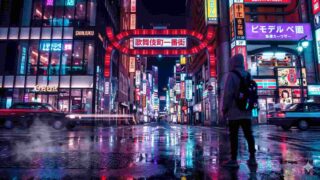
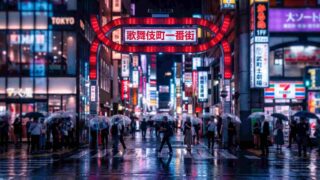
Shinjuku’s Kabukicho (歌舞伎町) is a sensory overload of neon lights, towering Godzilla heads, and frenetic energy. Often called the “Sleepless Town” (Nemuranai Machi), it is the most famous entertainment and red-light district in Japan. For many tourists, a night out in Tokyo isn’t complete without walking under the iconic red “Kabukicho Ichibangai” arch.
But as you plan your itinerary, a pressing question likely lingers: Is Kabukicho safe at night?
The short answer is: Yes, physically safe, but financially dangerous.
While you are unlikely to be mugged or assaulted in the way you might fear in other major global cities, Kabukicho is rife with predatory “bottakuri” (rip-off) bars and aggressive street touts designed to drain your wallet.
This comprehensive guide will arm you with the knowledge to navigate Shinjuku’s nightlife safely, distinguishing between the myths and the very real tourist traps.
- The Reality: Physical Safety vs. Financial Scams
- The Golden Rule: NEVER Follow the Touts (Kyaku-hiki)
- Anatomy of a “Bottakuri” (Rip-off) Scam
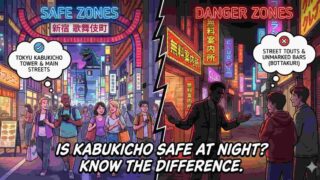
- Safe Zones vs. Danger Zones in Shinjuku
- Safety for Specific Travelers
- 5 Actionable Tips to Stay Safe
- What to Do If You Are Scammed
- Conclusion: Enjoy the Spectacle, Avoid the Trap
The Reality: Physical Safety vs. Financial Scams
To understand Kabukicho safety, you must separate physical violence from financial crime.
1. Violent Crime is Rare
Japan is consistently ranked among the safest countries in the world. Even in Kabukicho—arguably Tokyo’s “grittiest” neighborhood—random acts of violence against tourists are statistically very low. You can generally walk the main streets at 3:00 AM without fear of being held up at gunpoint or knifepoint.
2. Financial Predation is High
The real danger in Kabukicho is not a weapon; it’s a menu. The district is the epicenter of Bottakuri (ぼったくり), a practice where bars charge exorbitant hidden fees. A promised ¥3,000 ($20) drink deal can turn into a ¥300,000 ($2,000) nightmare in less than an hour.
Important Note: Local police (Koban) often view these incidents as “civil disputes” (disagreements over prices) rather than crimes. If you are scammed, the police may not be able to force the bar to refund your money. Prevention is your only true defense.
The Golden Rule: NEVER Follow the Touts (Kyaku-hiki)
If you take only one piece of advice from this article, let it be this: Ignore the street touts.
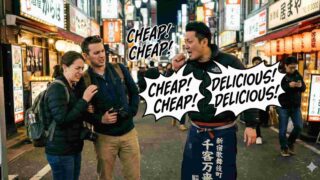
In Japanese, these people are called Kyaku-hiki (customer pullers). They stand on street corners, often aggressive or overly friendly, trying to lure you into their bar, club, or izakaya.
Why You Must Ignore Them
- It is Illegal: A Shinjuku City ordinance explicitly bans soliciting customers on the street. Any establishment that sends staff out to harass pedestrians is already breaking the law. Legitimate, high-quality bars do not need to drag people in off the street.
- The “Chain Restaurant” Scam: A common tactic in 2024 and 2025 is for a tout to approach you pretending to be staff from a famous, safe chain like Torikizoku or Hub. They will say, “Sorry, Torikizoku is full, but we have a sister shop nearby with the same menu.” This is a lie. They will take you to a rip-off bar with massive cover charges.
- The “Friendly Local” Act: Some touts (often fluent in English) will act like fellow travelers or friendly locals just looking for a drinking buddy. Once you lower your guard and follow them to “a cool place they know,” you are in their territory.
Who Are the Touts?
- Japanese Touts: Often young men or women in aprons or suits holding menus.
- Foreign Touts: Specifically in Kabukicho, there is a high concentration of Nigerian and Ghanaian touts. They can be physically imposing and very persistent, often promising “Girls, Sex, Titties” or “Cheap Drinks.”
Actionable Advice: Use the “Gray Rock” method. Do not make eye contact. Do not say “No thank you.” Do not engage. Pretend they are invisible and keep walking. If they block your path, walk around them silently.
Anatomy of a “Bottakuri” (Rip-off) Scam
How does a fun night turn into a financial disaster? Here is the typical playbook used by scam bars in Kabukicho:
The Hook
You are approached on the street with an offer: “All you can drink for ¥1,000 ($7) for 60 minutes!” or “Free entrance, just pay for drinks.”
The Trap
You enter a bar that is usually located on an upper floor (3rd floor or higher) of a nondescript building. The elevator opens directly into the bar, making it harder to leave. You are seated and given a towel and a small snack (otoshi).
The Sting
When you ask for the bill, it isn’t ¥1,000. It is ¥150,000 ($1,000+). The bill includes:
- Seating Charge: ¥20,000 per person.
- Ice Charge: ¥5,000 per cube.
- Weekend Surcharge: ¥10,000.
- Staff Drink Charge: You unknowingly bought drinks for the girls chatting with you, priced at ¥10,000 each.
The Confrontation
If you refuse to pay, the mood shifts instantly. The “friendly” staff become aggressive. Large men may block the exit. They might threaten to call the police (knowing the police won’t help you) or demand your credit card.
Warning Sign: If a bar does not have prices clearly listed outside, or if the elevator ride feels like you are going into a private apartment, turn back.
Safe Zones vs. Danger Zones in Shinjuku
Kabukicho isn’t a monolith; it has gradients of safety.
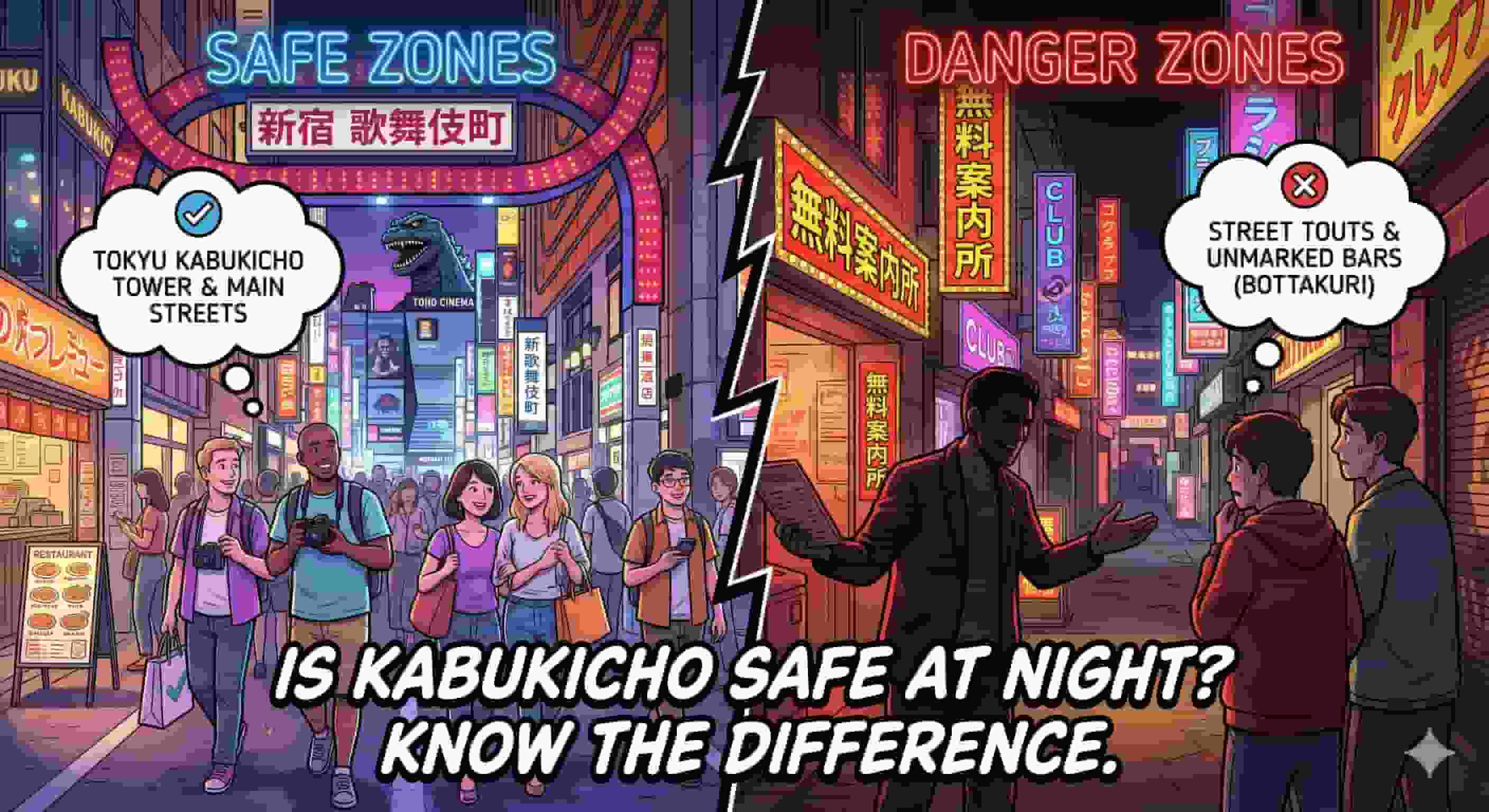
✅ generally Safe Areas
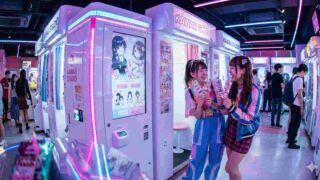
- Toho Building (Godzilla Head): The main street leading to the Godzilla Hotel is very touristy and generally safe, though crowded. Stick to the ground-level restaurants and arcades here.
- Shinjuku Golden Gai: Located adjacent to Kabukicho, this area consists of over 200 tiny bars. It is historically safer and very popular with tourists. However, some bars are “regulars only,” so look for English menus or “Tourists Welcome” signs.
- Tokyu Kabukicho Tower: The newest landmark (opened 2023). This complex contains hotels, arcades, and the Kabuki-yokocho food hall. It is brightly lit, security-patrolled, and completely safe for families and tourists.
⚠️ The Danger Zones
- Sakura-dori Street: A narrow street packed with “girl’s bars,” “Kyabakura” (hostess clubs), and aggressive touts.
- The “Scout” Areas: The streets specifically behind the Shinjuku Ward Office often have “scouts” recruiting women for the adult industry.
- Love Hotel Hill: The northern area of Kabukicho is a maze of Love Hotels. While not inherently dangerous, it is dark, secluded, and not a place for casual sightseeing.
Safety for Specific Travelers
Is Kabukicho Safe for Solo Female Travelers?
Surprisingly, yes, often more so than for men. Touts are primarily looking for men to lure into hostess bars or rip-off joints. A solo female traveler is “bad business” for them. You will likely be ignored by the scammers.
- Risk: The main risk is unwanted attention from drunk locals (“Nanpa”) or “scouts” trying to recruit you for adult work (modeling/AV).
- Advice: Walk with purpose. If approached by a scout, ignore them completely. Avoid dark alleyways and stick to the main Godzilla road.
Is Kabukicho Safe for Families?
During the day (until 6:00 PM), Kabukicho is just a busy commercial district. You can visit the Godzilla head, the arcades, and the Ninja Trick House.
- Advice: After 7:00 PM, the vibe changes. It becomes decidedly “adult.” While you can walk through with kids, you will have to explain why there are gigantic photos of hosts and hostesses everywhere. It is better to stick to the Tokyu Kabukicho Tower or move to West Shinjuku for dinner.
5 Actionable Tips to Stay Safe
- Trust Google Maps & Reviews: Before entering any bar, check it on Google Maps. If it has no reviews, or a 1.5-star rating with comments saying “SCAM,” do not enter. Legitimate bars have digital footprints.
- Bring Your Passport (But Keep it Safe): You legally must carry your passport in Japan. However, never give your passport to a bar staff member as “collateral.”
- Watch Your Drink: Drink spiking does happen. Never leave a drink unattended, and be wary if a stranger buys you a drink that you didn’t see poured.
- Carry Cash, But Not Too Much: Japan is still cash-heavy, but carrying ¥100,000 in your wallet makes you a target. Carry enough for the night (e.g., ¥10,000 – ¥20,000).
- Know the Koban (Police Box): There is a prominent Police Box right near the “Kabukicho Ichibangai” gate. If you feel threatened or are being followed, walk straight there.
What to Do If You Are Scammed
If you find yourself in a situation where a bar is demanding an exorbitant fee:
- Stay Calm: Do not get violent. This gives them a legal reason to detain you.
- Record Everything: discretely turn on your phone’s voice recorder. Take photos of the menu and the bill if possible.
- Call 110: This is the police emergency number. Even if the police struggle with “civil disputes,” the threat of police involvement can sometimes make scammers back down or negotiate a lower “exit fee” just to get rid of you.
- Credit Card Chargeback: If forced to pay by credit card, sign the receipt but immediately contact your credit card issuer to report the transaction as fraudulent/under duress once you are safe.
Conclusion: Enjoy the Spectacle, Avoid the Trap
Kabukicho is a fascinating, electric slice of Tokyo culture that shouldn’t be missed—but it should be respected. The district operates on a high-risk, high-reward dynamic.
The verdict? Go see Godzilla. Eat at a reputable restaurant. Have a drink in Golden Gai or the Tokyu Tower. But when a friendly stranger on the street offers you the “best night of your life” for ¥1,000, keep walking. Your wallet will thank you.
Next Step: Now that you know how to stay safe, are you ready to plan the rest of your Tokyo adventure? Check out our [The Ultimate 1-Day Shinjuku Walking Itinerary: From Neon Nights to Quiet Shrines] to find the best (and safest) spots in the city!

