














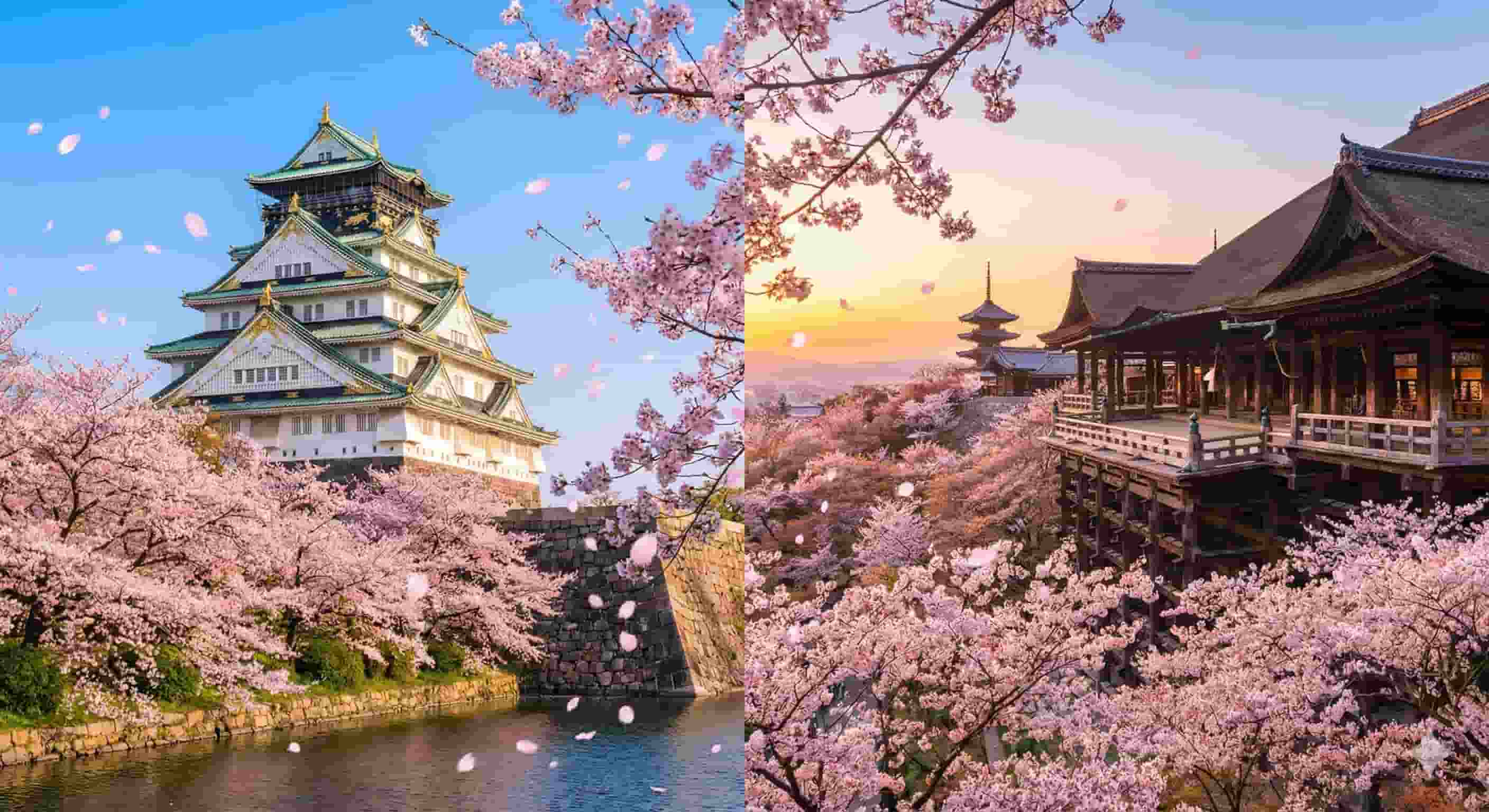
As winter fades, the Kansai region becomes a stunning display of pink and white. This attracts travelers from around the world to experience Hanami. With thousands of viewing spots throughout the area, planning the perfect trip can feel daunting. To help you make the most of your time and create lasting memories, we have gathered a top list of the best cherry blossom locations in Osaka and Kyoto. This includes famous heritage sites and hidden gems that many tourists overlook.
In this 2026 guide, we offer more than just simple descriptions. We include essential details, such as travel times from Kansai International Airport (KIX), blooming periods for rare cherry varieties, and tips for avoiding large crowds. Whether you want to see the historic beauty of Osaka Castle or the serene charm of Kyoto’s waterways, this article serves as your complete guide for an unforgettable spring in Japan.
Are you searching for the iconic setting of a castle, a quiet local spot away from tourists, or an early-blooming variety to enjoy in February?
This guide highlights the top 10 cherry blossom locations in Osaka and Kyoto. We have looked into access routes from Kansai International Airport (KIX), blooming times, and special features to help you capture the perfect moment.
Looking to see cherry blossoms around Tokyo? Click here!
Tokyo’s Best Cherry Blossom Spots: 5 Must-Visit Locations for Spring 2026
5 Best Cherry Blossom Spots Near Narita Airport
Part 1: Osaka – The Vibrant Soul of Hanami
Osaka offers a dynamic cherry blossom experience, blending urban energy with sprawling nature parks. From the rare late-blooming tunnel at the Mint Bureau to the early blooms of Tsurumi, here are the top 5 picks.
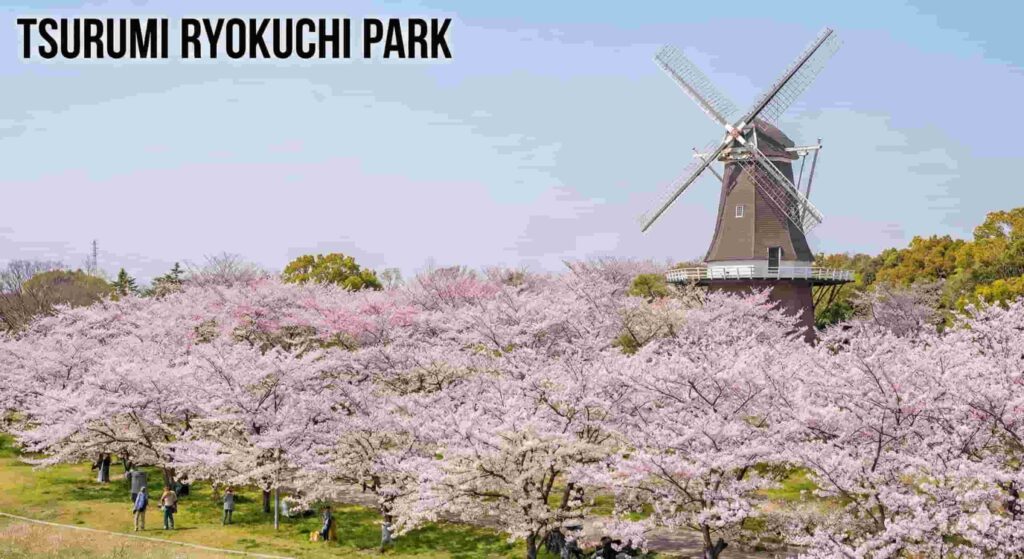
1. Tsurumi Ryokuchi Park: The Longest Blooming Season
Best for: Families, photographers, and early-season travelers.
Located on the site of the 1990 International Garden and Greenery Exposition, Tsurumi Ryokuchi Park is a massive urban oasis. While most spots offer a two-week viewing window, Tsurumi is unique because of its variety. It features the early-blooming Kawazu-zakura (deep pink) in late February, followed by the classic Somei Yoshino, and finishing with late-blooming Yaezakura.
- Why Go: The “Windmill Hill” is a photographer’s dream, often featuring a collaboration of tulips and cherry blossoms in a scene reminiscent of the Netherlands.
- Pro Tip: Pack a picnic. The expansive lawns and designated BBQ areas make it perfect for a full day of relaxation.
Key Details:
- Address: 2-163 Ryokuchikoen, Tsurumi-ku, Osaka
- Access from KIX: Approx. 1 hr 20 min via Nankai Line & Osaka Metro Nagahori Tsurumi-ryokuchi Line.
- Blooming Period: Late Feb – Early April.
- Map: Google Maps Link
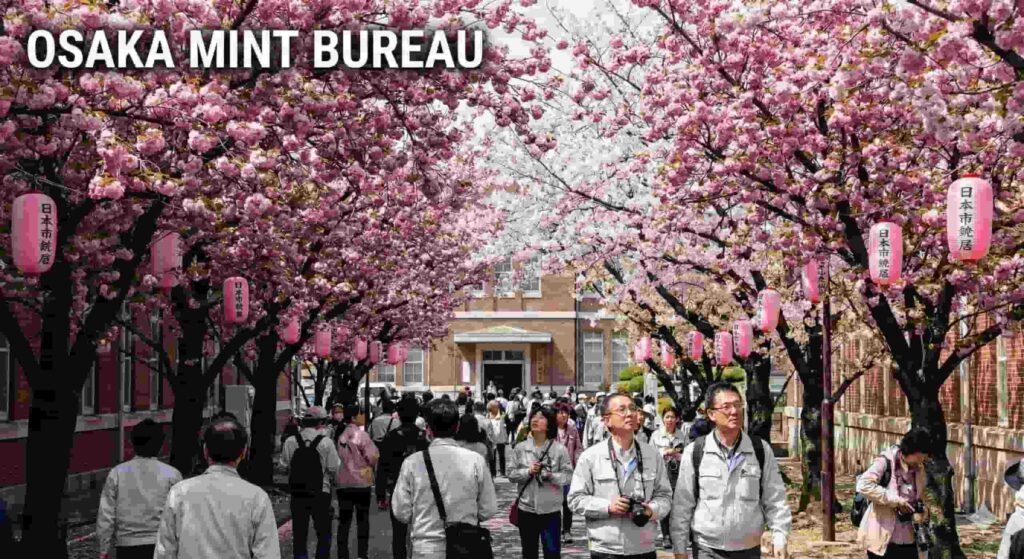
2. The Osaka Mint Bureau (Sakura no Torinuke): The Exclusive Experience
Best for: Rare cherry blossom varieties and botanical enthusiasts.
This is arguably the most exclusive cherry blossom event in Osaka. The “Sakura no Torinuke” (Cherry Blossom Passage) is open to the public for only one week in mid-April. Unlike the standard five-petal cherry blossoms, the Mint Bureau focuses on Yaezakura (double-flowered cherry blossoms).
- The Experience: You walk a 560-meter one-way passage along the Old Yodo River. The canopy is dense with over 300 trees comprising roughly 140 varieties, including rare “Otemari” and “Kotemari” blossoms that look like hanging pom-poms.
- Night Viewing: The passage is lit up by paper lanterns (bonbori) at night, creating a magical, soft-focus atmosphere.
Key Details:
- Address: 1-1-79 Tenma, Kita-ku, Osaka
- Access from KIX: Approx. 1 hr 10 min via JR Kansai Airport Rapid or Subway.
- Blooming Period: Mid-April (One week only).
- Map: Google Maps Link
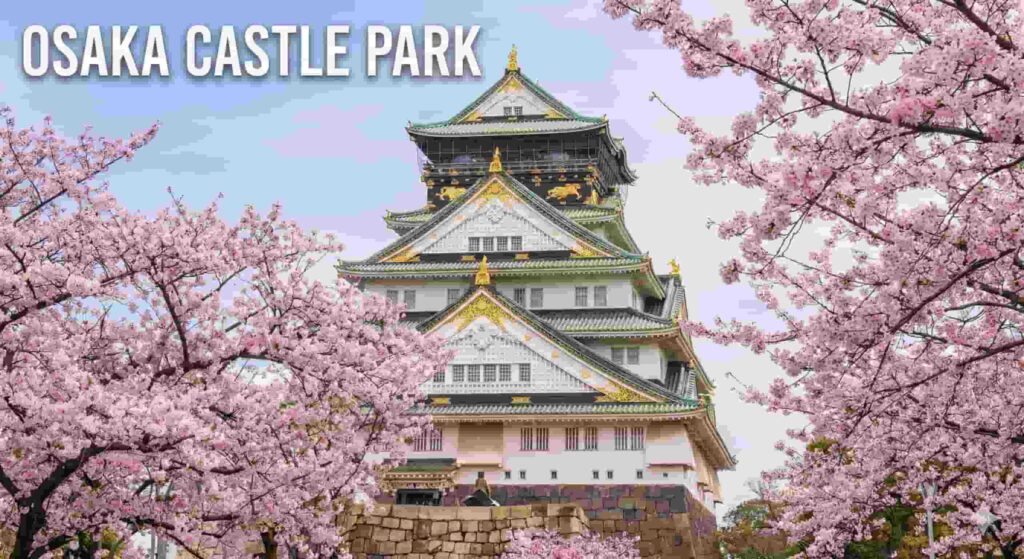
3. Osaka Castle Park: The Iconic Japan Shot
Best for: First-time visitors and history buffs.
If you have seen a photo of Osaka in spring, it was likely taken here. The contrast between the granite stone walls, the emerald green moat, the majesty of the Main Tower (Donjon), and the 3,000 cherry trees is unparalleled.
- Nishinomaru Garden: This paid area within the park contains about 300 cherry trees and offers the best unobstructed view of the castle tower. It is the premier spot for the “Kanko Nighter” (night illumination).
- Activities: Take a “Gozabune” boat ride around the moat to see the weeping cherries cascading toward the water.
Key Details:
- Address: Osakajo, Chuo-ku, Osaka
- Access from KIX: Approx. 1 hr direct via JR Kansai Airport Rapid to Osakajokoen Station.
- Blooming Period: Late March – Early April.
- Map: Google Maps Link
4. Suminoe Park: The Water and Greenery Retreat
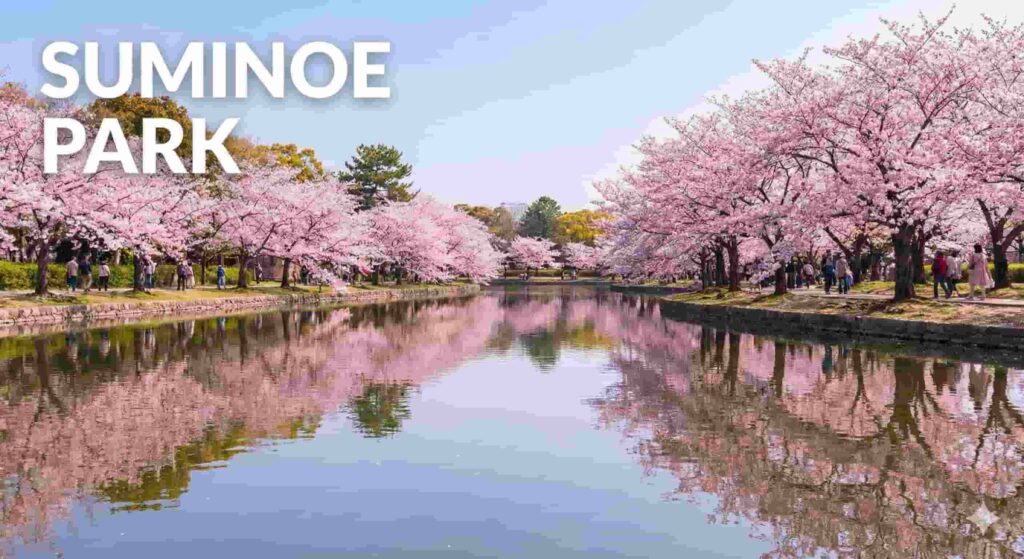
Best for: A relaxed, local atmosphere away from tourist hordes.
Themed around “Flowers, Greenery, and Water,” Suminoe Park is a favorite among locals. The highlight is the path surrounding the large “Oike” pond.
- Hanaikada (Flower Rafts): As the season ends, fallen petals cover the surface of the pond, creating pink rafts that drift on the water—a poetic end to the season.
- Facilities: With baseball fields and playgrounds, this is an excellent stop for travelers with active children who need to burn off energy while parents enjoy the scenery.
Key Details:
- Address: 1-1-117 Minamikagaya, Suminoe-ku, Osaka
- Access from KIX: Approx. 50 min – 1 hr via Nankai Line & Osaka Metro Yotsubashi Line.
- Blooming Period: Early Feb – Early April.
- Map: Google Maps Link
5. Sayamaike Park: Architecture Meets Nature
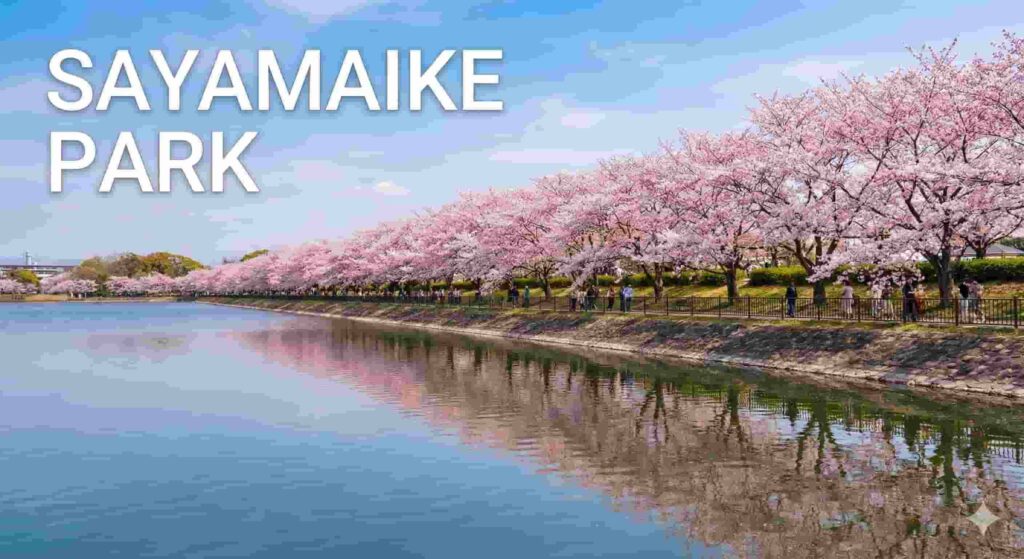
Best for: Architecture fans and early bloom seekers.
Surrounding the oldest dam-style pond in Japan, Sayamaike Park is a fusion of ancient history and modern design. The adjacent Sayamaike Museum was designed by world-renowned architect Tadao Ando, featuring his signature concrete aesthetic which contrasts beautifully with the soft organic shapes of the cherry trees.
- The Walk: A 2.85km path encircles the pond, lined with about 1,000 trees.
- Early Bloom: Famous for “Koshinohigan” cherries, this is one of the earliest spots in the prefecture to reach full bloom.
Key Details:
- Address: Iwamuro, Osakasayama City, Osaka
- Access from KIX: Approx. 1 hr via Nankai Line (transfer at Tengachaya).
- Blooming Period: Late March – Mid-April.
- Map: Google Maps Link
Part 2: Kyoto – The Traditional Heart of Japan
Kyoto’s cherry blossoms are best enjoyed with a sense of history. From riverside tunnels to ancient temples, these 5 spots define the “Old Capital” aesthetic.
6. Nanatanigawa (Yawaragi Road): The Hidden Tunnel
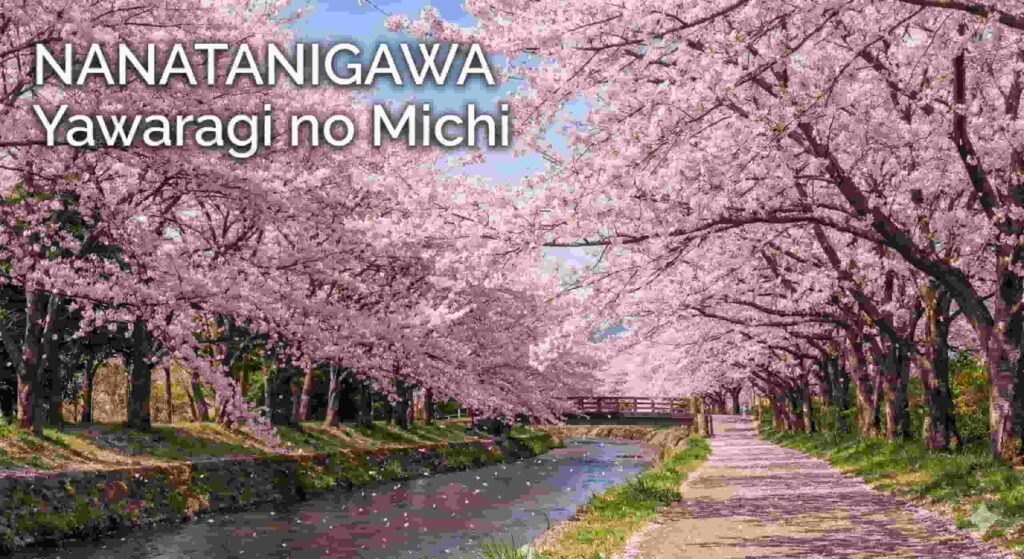
Best for: Outdoor lovers and those escaping the city center crush.
Located in Kameoka, just west of Kyoto City, this is the premier sakura spot in the Tamba region. Roughly 1,500 trees line the Nanatanigawa River for about 1 kilometer.
- The Immersion: When in full bloom, the trees create a complete roof over the walking path. It feels like walking through a pink cloud.
- Camping & BBQ: The adjacent park allows for outdoor activities, making it a distinct experience from the strict “no touching, no sitting” rules of some inner-city temples.
Key Details:
- Address: Chitose, Chitose-cho, Kameoka, Kyoto
- Access from KIX: 2 hr – 2.5 hr (Train to JR Kameoka Stn, then bus).
- Blooming Period: Late March – Early April.
- Map: Google Maps Link
7. Seimei Shrine: The Spiritual Power Spot
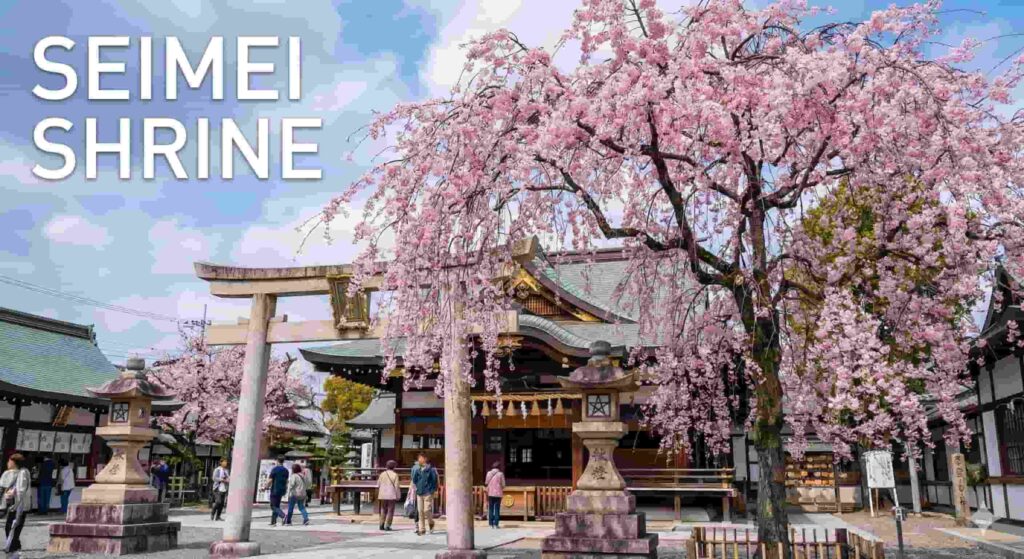
Best for: History enthusiasts and fans of Japanese folklore (Onmyoji).
Dedicated to Abe no Seimei, the Heian period’s most famous astronomer and diviner (Onmyoji), this shrine is a major “power spot.”
- The Aesthetic: While not a massive park, the juxtaposition of the mystical pentagram (Seimei Kikyo) crests and the delicate cherry blossoms is striking.
- Cultural Connection: The shrine has seen a surge in popularity due to figure skater Yuzuru Hanyu (who used Seimei’s theme) and anime/movie adaptations. The cherry blossoms here feel intimate and sacred.
Key Details:
- Address: 806 Seimei-cho, Kamigyo-ku, Kyoto
- Access from KIX: Approx. 1 hr 40 min via JR Kyoto Station & City Bus.
- Blooming Period: Late March – Early April.
- Map: Google Maps Link
8. Yodo Waterway (Yodo Ryokuchi): The Early Riser
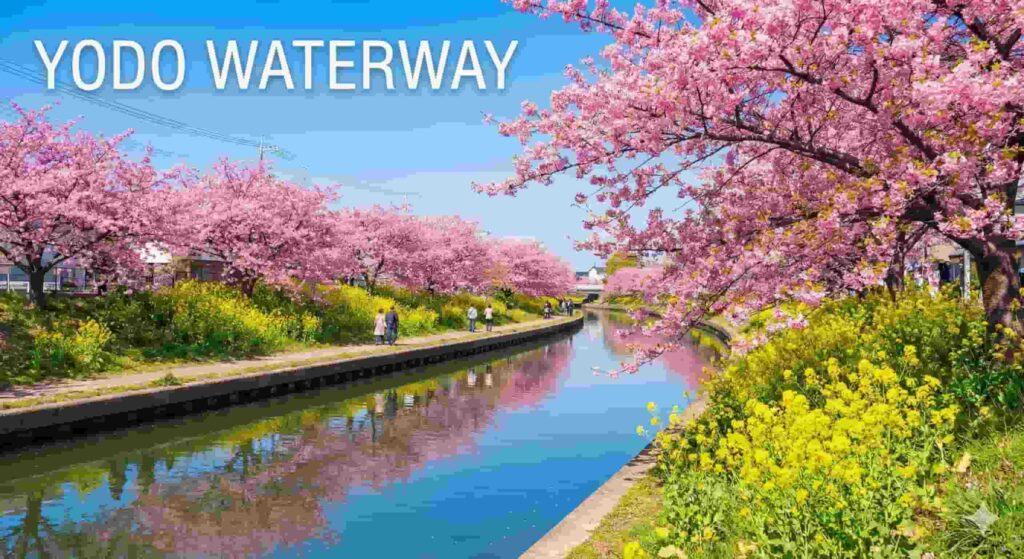
Best for: February/March travelers who think they missed the season.
If you arrive in early March, most of Kyoto will still be bare branches—except here. The Yodo Waterway is famous for Kawazu-zakura, a variety that blooms over a month earlier than the standard Somei Yoshino.
- The Contrast: The vibrant, deep pink of the Kawazu-zakura often blooms simultaneously with bright yellow nanohana (rapeseed flowers) along the bank. The pink and yellow contrast is visually stunning and rare in Kyoto.
- Crowd Factor: While gaining popularity, it is still less chaotic than Kiyomizu-dera or Arashiyama during peak season.
Key Details:
- Address: Yodo Kizucho, Fushimi-ku, Kyoto
- Access from KIX: Approx. 1 hr 30 min (Keihan Yodo Station).
- Blooming Period: Mid-Feb – Mid-March.
- Map: Google Maps Link
9. Sagano Romantic Train: The Scenic Journey
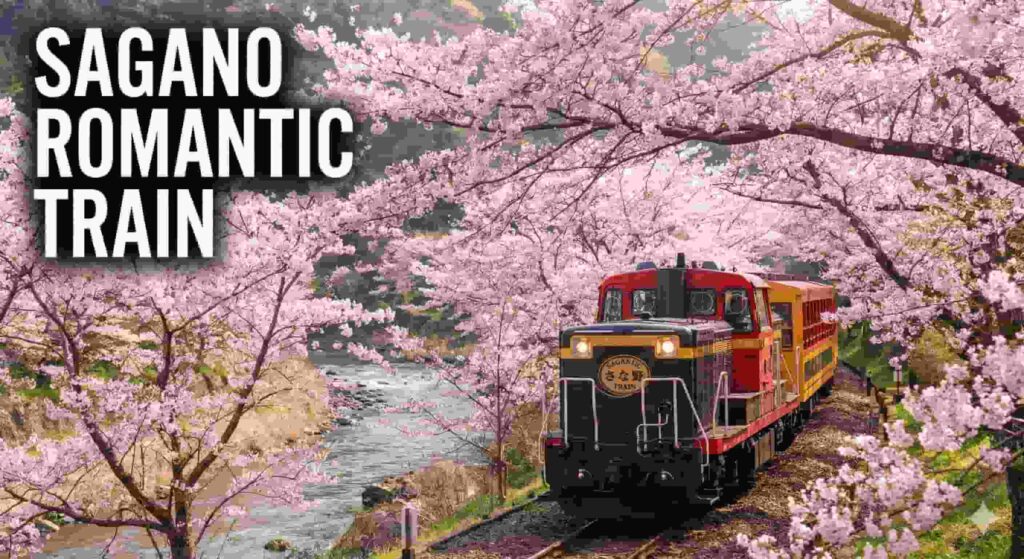
Best for: Couples and families wanting a moving panorama.
The Sagano Scenic Railway winds through the Hozukyo Ravine, connecting Arashiyama and Kameoka. This is not a walk; it is a 25-minute immersion into nature.
- The “Rich” Car: Try to book “The Rich” (Car No. 5). It has open windows and a glass ceiling, allowing you to see the 2,000 cherry trees that line the tracks and the mountain slopes without obstruction.
- The Tunnel: There are sections where the train passes through a literal tunnel of cherry blossoms—a moment where passengers collectively gasp in awe.
Key Details:
- Address: Saga Tenryuji Kurumamichicho, Ukyo-ku, Kyoto
- Access from KIX: Approx. 1 hr 30 min via JR Kyoto to Saga-Arashiyama.
- Blooming Period: Late March – Early April.
- Map: Google Maps Link
10. Daigoji Temple: The Historic Masterpiece
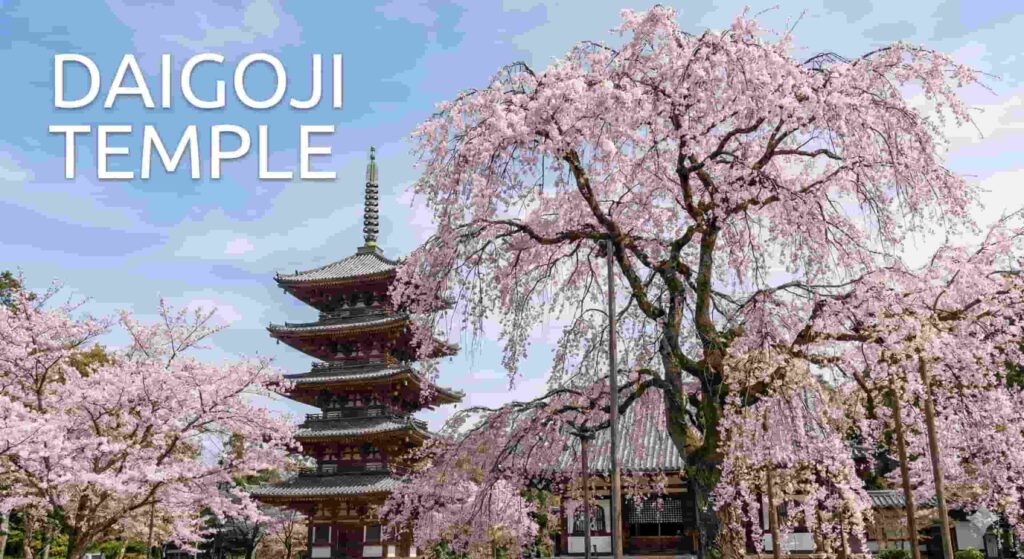
Best for: Seeing where the “Hanami” culture truly began.
Daigoji is a World Heritage Site with deep historical significance. In 1598, the warlord Toyotomi Hideyoshi held the famous “Daigo no Hanami,” a massive party that cemented the custom of cherry blossom viewing in Japanese culture.
- Variety: With 1,000 trees, including weeping cherries, huge ancient clones, and mountain cherries, the blooming period is long (about 3 weeks).
- The Iconic Shot: The Bentendo Hall on the island in the pond, framed by red autumn leaves or spring cherry blossoms, is one of the most recognized images of Kyoto.
Key Details:
- Address: 22 Daigo Higashioji-cho, Fushimi-ku, Kyoto
- Access from KIX: Approx. 1 hr 40 min via Subway Tozai Line (Daigo Stn).
- Blooming Period: Late March – Early April.
- Map: Google Maps Link
Practical Planning: Timing Your Visit
Understanding the “Sakura Front” (Cherry Blossom Forecast) is crucial. Blooms vary by year depending on the temperature in February and March.
Blooming Calendar (General Average)
| Location Type | Variety | Approx. Timing | Recommended Spot |
| Early Bloom | Kawazu-zakura | Late Feb – Mid March | Yodo Waterway (Kyoto), Tsurumi Ryokuchi (Osaka) |
| Peak Bloom | Somei Yoshino | Late March – Early April | Osaka Castle, Nanatanigawa, Sagano Train |
| Late Bloom | Yaezakura | Mid April | Osaka Mint Bureau, Daigoji Temple |
Traveler Tip: Always check the official “Sakura Weather Map” released by the Japan Meteorological Corporation starting in January for the most accurate dates.
Conclusion: Which City Should You Choose?
Both Osaka and Kyoto offer world-class viewing experiences, but the vibe is different.
- Choose Osaka if: You want a festive, energetic atmosphere. Osaka locals love to party under the trees (eating, drinking, and laughing). The parks are spacious, and the night illuminations are spectacular against the modern city skyline.
- Choose Kyoto if: You seek the romantic, traditional Japanese aesthetic. The combination of ancient wooden temples, stone paths, and falling petals is unmatched for emotional impact.
Our Recommendation: Do both. With only a 30-minute train ride separating these two cities, you can easily start your morning with a quiet walk in Kyoto’s Daigoji, and finish your evening with street food and beer under the illuminated trees of Osaka Castle.
Ready to Plan Your Spring Getaway?
Japan’s cherry blossom season is the busiest travel period of the year. Hotels in Osaka and Kyoto often sell out months in advance.
For those who want to know about spring weather!