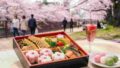












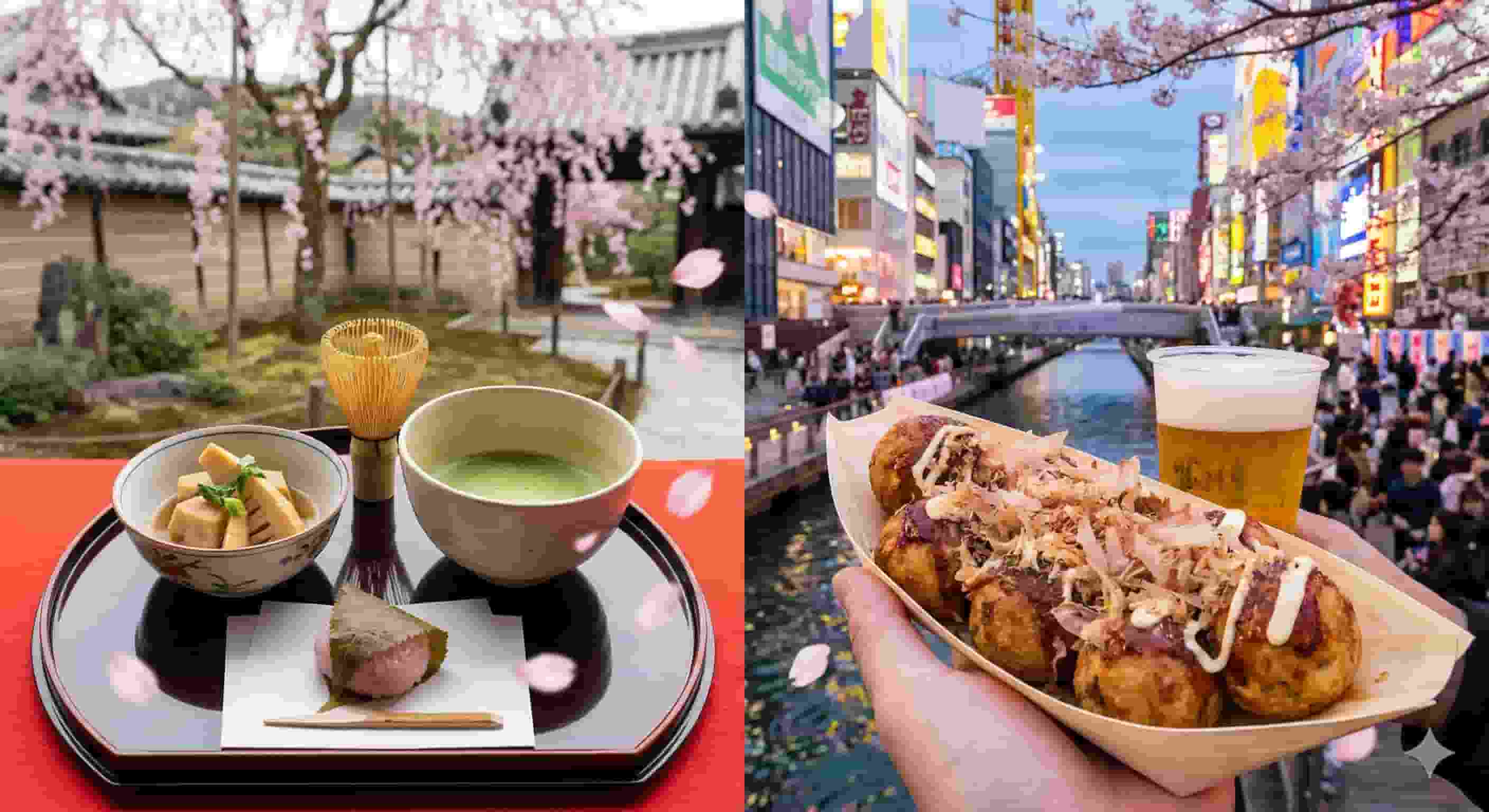
Japan does not merely observe the seasons; it tastes them.
If you are planning a trip to the Kansai region between March and May, you are arriving at the absolute peak of the culinary calendar. But here is the reality: most travelers get so distracted by the cherry blossoms that they miss the true essence of the trip—the food on their plate.
To truly experience this country, you must go beyond the standard sushi and ramen. You need to understand Japan’s seasonal food culture (known as Shun).
This is your ultimate Kyoto cherry blossom food guide and Osaka street food spring manifesto. Whether you are a serious foodie looking for the best spring dishes in Japan or a traveler wanting to know exactly what to eat while viewing the flowers, this guide is for you.
We are going to move beyond the guidebooks. In this comprehensive deep-dive, you will discover:
- The philosophy of eating ingredients at their peak flavor.
- The differences between refined Kyoto spring cuisine and hearty Osaka soul food.
- Two exclusive food-walking routes designed to help you eat your way through the season.
Stop watching the forecast. It’s time to explore the spring food of Kyoto and Osaka.
🌸 Planning a trip across Japan? This article focuses on Kyoto and Osaka, but the flavors change depending on where you are. Check out our Ultimate Japan Spring Food Guide for the complete list of seasonal specialties (Shun) across Tokyo, Kyoto, Osaka, and regional hidden gems.
- The Philosophy of Shun: Why Seasonality Matters
- Iconic Spring Foods in Kyoto: Elegance and Tradition
- Iconic Spring Foods in Osaka: The “Kuidaore” Spirit
- Route 1: The “Philosopher’s Palate” (Kyoto Food-Walking Route)
- Route 2: The “Castles & Crab” (Osaka Food-Walking Route)
- Hanami Etiquette: Eating Like a Local
- Conclusion
The Philosophy of Shun: Why Seasonality Matters
In Japan, “seasonal” isn’t a marketing buzzword; it is a rigid cultural imperative. Shun refers to the specific ten-day period when a vegetable or fish is at its peak nutrient content and flavor.
Eating shun ingredients is believed to bring the eater into harmony with nature. In spring, the flavors shift from the heavy, warming root vegetables of winter to ingredients that are bitter, budding, and vibrant.
- The Taste of Spring: Spring foods often feature a distinct bitterness (Sansai/mountain vegetables) which is said to “wake up” the body from its winter hibernation.
- The Visuals: Pinks (sakura), greens (budding leaves), and whites (whitebait) dominate the color palette.
Iconic Spring Foods in Kyoto: Elegance and Tradition
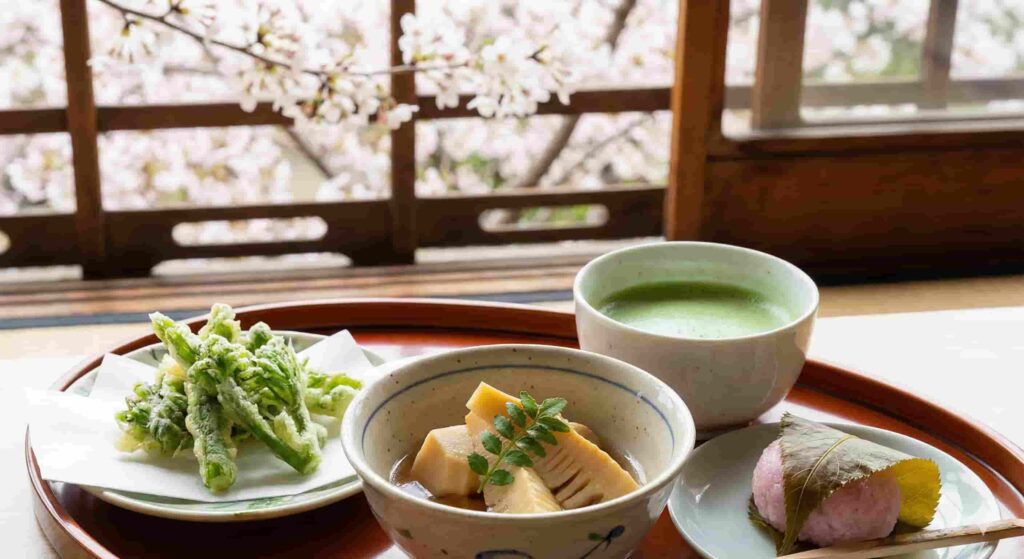
Kyoto, the ancient capital, offers a refined take on spring. Here, food is history. The focus is on vegetables, fresh water, and subtle flavors that reflect the surrounding mountains.
1. Takenoko (Bamboo Shoots)
If spring had a flavor in Kyoto, it would be Takenoko. Unlike the canned variety found abroad, fresh Kyoto bamboo shoots—particularly those from the Nishiyama district—are tender, sweet, and possess a texture akin to a crisp pear.
- How to eat it: Takenoko Gohan (bamboo shoot rice) or Wakametake (simmered bamboo shoots with wakame seaweed).
- Where to try it:
- Tosuiro (Tofu & Seasonal Kaiseki):https://tousuiro.com/en-home – While famous for tofu, their seasonal spring menu heavily features local bamboo shoots.
2. Kansai-Style Sakura Mochi
Be careful—Sakura Mochi is different depending on where you are in Japan. In Tokyo (Kanto), it resembles a crepe. In Kyoto and Osaka (Kansai), it is a coarse, sticky rice ball (made from Domyoji flour) filled with red bean paste and wrapped in a pickled cherry blossom leaf.
- The Experience: The saltiness of the pickled leaf contrasts perfectly with the sweet bean paste.
- Where to try it:
- Demachi Futaba: https://www.instagram.com/demachi_futaba/ (Unofficial Fan Page/Location Info) – Be prepared to queue. This is arguably the most famous mochi shop in Kyoto.
3. Kyonana (Kyoto Greens) and Sansai (Mountain Vegetables)
As the snow melts, wild greens sprout in the mountains surrounding Kyoto. Look for Fuki (butterbur), Tara no me (angelica tree shoots), and Kogomi (fiddlehead fern).
- How to eat it: Tempura is the best method, as the light batter and frying counteract the natural bitterness of the greens.
Iconic Spring Foods in Osaka: The “Kuidaore” Spirit
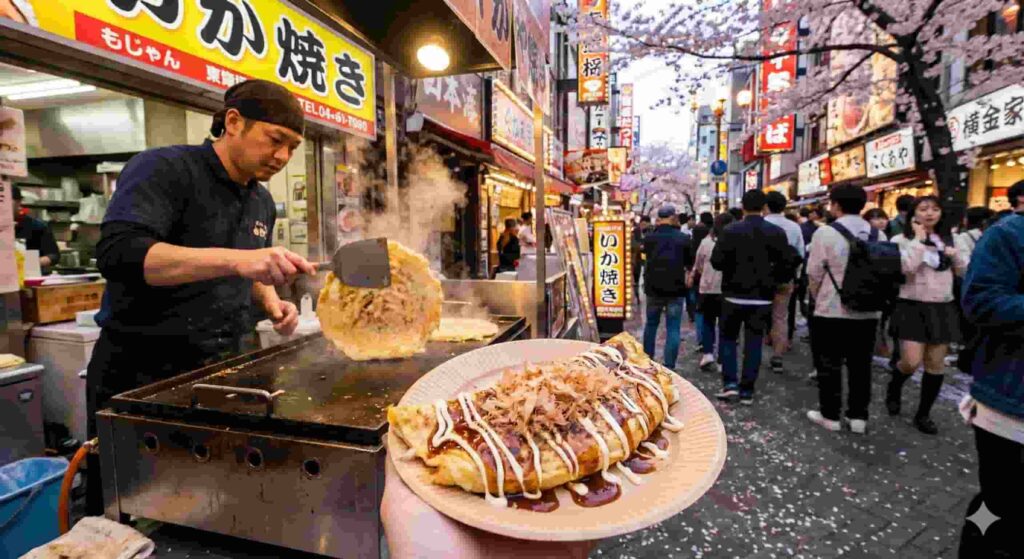
Osaka is the antithesis of Kyoto. It is loud, vibrant, and driven by Kuidaore—the concept of spending all your money on food until you drop. Spring in Osaka is hearty and flavorful.
1. Ikanago no Kugini (Simmered Sand Lance)
This is a hyper-regional spring delicacy. Tiny young sand lance fish are simmered in soy sauce, sugar, ginger, and mirin until they look like rusty nails (kugini). It sounds aggressive, but the taste is sweet, savory, and addictive. It is the definitive “taste of mom’s cooking” in Osaka spring.
- Where to buy it: Any Depachika (Department store basement food hall) in Umeda or Namba, such as Hanshin Department Store. https://www.hanshin-dept.jp/hshonten/
2. Spring Temari Sushi
Osaka is known for Oshizushi (pressed sushi), but in spring, presentation takes center stage. Small, ball-shaped sushi (Temari) topped with sea bream (Tai) or marinated cherry blossoms are popular for picnics.
- Where to try it:
- Endo Sushi (Central Market): https://www.endo-sushi.com/ – While famous for nigiri, their seasonal selection of spring fish like Sayori (Japanese halfbeak) is legendary.
3. Strawberry Daifuku
While available nationwide, Osaka has a massive sweet tooth for fruit mochi. A whole fresh strawberry wrapped in red bean paste and soft mochi. The acidity of the spring berry cuts through the sugar.
- Where to try it:
- Isshindo: https://www.issindo-osaka.com/ – Famous for their fruit daifuku, heavily featuring seasonal spring strawberries.
Route 1: The “Philosopher’s Palate” (Kyoto Food-Walking Route)
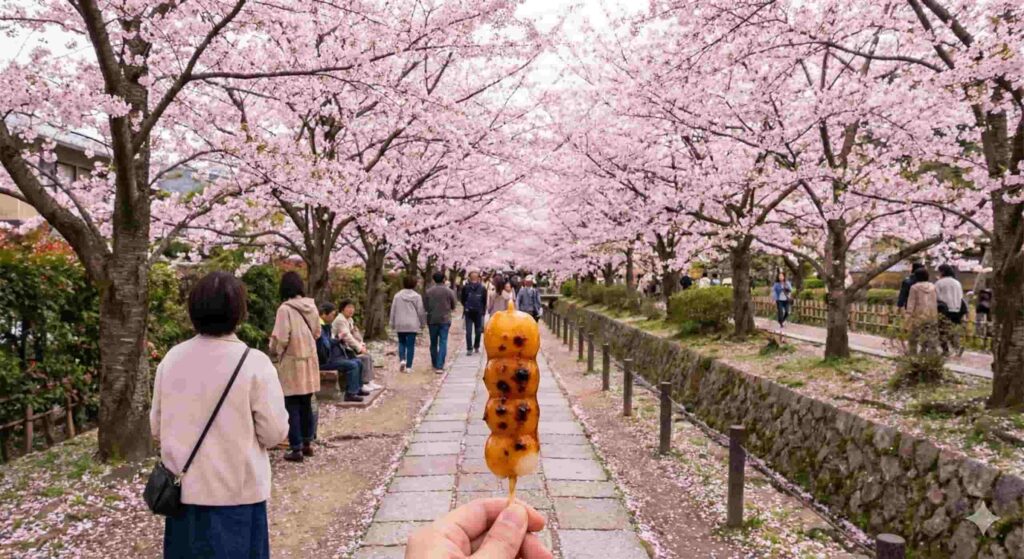
Theme: Quiet contemplation, temple gardens, and refined tofu/sweets. Best Time: Early April (Peak Sakura).
This route follows the famous Philosopher’s Path, a stone path along a canal lined with hundreds of cherry trees.
- Start: Keage Incline
- Begin at the abandoned sloping railway track lined with Yoshino cherry trees. It is a stunning photo spot.
- Stop 1: Nanzen-ji Temple & Yudofu Lunch
- Walk to the Nanzen-ji temple complex. This area is the birthplace of Yudofu (simmered tofu), a classic Kyoto comfort food perfect for the crisp spring air.
- Eat Here: Junsei. They serve elite-level tofu in a registered tangible cultural property garden. http://www.to-fu.co.jp/en/
- The Walk: The Philosopher’s Path (Tetsugaku no michi)
- Walk North along the canal. The cherry blossoms here form a pink tunnel.
- Snack Stop: Look for small vendors selling Mitarashi Dango (grilled rice dumplings with sweet soy glaze) or Matcha soft serve along the path.
- Stop 2: Ginkaku-ji (The Silver Pavilion)
- End the walk at this Zen temple.
- Stop 3: Tea Time at Omen
- Just near Ginkaku-ji is Omen, famous for its Udon, but in spring, their seasonal vegetable tempura (Sansai) accompanying the noodles is a must. https://www.omen.co.jp/en/
Note on Attire: This route involves about 2-3 hours of walking outdoors. Spring in Kyoto can be deceptively chilly, especially near the canal. Before you head out, make sure you are dressed appropriately by reading our [Japan Spring Weather Guide: What to Wear in March to May].
Route 2: The “Castles & Crab” (Osaka Food-Walking Route)
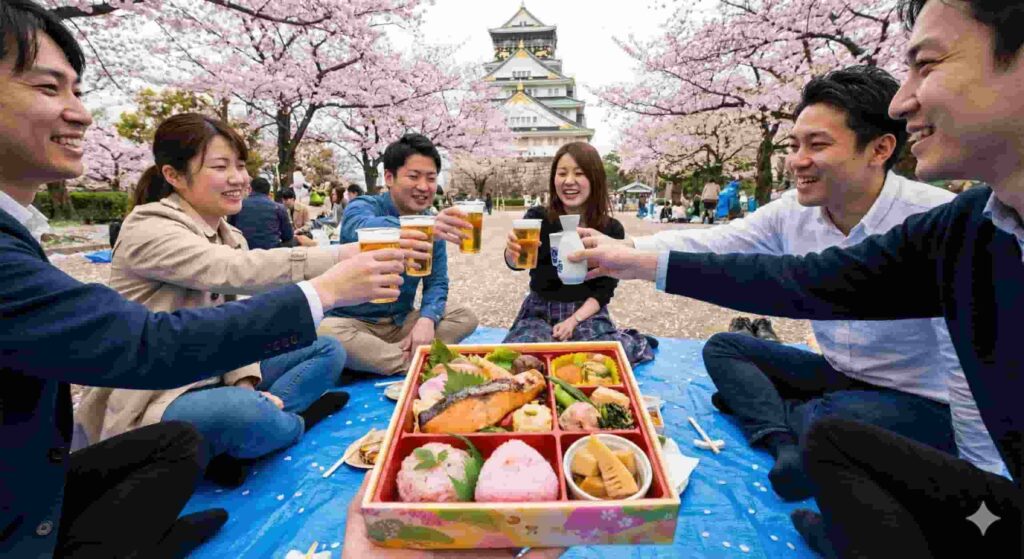
Theme: Grand picnics, history, and neon-lit street food indulgence. Best Time: Late March to Mid-April.
- Start: Osaka Castle Park (Nishinomaru Garden)
- This is the epicenter of Osaka’s Hanami (flower viewing). Thousands of locals gather here.
- Activity: Buy a Hanami Bento (seasonal lunchbox) at the station before entering. Many bento shops release limited edition “Spring Makunouchi” bentos featuring bamboo shoots and pink rice.
- Walk: Toward Tenmabashi
- Walk along the Okawa River. The riverbanks are lined with cherry blossoms and food stalls (Yatai).
- Eat Here: Grab Baby Castella (sponge cake bites) or Ikayaki (squid pancake) from a street stall.
- Transit: Take the subway or a taxi to the Dotonbori area (Namba).
- Stop: Dotonbori Street
- Arrive at the neon heart of Osaka.
- Eat Here: Kani Doraku. You know the place by the giant moving crab sign. In spring, they serve seasonal crab Kaiseki that is sweeter and lighter. Even grabbing grilled crab legs from their street stall is worth it. https://douraku.co.jp/
- Dessert: Rikuro Ojisan no Mise
- Finish with the jiggly Osaka cheesecake. It’s light, airy, and usually has a special spring branding during the season. http://www.rikuro.co.jp/en/
** Gamer’s Detour:** Osaka isn’t just about food; it’s also the hub for gaming culture. If the crowds at Dotonbori get overwhelming, or if you couldn’t get tickets to Universal Studios, check out our guide on the [Failed the Nintendo Lottery? ‘Plan B’ Gaming Course in Kyoto & Osaka] for some arcade action nearby.
Hanami Etiquette: Eating Like a Local
If you plan to sit under the trees (Hanami) in parks like Maruyama (Kyoto) or Osaka Castle Park, follow these unwritten rules:
- Shoes Off: If you step onto a blue tarp or picnic mat, take your shoes off, just as you would entering a home.
- Trash: Public trash cans are rare. You must carry your trash back to your hotel or find a designated dumping spot.
- Respect the Trees: Never shake a branch to make the petals fall. It is considered disrespectful to the spirit of the tree.
Knowing the etiquette is only half the battle; you also need to find the right park. To avoid the tourist traps and find the most photogenic locations for your picnic, check out our curated list of [Cherry Blossoms in Osaka and Kyoto: 10 Hanami Spots (2026)].
Conclusion
Spring in Kansai is a fleeting miracle. The cherry blossoms last only a week, and the freshest bamboo shoots are tender for only a few days. To visit Kyoto and Osaka during this season is to witness the transience of beauty, celebrated through the permanence of delicious tradition.
Whether you are sipping matcha on the Philosopher’s Path or devouring takoyaki under the neon lights of Dotonbori, you are participating in a ritual centuries in the making.
Your Next Step: Don’t just read about it—taste it. If you are ready to book your culinary adventure, check out our curated list of “Kyoto & Osaka Spring Food Tours” to secure a guide who can navigate the menus and hidden alleys for you.