














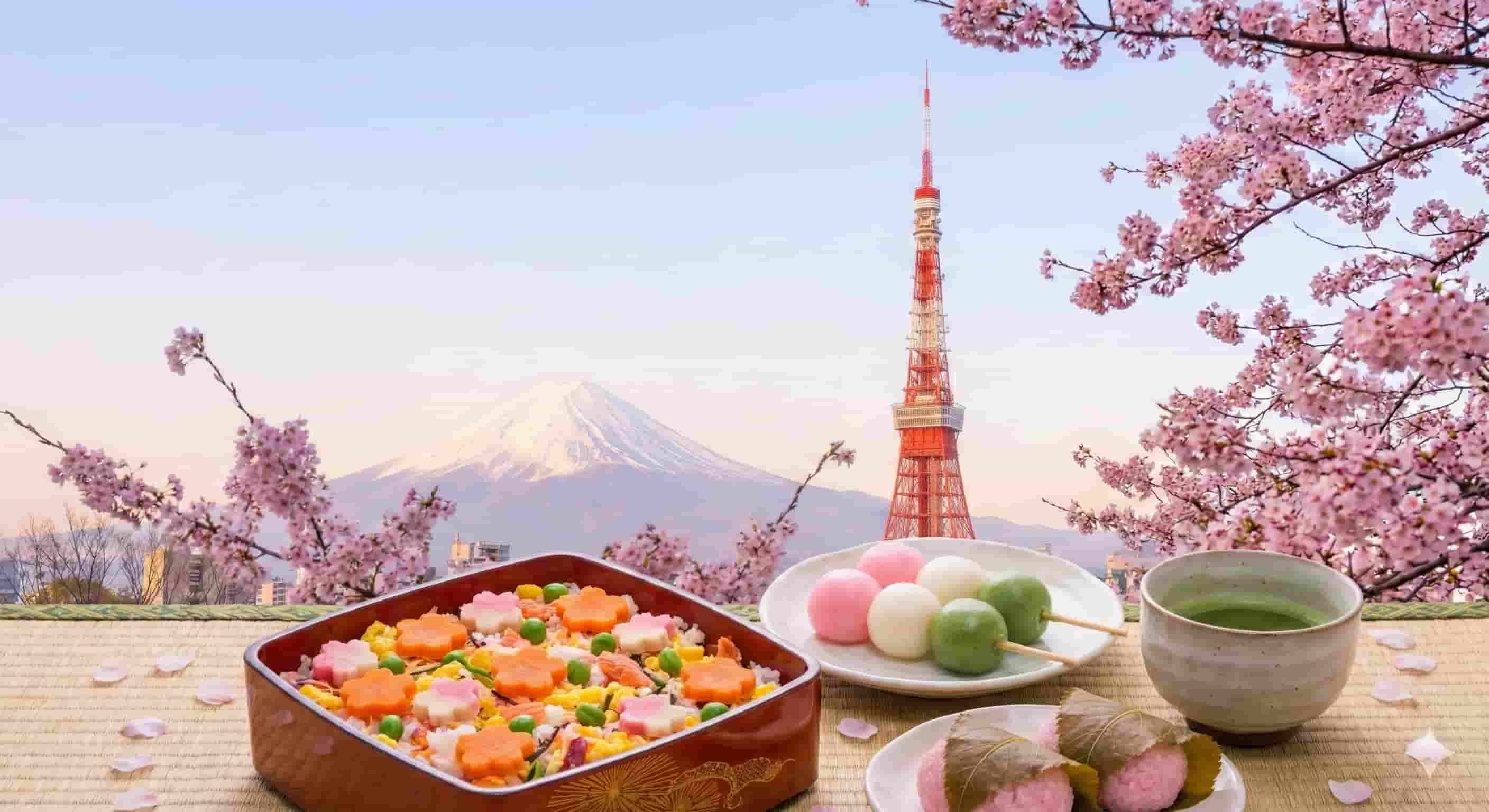
Let’s be real: your Instagram feed is about to be flooded with cherry blossoms. But while everyone else is fighting for the perfect photo angle at the Meguro River, they are missing the best part of the season.
If you visit Japan in March, April, or May and stick to year-round staples like standard ramen or convenience store egg sandwiches, you aren’t just missing out—you’re doing your trip wrong.
In Japan, food isn’t just fuel; it’s a calendar. This concept is called Shun (旬)—the fleeting moment when an ingredient hits its peak flavor. In spring, that flavor profile shifts from the bitter detox of mountain vegetables to the sweet snap of shellfish and sea bream.
This isn’t just another generic list. This is your strategic roadmap to the limited-edition, seasonal flavors that define Japan Spring Food. We are going to break down exactly what to eat in Tokyo, Kyoto, and Osaka so you don’t waste your stomach space on “tourist trap” meals.
Ready to upgrade your itinerary? Here is the definitive parent guide to eating your way through Sakura season.
(For deep dives into specific cities, check out our dedicated guides: Tokyo Spring Food Guide & Walking Routes and Spring Food Kyoto Osaka Guide)
The Philosophy of Spring: “Bitterness for Spring”
There is a Japanese saying: “Spring is for bitterness, Summer is for vinegar, Autumn is for spicy, Winter is for oil.” Spring foods, particularly vegetables, are often characterized by a distinct, earthy bitterness. This is not accidental. Traditional Eastern medicine suggests that this bitterness helps detoxify the body, stimulating the metabolism after months of hibernation and heavy winter stews. As you eat your way through Japan, look for this sophisticated flavor profile—it is the taste of nature waking up.
Planning the rest of your trip? This article is just one part of the season. To get the full picture—including the 2026 Cherry Blossom Forecast, Golden Week survival tips, and Skiing advice—check out my main guide:
👉 Read the Ultimate Guide to Spring in Japan 2026
Tokyo: The Metropolitan Spring Table
Tokyo is where tradition meets innovation. The capital draws the best ingredients from all over Japan, but it also retains its own Edo-mae (Edo-style) culinary heritage. The spring food scene here is fast-paced, with seasonal menus appearing in convenience stores and Michelin-starred counters alike.
Read our in-depth regional guide here: Tokyo Spring Food Guide & Walking Routes
1. Edo-Mae Sushi: Hatsugatsuo (The First Bonito)
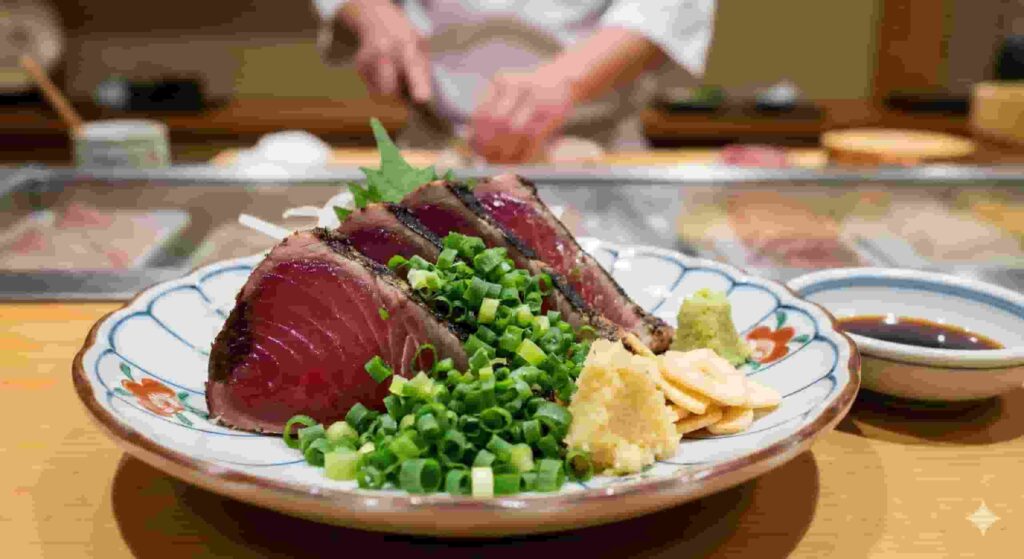
In the Edo period, it was said that a man would pawn his wife’s kimono just to taste the Hatsugatsuo (the first catch of bonito in spring). This fish is the obsession of Tokyoites. Unlike the fatty bonito of autumn, spring bonito is lean, clean, and incredibly fresh. It is typically served tataki style—seared on the outside, raw inside, and garnished with heaps of spring garlic, ginger, and scallions to complement its iron-rich flavor.
🍴Warayakiya Roppongi (わらやき屋 六本木)
📍 https://maps.app.goo.gl/TokyoWarayakiya
This restaurant specializes in “Warayaki” (straw-grilled) cuisine, the traditional way to prepare Katsuo. You can watch the chefs sear the fresh spring bonito over massive straw flames, imparting a smoky aroma that perfectly complements the lean, iron-rich fish.
2. Sakura Mochi (Kanto Style)
You cannot speak of Tokyo spring without mentioning Sakura Mochi. However, travelers are often confused because there are two types. The Tokyo (Kanto) style, known as Chomeiji, resembles a small crepe or pancake. It is made from flour, dyed pale pink, rolled around smooth red bean paste (koshian), and wrapped in a salted, pickled cherry leaf. The contrast between the sweet bean paste and the salty, floral leaf is the defining flavor of the season.
🍴Chomeiji Sakura Mochi (長命寺 桜もち)
📍https://maps.app.goo.gl/ChomeijiSakuraMochi
The birthplace of the Kanto-style Sakura Mochi. Located near the Sumida River, they have been serving their signature crepe-style mochi wrapped in three salted cherry leaves since 1717.
Kyoto & Osaka: The Soul of Kansai Cuisine
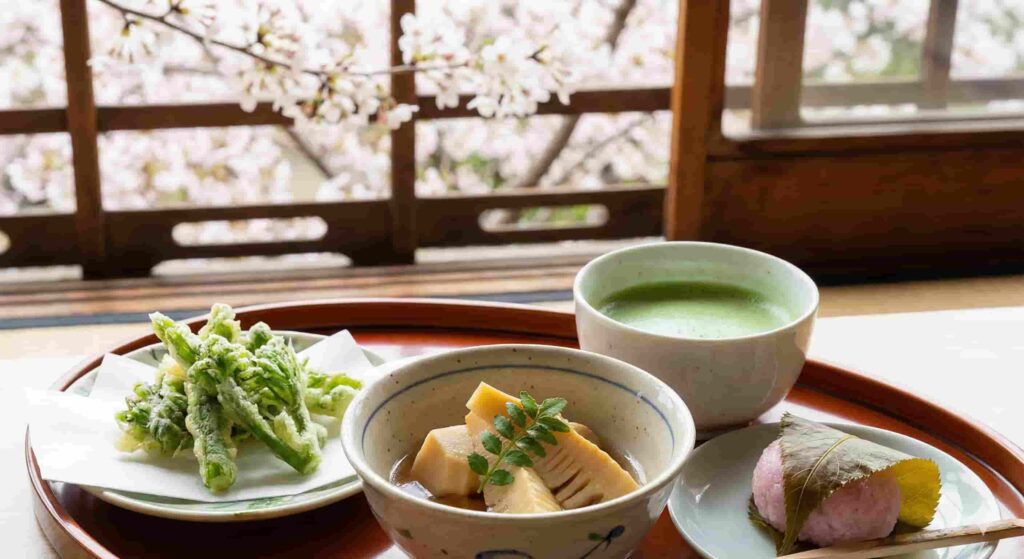
Heading west to the Kansai region, the food culture shifts dramatically. Kyoto focuses on the subtle, natural flavors of ingredients rooted in imperial history, while Osaka is the kitchen of the nation, focusing on hearty, flavorful dishes that celebrate the harvest.
Discover the full list of recommendations here: Spring Food Kyoto Osaka Guide
Kyoto: Refined Elegance
1. Takenoko (Bamboo Shoots)
If Tokyo is about fish, Kyoto is about vegetables. The undisputed king of Kyoto spring is Takenoko. Grown in the soft, tended soil of the Kyoto hills, these bamboo shoots are harvested in the early morning before they break the surface. They are so tender they can sometimes be eaten raw (sashimi style), but are most commonly simmered in dashi (Tosani) or cooked with rice (Takenoko Gohan). The texture is crisp yet yielding, with a flavor like sweet corn and earth.
🍴Uosaburo (魚三楼)
📍 https://maps.app.goo.gl/UosaburoKyoto
A historic Ryotei (traditional upscale restaurant) in the Fushimi district, established over 250 years ago. In spring, they offer exquisite kaiseki courses featuring fresh morning-harvested bamboo shoots from the nearby Kyoto hills.
2. Sakura Mochi (Kansai Style)
Kyoto has its own version of the pink treat, called Domyoji. Unlike the Tokyo crepe style, the Kansai version is made from coarsely crushed sticky rice. It has a chewy, textured consistency similar to an onigiri (rice ball) but is sweet and sticky. Wrapped in the same salted cherry leaf, it offers a more substantial mouthfeel that many travelers prefer.
🍴Tsuruya Kotobuki (鶴屋寿)
📍https://maps.app.goo.gl/TsuruyaKotobuki
Famous for their white, salted Sakura Mochi, this shop in Arashiyama captures the essence of Kyoto style. The sticky Domyoji rice provides a delightful texture that contrasts with the salty cherry leaf.
Osaka: The “Kuidaore” Spirit
1. Ikanago no Kugini (Simmered Sand Eels)
A true harbinger of spring in Osaka and neighboring Hyogo is Ikanago. These tiny sand eels are harvested in late February and March. Local grandmothers simmer pounds of them in soy sauce, sugar, ginger, and mirin until they glaze over and curl up, resembling rusty nails (hence the name kugini, or “boiled nails”). It is a salty-sweet delicacy eaten over white rice that you will find in every Osaka supermarket and department store basement (depachika).
🍴Oguraya Yamamoto Main Store (小倉屋山本 本店)
📍 https://maps.app.goo.gl/OgurayaYamamoto
While Ikanago no Kugini is typically a side dish eaten at home, this prestigious shop is the perfect place to buy the authentic version. Their high-quality simmered sand eels make for a savory souvenir or a hotel-room snack with rice balls.
2. Spring Cabbage Okonomiyaki
Osaka’s soul food, Okonomiyaki, gets a seasonal upgrade in March. Haru-kyabetsu (spring cabbage) hits the markets, which is sweeter, softer, and fluffier than winter cabbage. Savvy Okonomiyaki chefs use this loose-leafed cabbage to create pancakes that are lighter and sweeter than usual, often pairing it with spring onions and cherry blossom shrimp (sakura ebi).
🍴Mizuno (美津の)
📍 https://maps.app.goo.gl/MizunoOkonomiyaki
A legendary Dotonbori restaurant that uses high-quality ingredients. During spring, the natural sweetness of the seasonal cabbage shines through in their “Yamaimo-yaki” (flourless yam pancake), creating an incredibly fluffy texture.
Beyond the Golden Route: Regional Spring Gems
While Tokyo, Kyoto, and Osaka garner the spotlight, the “elite” food traveler knows that some of the best spring delicacies are found in the regions.
1. Toyama: Hotaru Ika (Firefly Squid)
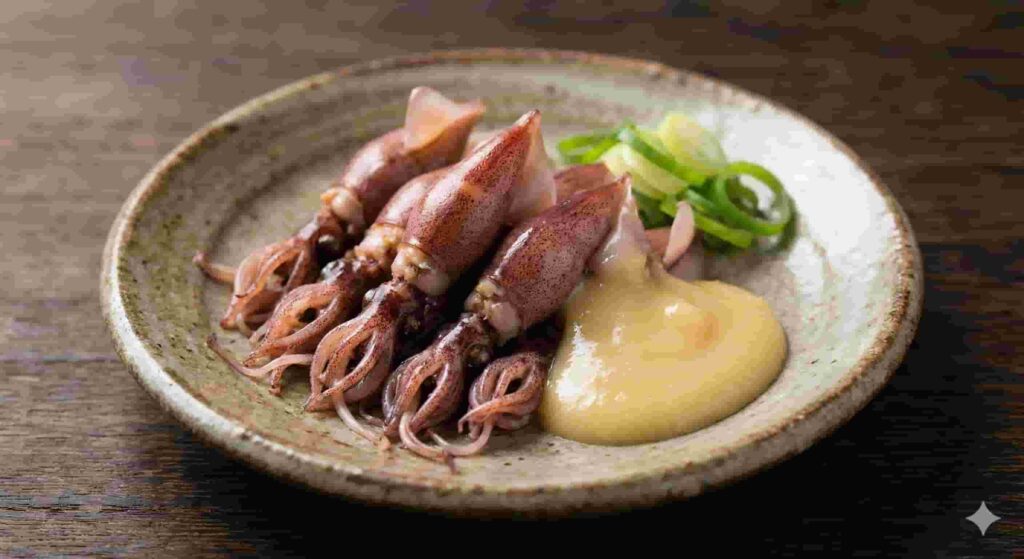
In the springtime waters of Toyama Bay, millions of tiny bioluminescent squid rise to the surface. These are Hotaru Ika. They are tiny—bite-sized—and packed with rich, oceanic umami. They are best eaten boiled with a vinegared miso sauce (sumiso). The creamy insides of the squid paired with the tangy miso is a flavor bomb that pairs perfectly with sake.
🍴Panorama Restaurant Kosai (Hotaruika Museum)
📍https://maps.app.goo.gl/HotaruikaMuseum
Located inside the Firefly Squid Museum in Namerikawa, this restaurant offers the freshest possible Hotaru Ika. You can enjoy a full course of firefly squid dishes while overlooking the very bay where they are caught.
2. Fukuoka: Amaou Strawberries
Japanese strawberries are legendary, and the “Amaou” variety from Fukuoka is the jewel in the crown. The name is an acronym for Akai (Red), Marui (Round), Ookii (Big), and Umai (Delicious). Available from winter through May, they are at their sweetest in early spring. You will find them atop parfaits, inside daifuku mochi, or sold in luxury gift boxes.
🍴Campbell Early (キャンベル・アーリー)
📍 https://maps.app.goo.gl/CampbellEarlyFukuoka
A popular fruit parlor located in Hakata Station. They are famous for their massive seasonal parfaits, which are piled high with locally grown, ruby-red Amaou strawberries during the spring season.
3. Hokkaido: Green Asparagus
As the snow finally melts in the north around May, Hokkaido produces some of the world’s finest green asparagus. Unlike the thin spears found elsewhere, Hokkaido asparagus is thick, juicy, and intensely sweet. It is often grilled simply with butter and soy sauce or served as tempura.
🍴Restaurant Asperges (レストラン・アスペルジュ)
📍 https://maps.app.goo.gl/RestaurantAsperges
A Michelin-starred restaurant in Biei, Hokkaido, literally named after asparagus. They serve French-inspired cuisine using vegetables harvested from the surrounding fields, with the green asparagus being the star attraction in late spring.
The “Must-Eat” Categories of Spring
To ensure you don’t miss anything, keep this checklist of ingredients handy. If you see these on a menu, order them immediately.
Sansai (Mountain Vegetables)
These are foraged wild plants. They are rare, expensive, and difficult to prepare at home, making them a treat at restaurants.
- Fuki (Butterbur): Crunchy stalks often simmered in dashi.
- Tara-no-me (Angelica Buds): The “King of Sansai,” almost always served as tempura.
- Warabi (Bracken): Fern-like shoots with a sticky texture, often found in soba noodles.
🍴Sojiki Nakahigashi (草喰 なかひがし)
📍 https://maps.app.goo.gl/SojikiNakahigashi
One of the most famous restaurants in Japan for “Tsumikusa” (freshly picked) cuisine. The chef forages for wild mountain vegetables (Sansai) every morning to create a deeply seasonal and spiritual dining experience.
Shellfish
Spring tides bring the best shellfish.
- Asari (Littleneck Clams): Essential for miso soup or steamed with sake (Sakamushi).
- Hamaguri (Hard Clams): Larger clams often served in clear soups for Girls’ Day (Hinamatsuri) in March.
🍴Monzenchaya (門前茶屋)
📍 https://maps.app.goo.gl/Monzenchaya
Located in the Fukagawa area, this restaurant is famous for Fukagawa-meshi, a traditional fisherman’s dish of short-neck clams (Asari) steamed with rice. It is the ultimate way to enjoy the briny depth of spring shellfish.
Sea Bream (Sakuradai)
Red Sea Bream (Tai) spawned in spring turn a beautiful pink color and are known as Sakuradai. The fish is fattier and richer during this season. It is often eaten as sashimi or Tai-meshi (steamed whole with rice).
🍴Ginza Asami (銀座あさみ)
📍 https://maps.app.goo.gl/GinzaAsami
A highly regarded kaiseki restaurant in Ginza known for its Sea Bream Chazuke (Tai-chazuke). The rich sesame sauce pairs perfectly with the fresh spring sea bream (Sakuradai), making for a luxurious yet comforting lunch.
Conclusion
Eating in Japan during spring is about more than just sustenance; it is about synchronizing yourself with the season. Whether you are biting into a crisp bamboo shoot in Kyoto, savoring the salty tang of a preserved cherry leaf in Tokyo, or enjoying the street food hustle of Osaka, you are participating in a culinary tradition that values the fleeting moment.
Don’t stick to the standard year-round menus. Ask the chef for “Shun no mono” (seasonal things), and you will be rewarded with the true taste of Japan.
Next Step: Are you ready to plan your culinary walking route? Start by exploring our specific city guides to map out your meals: