









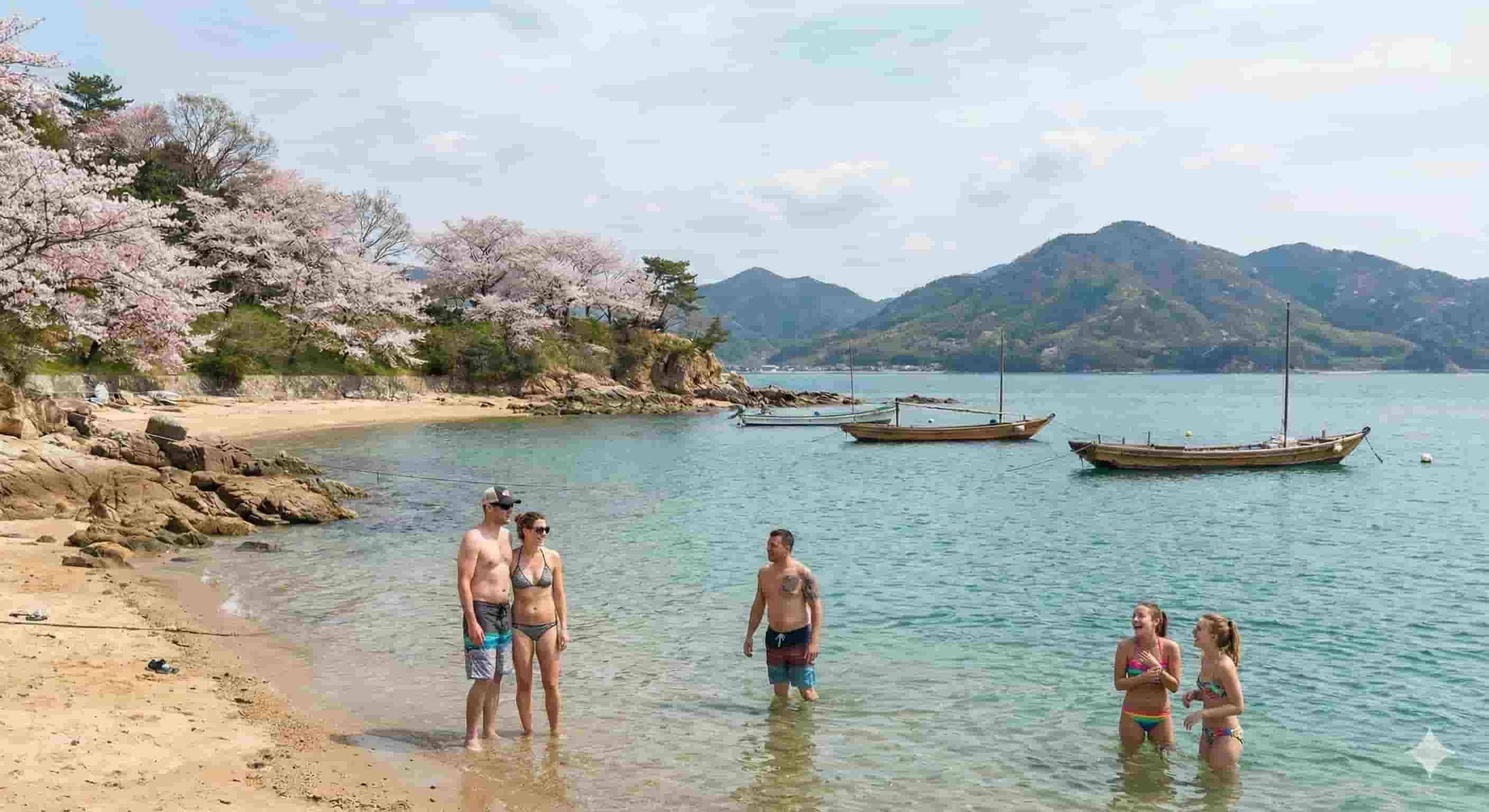
While the world turns its eyes to Tokyo and Kyoto for the cherry blossoms (sakura), a different kind of magic is happening in the southern reaches of the Japanese archipelago. While mainland Japan is still shaking off the winter chill, the sub-tropical islands are throwing open their doors to summer.
The short answer is: Yes, you can swim in Japan in spring. But you need to know exactly where to go.
Spring (March to May) is arguably the “Golden Era” for Japanese beach travel. It is the sweet spot before the humid rainy season and the typhoon risks of late summer. However, not all beaches are created equal. To find swimmable waters, you must venture to the Sakishima Islands (Miyako and Ishigaki) in the southwest of Okinawa, or the remote Ogasawara Islands, located 1,000km south of Tokyo.
This comprehensive guide will break down the specific climates, water qualities, and unique cultures of these three paradises, helping you decide which “early summer” escape is right for you.
How about skiing for people who can’t stand the heat?
Spring Skiing Japan: Where to Find the Best Snow from March to May
- The Reality of Spring Swimming: Temperature & “Umi-biraki”
- 1. Miyako Island (Okinawa): The “Miyako Blue” Phenomenon
- 2. Ishigaki Island (Okinawa): The Jungle & Culture Hub
- 3. Ogasawara Islands (Tokyo): The “Galapagos of the East”
- The Verdict: Miyako vs. Ishigaki (Diagnostic Test)
- 3-Day Spring Itineraries
- Critical Planning Advice: The “Spring Gap” Strategy
- Conclusion
The Reality of Spring Swimming: Temperature & “Umi-biraki”
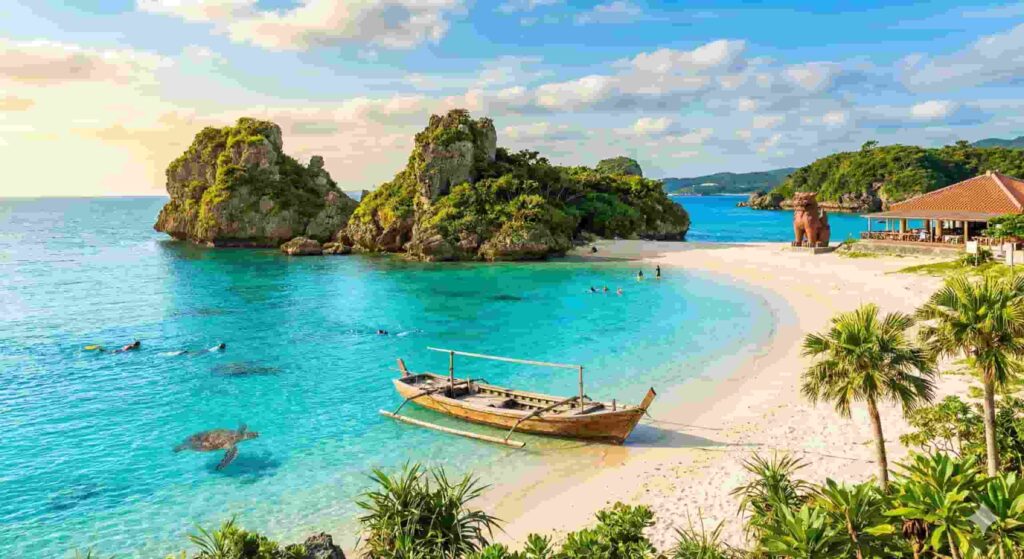
Before booking your flight, it is crucial to manage expectations regarding water temperature and local customs.
What is “Umi-biraki”?
In Japan, the official start of the swimming season is marked by a ceremony called Umi-biraki (Sea Opening). In the Sakishima Islands (Miyako and Ishigaki), this typically occurs in late March to early April. This is significantly earlier than the mainland, where beaches don’t open until July.
The Water Temperature Reality Check
While the air is warm, the ocean has a thermal lag.
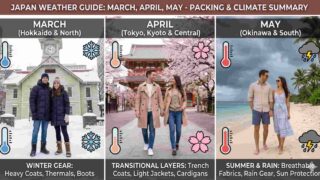
- March: Water temperature is approx. 22°C – 23°C (71°F – 73°F). This is refreshing but can feel chilly after 15 minutes.
- April: Temperatures rise slightly; comfortable for sunny days.
- May: The water reaches a pleasant 24°C – 26°C (75°F – 79°F).
Pro Tip: For March and early April trips, packing a rash guard or a thin wetsuit (2mm) is highly recommended. It allows you to snorkel for hours without getting cold, unlike swimming in just a bikini or boardshorts.
1. Miyako Island (Okinawa): The “Miyako Blue” Phenomenon
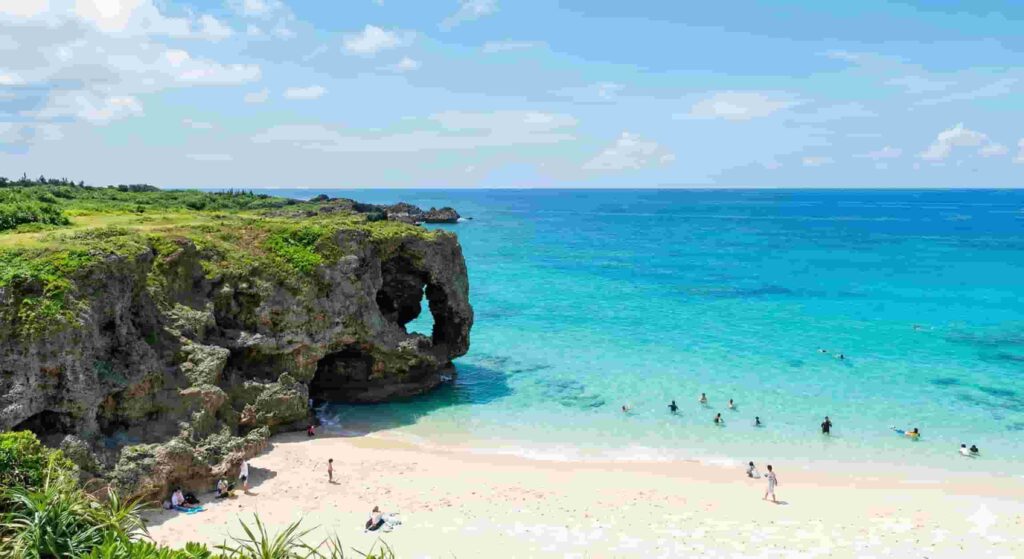
If your priority is crystal-clear water that rivals the Maldives, Miyako Island (Miyakojima) is your destination.
The Science Behind “Miyako Blue”
Miyako Island boasts water clarity that is often cited as the best in Japan, dubbed “Miyako Blue.”
- Geology: The island is formed from raised coral reefs.
- No Mountains: Unlike other islands, Miyako is flat. There are no mountains or rivers, meaning no soil or sediment runs off into the ocean when it rains. This keeps the water pristinely clear year-round.
Spring Highlights in Miyako
- Yonaha Maehama Beach: Often voted the best beach in the Orient. In spring, the blinding white sand contrasts beautifully with the soft sunlight.
- The Three Great Bridges: Miyako is connected to three smaller islands by massive bridges (Irabu, Kurima, and Ikema). Driving across these bridges offers a sensation akin to flying over the ocean.
Comparison: If you love the Florida Keys (USA), you will love Miyako Island. Just like the Keys, Miyako is defined by flat terrain, a relaxed atmosphere, and a series of spectacular bridges connecting islands over shallow, turquoise waters. It’s less about nightlife and more about the “blue.”
2. Ishigaki Island (Okinawa): The Jungle & Culture Hub
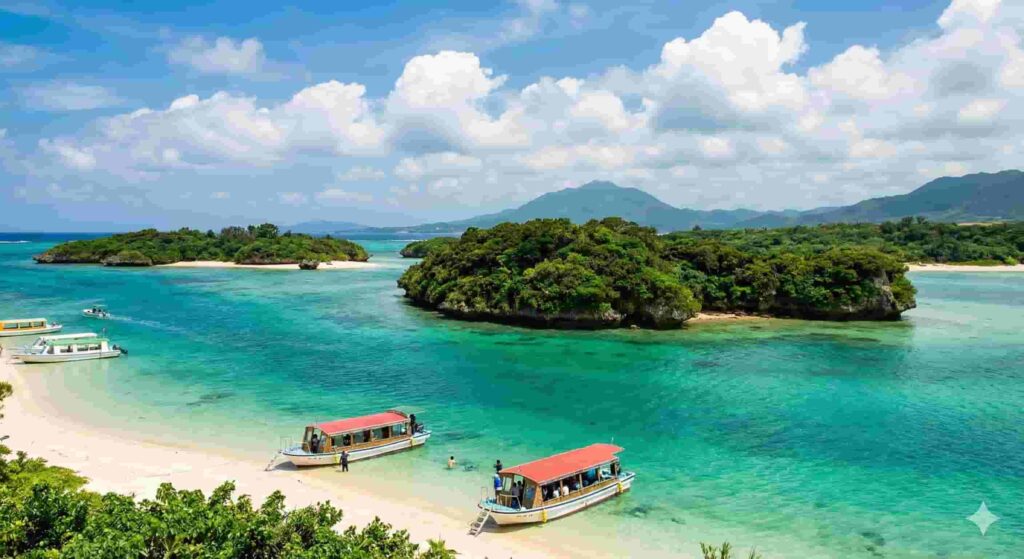
Ishigaki is the gateway to the Yaeyama Islands. It offers a rugged, adventurous contrast to the flat beauty of Miyako.
A Mix of Green and Blue
Unlike Miyako, Ishigaki has mountains, including Mt. Omoto. This topography creates a lush, subtropical jungle environment.
- Adventure: Spring is perfect for trekking and mangrove kayaking, as it isn’t sweltering hot yet.
- Manta Rays: Kabira Bay and nearby spots are famous for Manta Ray encounters. Spring is a prime season for divers hoping for a sighting.
The Starry Sky Sanctuary
The Iriomote-Ishigaki National Park is designated as an International Dark Sky Park. In spring, after a day of swimming, you can view the Southern Cross, which is visible only from this latitude in Japan.
Comparison: If you love Kauai (Hawaii), you will love Ishigaki Island. Like the “Garden Isle,” Ishigaki offers a dramatic contrast between deep green mountains and the ocean. It retains a rustic, local culture—red-tiled roofs and traditional weaving—much like the plantation-era charm found in parts of Hawaii.
3. Ogasawara Islands (Tokyo): The “Galapagos of the East”
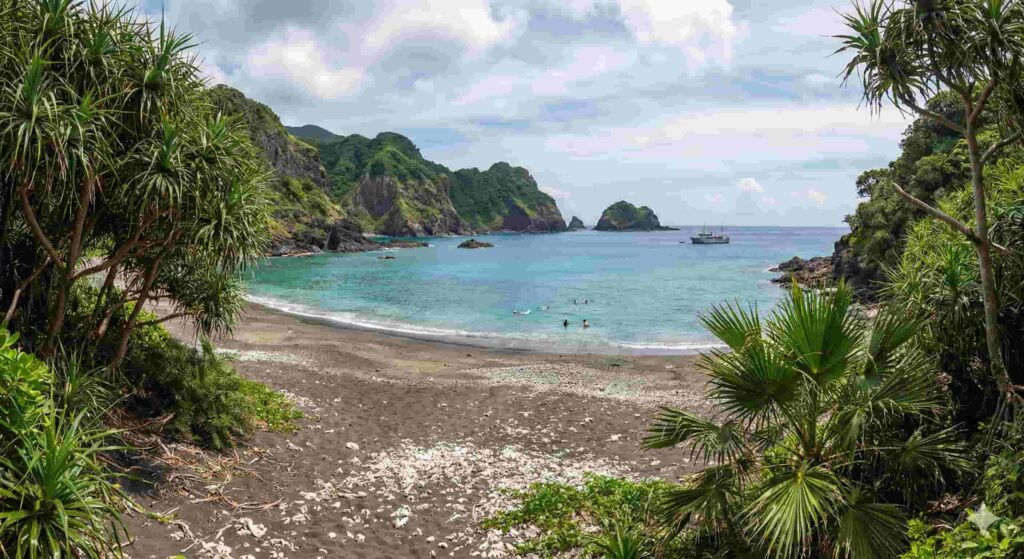
For the true explorer, there are the Ogasawara Islands (Bonin Islands). Though technically part of Tokyo, they are a 24-hour ferry ride south.
“Bonin Blue” and Deep Waters
The water here is a deep, sapphire navy known as “Bonin Blue.” Unlike the shallow coral shelves of Okinawa, the ocean floor drops steeply around Ogasawara. This means you can see large pelagic fish and dolphins just off the coast.
Spring Exclusives: Whale Watching
Spring coincides with the breeding season of Humpback Whales.
- The Song: You can often hear the whale “songs” underwater while snorkeling.
- Weather: Spring air is comfortable, making the hiking trails to the island’s peaks enjoyable.
Comparison: If you dream of the Galapagos Islands (Ecuador), Ogasawara is the Japanese equivalent. Having never been connected to the mainland, the flora and fauna here have evolved uniquely. Strict eco-tourism rules protect this World Heritage site, appealing to nature lovers who don’t mind the difficult access.
The Verdict: Miyako vs. Ishigaki (Diagnostic Test)
Can’t decide between the two accessible Okinawan options? Use this diagnostic checklist to find your perfect match.
Type A: The “Miyako Island” Traveler
- [ ] You want to stare at the bluest water possible all day.
- [ ] You prefer driving scenic roads over hiking mountains.
- [ ] You want a luxury “staycation” in a high-end villa.
- [ ] You dislike boats and prefer bridges.
- [ ] Keywords: #UltimateRelaxation #Luxury #Driving #MiyakoBlue
Your Trip: You are seeking visual impact and relaxation. Miyako offers a high-end, slow-paced holiday where the ocean is the protagonist.
- Action: Rent a convertible and drive the Irabu Bridge. Stay at the Miyakojima Tokyu Hotel & Resorts right on Maehama Beach.
Type B: The “Ishigaki Island” Traveler
- [ ] You want variety: beaches, jungles, and mangroves.
- [ ] You want to go Island Hopping (ferry to Taketomi or Iriomote).
- [ ] You enjoy nightlife, local food markets, and drinking Awamori in lively izakayas.
- [ ] You need a “Rainy Day Plan B” (crafts, shopping).
- [ ] Keywords: #Adventure #IslandHopping #Culture #Active
Your Trip: You are a restless explorer. Ishigaki is a “hub.” You can stay in the city, enjoy the nightlife, and take day trips to wilder islands like Iriomote (the jungle island) or Taketomi (the traditional village).
- Action: Stay at Fusaki Beach Resort for a mix of beach and pool access. Take the ferry to Taketomi Island for a water buffalo cart ride.
3-Day Spring Itineraries
To help you visualize your trip, here are optimized itineraries for a spring getaway.
Option 1: Miyako Island – The “Blue Drive” & Luxury Cafe Tour
Perfect for couples and photographers.
- Day 1: The Longest Bridge & Sunset
- Arrival: Pick up a rental car.
- Drive: Cross the Irabu Bridge (3,540m). It’s free and offers 360-degree ocean views.
- Stop: “17END” – a man-made beach with incredibly clear water. Grab a mango smoothie at a nearby food truck.
- Sunset: Sunayama Beach (famous for its rock arch).
- Day 2: The Phantom Continent
- Morning: Book a boat tour to Yabiji. This is Japan’s largest coral reef group, and during spring tides, it emerges above the water like a phantom continent.
- Afternoon: Cross the Kurima Bridge. Explore stylish pottery shops and cafes.
- Dinner: Okinawan Wagyu beef BBQ.
- Day 3: The Orient’s Best Beach
- Morning: Relax at Yonaha Maehama Beach. The sand is like powder.
- Lunch: Traditional Miyako Soba noodles before heading to the airport.
Option 2: Ishigaki Island – Fireflies & Island Hopping
Perfect for families and active groups.
- Day 1: Michelin Views & Hidden Lights
- Arrival: Head straight to Kabira Bay. Take a glass-bottom boat (swimming is prohibited here due to currents, but the view is world-class).
- Evening (March-April Only): Join a Yaeyama Himebotaru (firefly) tour. Thousands of tiny fireflies light up the forest floor at dusk—a magical spring exclusive.
- Day 2: Time Travel on Taketomi Island
- Morning: Take a 15-minute ferry to Taketomi Island.
- Activity: Ride a water buffalo cart through the village of red-tiled roofs and coral walls.
- Beach: Cycle to Kondoi Beach. It is shallow and perfect for wading in spring.
- Day 3: Jungle & Souvenirs
- Morning: Quick kayak tour in the mangroves of the Miyara River.
- Shopping: Euglena Mall for souvenirs (Chinsuko cookies, chili oil).
- Lunch: Ishigaki Beef Burger.
Critical Planning Advice: The “Spring Gap” Strategy
To have the perfect trip, you must navigate the calendar carefully.
1. Avoid the Golden Week Crowds
“Golden Week” is a string of Japanese national holidays from April 29 to May 5.
- Impact: Flight prices triple, and hotels sell out months in advance.
- Strategy: Travel in early-to-mid April or mid-May.
2. The “Tsuyu” (Rainy Season) Warning
Unlike mainland Japan (where rain starts in June), Okinawa enters the rainy season (Tsuyu) earlier.
- Typical Start: Around May 10th – 15th.
- The Sweet Spot: The absolute best time to visit is early April to May 8th.
- Why? The weather is warm enough to swim, the typhoons haven’t started, and the rainy season hasn’t begun. It is the “Miracle Season.”
3. Sun Protection
Do not underestimate the subtropical sun. Even in April, the UV index in Okinawa is higher than mid-summer in Tokyo.
- Requirement: Reef-safe sunscreen (SPF 50+), a hat, and polarized sunglasses are non-negotiable.
Conclusion
Japan is more than just temples and mountains. The southern islands offer a world-class beach experience that rivals Hawaii or the Caribbean, with the added benefit of delicious Japanese food and safety.
Whether you choose the Miyako Blue for pure relaxation, the Ishigaki jungles for adventure, or the remote Ogasawara for nature, visiting in spring allows you to beat the summer rush and enjoy these paradises in their most comfortable climate.
Ready to plan your spring escape? The “Miracle Season” of April is short. We recommend checking flight availability at least 3 months in advance to secure the best rates.