












So, you refreshed your email for weeks. You prayed to the spirits of the Famicom. You even considered changing your legal name to “Mario.” But the result was the same: “Regrettably, you were not selected.”
The lottery system for the newly opened Nintendo Museum in Uji, Kyoto, is notoriously brutal. With global demand skyrocketing and limited daily slots, thousands of die-hard fans are left with a “rejection letter” and a gaping hole in their travel itinerary.
Here is the good news: You do not need that ticket to have a world-class gaming pilgrimage in Kansai.
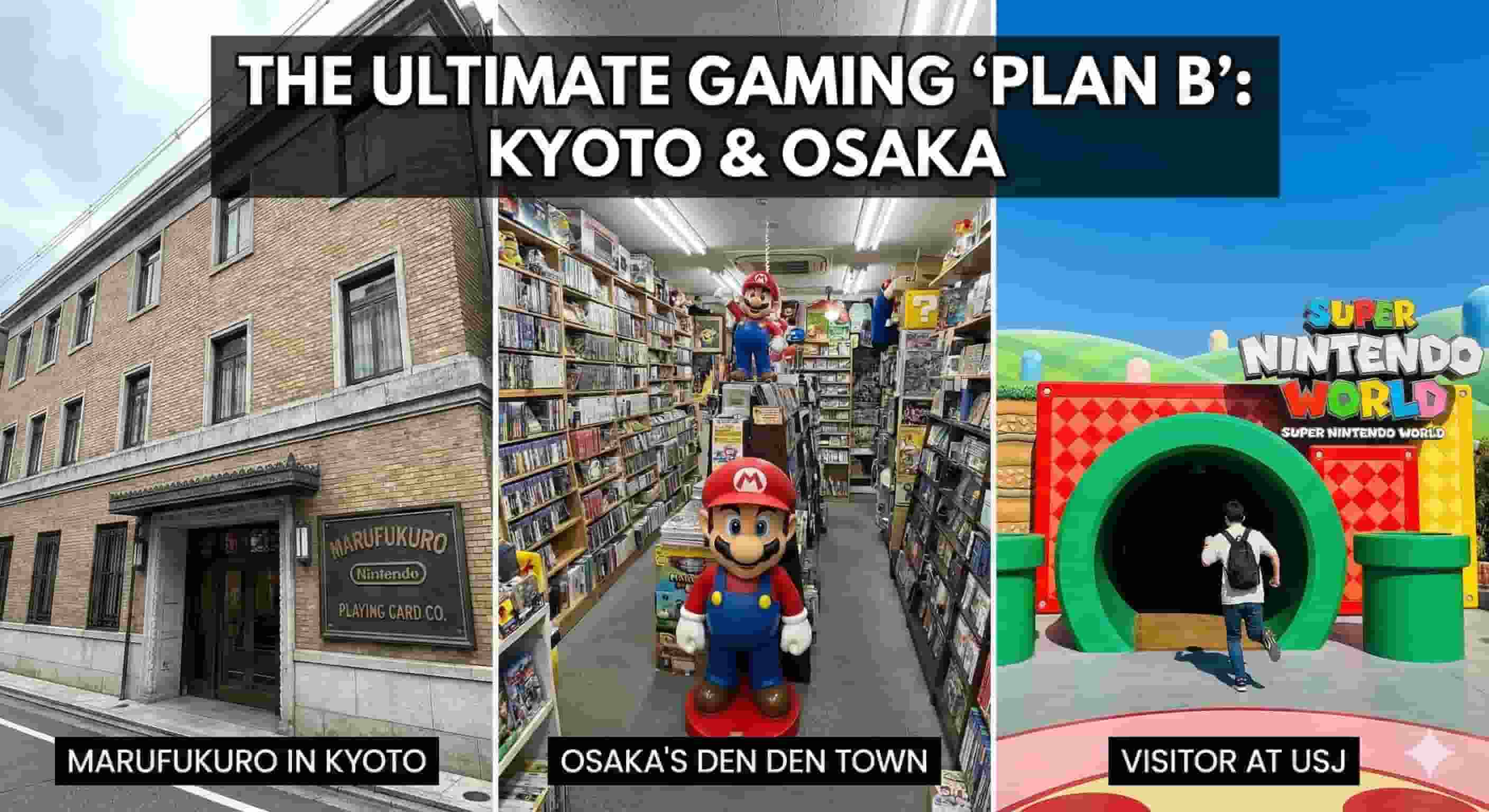
Kyoto is the birthplace of Nintendo, and Osaka is the chaotic, neon-drenched heart of Japan’s retro gaming trade. This guide is your “Plan B”—a curated, elite-level itinerary that takes you to the real sacred sites of gaming history, the best retro shops in Western Japan, and the coolest gaming bars, all without winning a single lottery.
Related Posts
The Ultimate Guide to Japan’s Game Centers: Complete Rules, Etiquette, and How to Play
1. Kyoto: Walking the Sacred Grounds (The “Origins” Tour)
While the official museum holds the artifacts, the city of Kyoto holds the soul of Nintendo. You can physically walk the streets where the Yamauchi family started a playing card empire in 1889. This leg of the trip is about history and atmosphere.
The Original Nintendo Headquarters (Marufukuro)
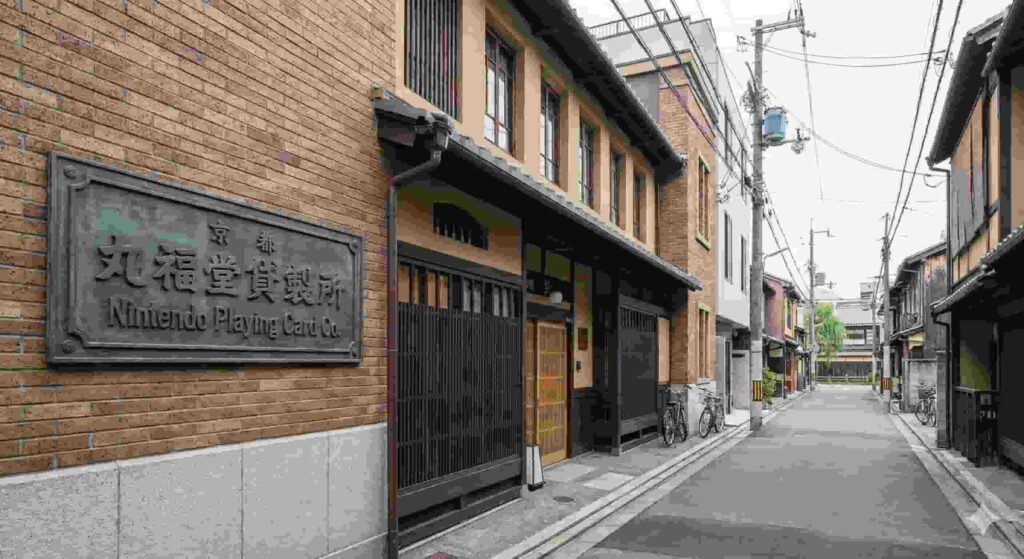
Your pilgrimage begins not at a museum, but at a quiet corner near the Kamo River. This is the former Nintendo headquarters, built in 1930. Unlike the modern glass fortresses they occupy now, this building is a stunning piece of Art Deco architecture that screams “early 20th-century empire.”
- What to see: The building has been converted into a luxury hotel called Marufukuro, but the exterior remains largely untouched. Look for the original metal plaques on the building’s side that still read “Nintendo Playing Card Co.” in English and kanji.
- Pro Tip: You don’t need to stay there ($800+/night) to soak it in. There is a cafe/lounge accessible to guests, but the real photo op is the exterior on Shomen Dori. Standing here, you are looking at the building where the Game & Watch was essentially born.
The “Founding Site” Stone Marker
Just a short walk from the 1930 building is the exact spot where Fusajiro Yamauchi opened his Hanafuda shop in 1889.
- Location: While the original wooden structure is long gone, the spiritual weight of this location is immense for serious fans. It is a quiet residential street, offering a stark contrast to the chaos of Mario Kart.
Cafe La Siesta – The 8-Bit Sanctuary
After walking the history, you need a drink. Skip the Starbucks and head to Cafe La Siesta on Kiyamachi Street.
- The Vibe: This is not just a bar with a few consoles; it is a cultural hub for the “Chiptune” (8-bit music) scene in Kyoto. The owner is a composer, and the walls are lined with Game Boys and cartridges.
- Why Go: It feels authentic. It’s dark, loud, and full of locals who actually play games. Order a cocktail named after a Sega console and play their arcade cabinet which often runs indie games developed by the regulars.
2. Osaka: The “Akihabara of the West” (Den Den Town)
Hop on the Keihan or JR line and head south to Osaka. If Kyoto is the polite grandmother of gaming, Osaka is the loud, rebellious teenager. Your destination is Nipponbashi, affectionately known as Den Den Town.
Many tourists make the mistake of thinking Tokyo’s Akihabara is the only place to buy retro games. False. Osaka often has better prices, better stock, and a grittier, “treasure hunt” atmosphere.
The “Big Three” Retro Shops
You are going to hit three specific stores. Do not wander aimlessly; follow this route for maximum efficiency.
A. Super Potato (Nipponbashi Branch)
- The Vibe: It’s a museum where everything is for sale. Yes, it is touristy. Yes, the prices are slightly higher (the “foreigner tax,” as locals joke).
- Why Visit: For the spectacle. The entrance features a giant Mario statue, and the interior is a claustrophobic tunnel of nostalgia.
- Best For: The “I was there” Instagram photo and high-end, boxed rarities that you can’t find anywhere else. Don’t buy your common games here; just look at the $5,000 Neo Geo AES cartridges.
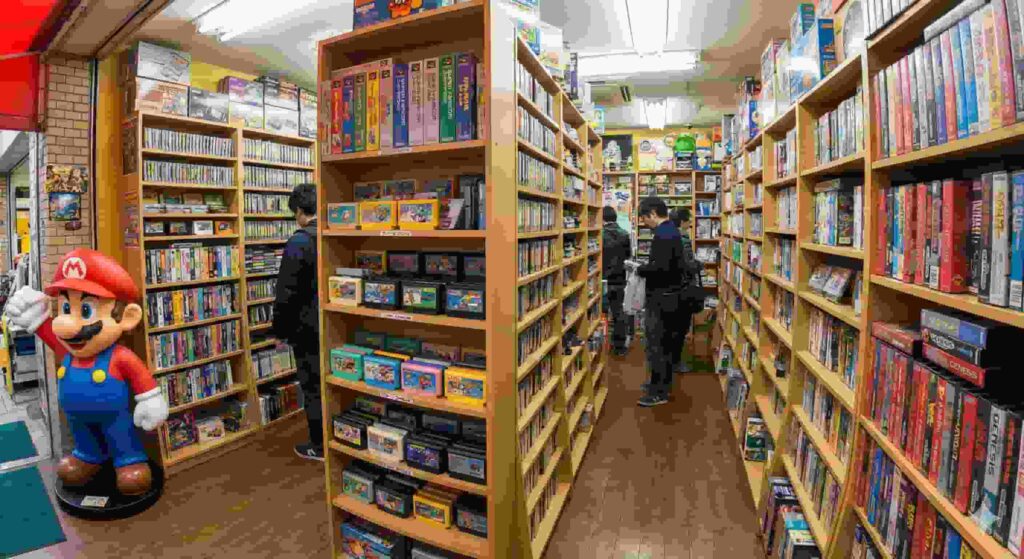
B. Game Tanteidan (The “Game Detective”)
- The Vibe: This is where the serious collectors go. Located on the main street (Sakai-suji), it looks unassuming but holds deep inventory.
- Why Visit: Game Tanteidan prides itself on pristine condition. If you are looking for a copy of Chrono Trigger or Mother 2 that looks like it was printed yesterday, this is the place. Their soundtrack (OST) section is also legendary.
- Secondary Keyword Focus: This is the best alternative to Super Potato Osaka for price-conscious hunters.
C. Surugaya (Nipponbashi Main Store)
- The Vibe: Chaos. Piles of unboxed cartridges in baskets.
- Why Visit: The “Junk” bins. In Japan, “Junk” doesn’t mean broken; it often just means “untested” or “missing the manual.” You can find Game Boy Advance cartridges here for 300-500 yen ($2-$4) that work perfectly.
- Pro Tip: Check the glass cases near the register for the “Surugaya High Grade” selection—verified rare items often priced 10-20% lower than Tokyo standards.
3. The USJ Hack: Super Nintendo World Without the Headache
You failed the museum lottery, but you cannot miss Super Nintendo World at Universal Studios Japan (USJ). The problem? It uses a “Timed Entry” system that feels suspiciously like another lottery.
If you didn’t buy the expensive “Express Pass” months ago, do not despair. Here is the “Plan B” Entry Strategy:
The “Rope Drop” Sprint
- The Logic: USJ officially opens at roughly 8:00 or 9:00 AM, but they actually open the gates 30-60 minutes early to clear the crowds.
- The Move: Arrive at the USJ gates at 7:15 AM. Yes, it hurts. But when the gates open (likely around 7:45 AM), you do not walk; you briskly power-walk straight to the Super Nintendo World entrance.
- The Reward: The first wave of guests can walk right in without a timed entry ticket. No app, no lottery, no QR code. Just you and the warp pipe.
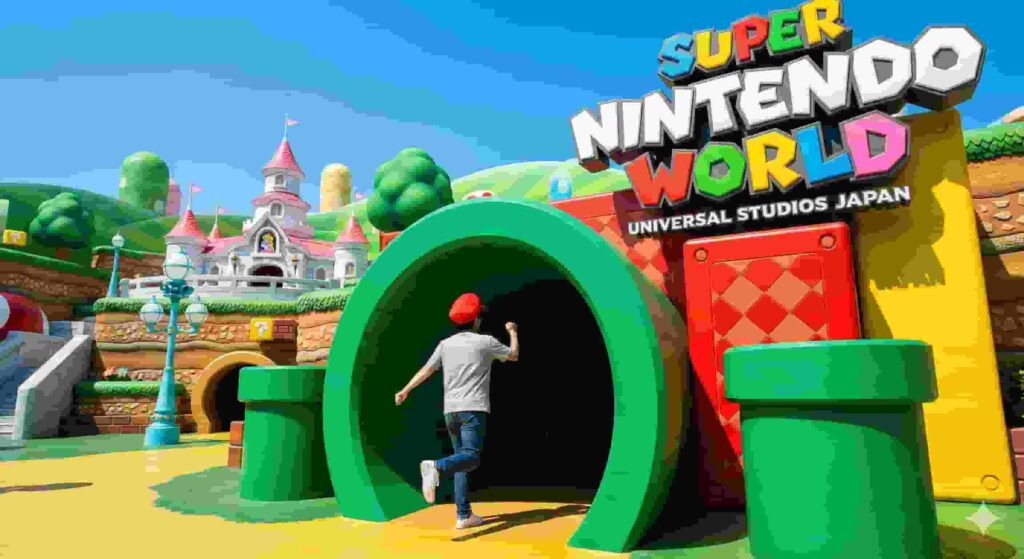
The “App Lottery” (Area Timed Entry)
If you miss the morning rush, you must use the official USJ app to grab a “Timed Entry Ticket” (free).
- The Hack: These slots disappear instantly. However, refreshing the app around 1:00 PM often reveals “cancelled” slots or a second release of entry times. Be persistent.
4. The Hidden Menu: Deep Cuts for True Gamers
If you still have time after Kyoto history and Osaka shopping, hit these “Deep Cut” locations to round out your trip.
Space Station (Osaka)
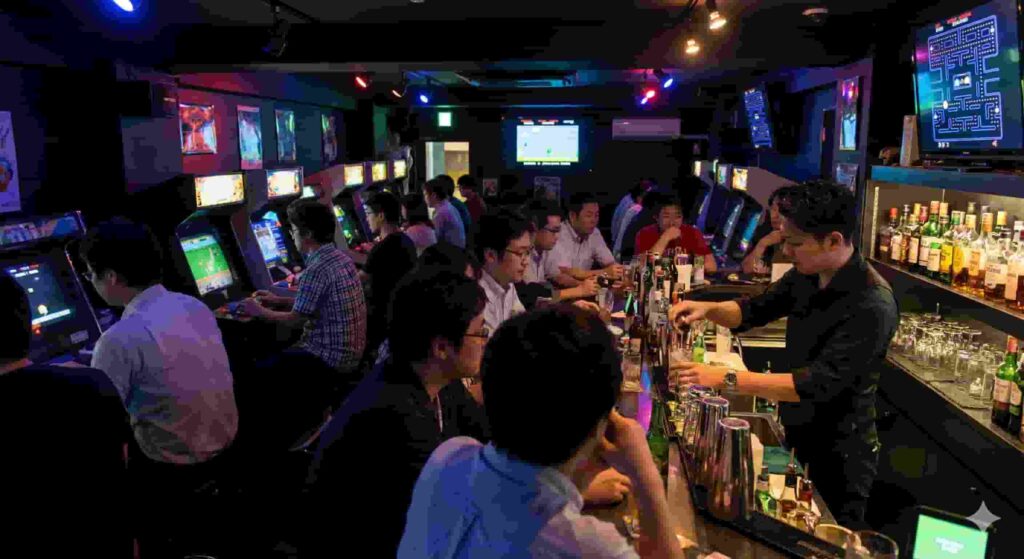
Located in Amemura (American Village), Space Station is a video game bar famous among expats and travelers.
- Why: No cover charge (rare in Japan). You just buy drinks. The bar itself is built into the gaming experience—the back bar is lined with screens, and you can play everything from N64 Smash Bros to obscure Dreamcast shooters while you drink.
Capcom Headquarters (Photo Op)
Did you know Osaka is the home of Capcom? While you can’t tour the offices, the headquarters building near the castle is a landmark.
- The Move: Visit the Capcom Store Osaka in the Parco Shinsaibashi building. It features a life-sized Ryu statue and exclusive merch from Monster Hunter, Resident Evil, and Street Fighter that you cannot get in Tokyo.
The Gachapon Halls of Den Den Town
Forget the few machines in the airport. Den Den Town has entire storefronts dedicated to Gachapon (capsule toys).
- The Strategy: Bring 100-yen coins. Look for the “retro hardware” miniatures—tiny, highly detailed replicas of Sega Saturns, Famicoms, and PlayStation 1s. They are the perfect, cheap souvenir ($3) to console yourself over the missed museum ticket.
Conclusion: You Don’t Need a Golden Ticket
While the Nintendo Museum is the shiny new toy, it is ultimately just one building. The Kansai region is the museum.
By walking the streets of Kyoto where the company began, hunting for treasures in the back alleys of Osaka, and physically stepping into the Mushroom Kingdom at USJ, you are getting an experience that is arguably more authentic and certainly more hands-on than looking behind glass cases.
You didn’t fail the lottery. You just unlocked the “Hard Mode” itinerary—and it’s a much better game.