


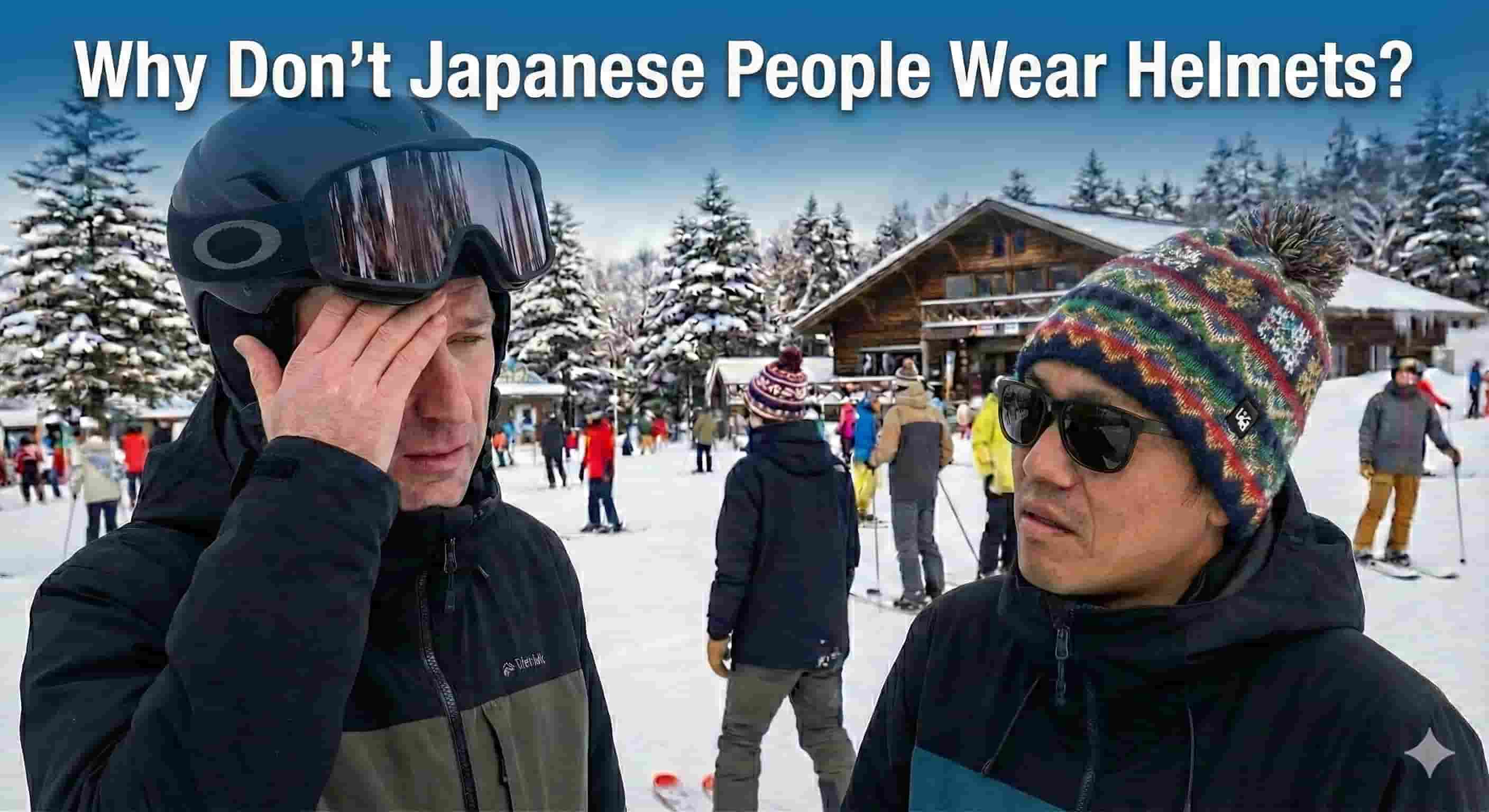
Skiing in Japan is often celebrated for its legendary powder snow (“Japow”), world-class resorts like Niseko and Hakuba, and delicious post-slope ramen. However, international visitors are frequently baffled by one stark visual difference: the lack of head protection. If you are planning a trip to the Japanese Alps or Hokkaido, understanding the nuances of Japanese ski culture, safety standards, and local etiquette is vital for a safe and enjoyable experience. This guide explores why the helmet usage rate is low, explains the rules in simple terms, and prepares you for the slopes.
That said, I go snowboarding with friends every season, but I’ve never worn a helmet. Of course, none of my friends wear helmets either.
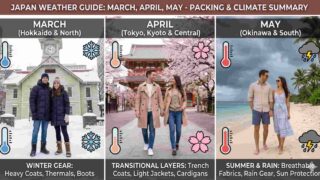
Why not go skiing in Japan this spring? Here are some ski resorts that stay open even in spring!
Spring Skiing Japan: Where to Find the Best Snow from March to May
The Reality: Do Japanese Skiers Really Not Wear Helmets?
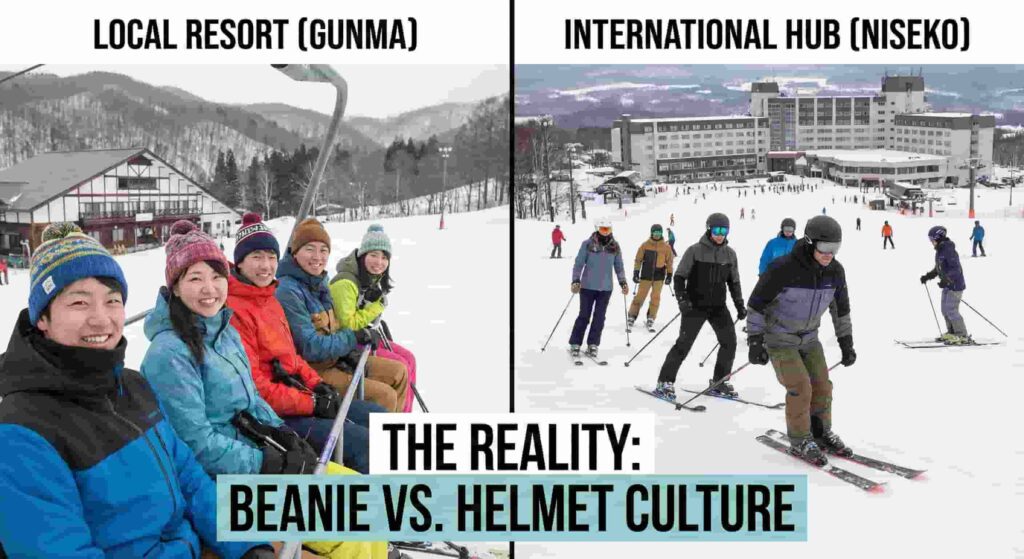
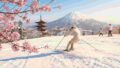
The short answer is: historically, no, but times are slowly changing. If you visit a typical ski resort in Japan, especially one frequented more by locals than international tourists, you will witness a sea of colorful knit beanies (pom-pom hats) rather than the hard-shell helmets common in Europe or North America.
The Statistics and the “Beanie” Preference
While helmet usage in Western countries often exceeds 80% due to strict awareness campaigns and liability concerns, the adoption rate among domestic Japanese skiers has historically hovered much lower. For many Japanese winter sports enthusiasts, skiing and snowboarding are viewed less as “extreme sports” and more as “leisure activities” similar to a casual hike or a day at an amusement park.
- Fashion over Function: For decades, the “knit cap” (beanie) has been the dominant fashion statement. It is seen as stylish, comfortable, and part of the traditional ski aesthetic in Japan.
- Perception of Speed: Japanese slopes are often regulated to control speed, and the culture emphasizes controlled, rhythmic turning rather than bombing down runs at Mach speeds. Because the perceived risk of high-impact collision is lower, the urgency for helmets is less pronounced.
- Rental Availability: Until recently, many standard rental shops in rural Japanese resorts did not include helmets as a default part of the “full set” rental package, treating them as an optional accessory.
Expert Note: If you are visiting international hubs like Niseko, you will see a different reality. The influx of Australian, American, and European tourists has normalized helmet use there. However, venture to a local resort in Gunma or Niigata, and the “beanie culture” reigns supreme.
Skiing Made Simple: Understanding the “Invisible” Rules
Note: In Japan, following the rules is very important to keep everyone happy and safe. Here is an easy-to-understand guide to how skiing works here, perfect for beginners and families.
Imagine the ski mountain is like a giant playground. In Japan, everyone tries very hard not to bump into each other or cause trouble for others. It is called meiwaku (avoiding being a nuisance). Here is how the “playground rules” work in Japan.
1. The “Slow and Steady” Rule
In many countries, skiers like to go very fast to feel exciting. In Japan, skiing is often more about looking graceful and making beautiful turns.
- Don’t Rush: It is not a race! The goal is to enjoy the soft snow.
- Give Space: Because people carve wide turns, you should always leave plenty of space between you and the person in front of you.
2. The “Do Not Cross the Ropes” Rule
This is the most important rule of all! You will see ropes (often yellow and black) along the sides of the ski runs.
- The Ropes are Walls: Pretend the ropes are solid brick walls. You must never duck under them to ski in the trees unless the resort specifically says it is okay (these are called “Gateway” or “Sidecountry” zones).
- Why? In Japan, deep snow can be dangerous because of hidden holes near tree trunks or sudden cliffs. If you go past the rope, the Ski Patrol (the mountain police) might take away your lift pass!
3. The Polite Lift Line
Waiting for the chairlift in Japan is very orderly.
- Single File: People line up in straight lines. There is no pushing or shoving.
- Wait Your Turn: Even if you are excited, you wait for the person in front of you to go.
- Safety Bar: In Japan, we always pull the safety bar down on the chairlift immediately. It is a strict rule to keep you safe.
Equipment Check: What You Need to Know About Gear in Japan
If you are traveling to Japan to ski, you might be wondering if you should bring your own gear or rent it. Because the culture is different, the gear availability can be different too.
Bringing Your Helmet vs. Renting
Since we established that many locals don’t wear helmets, you might worry about finding one.
- Bring Your Own: Ideally, bring your own helmet. It guarantees a perfect fit and ensures you have safety gear regardless of the shop’s inventory.
- High-End Resorts: In places like Hakuba, Niseko, and Rusutsu, rental shops are modernized and stock plenty of helmets (often high-quality brands like Smith or Giro).
- Local Hills: Small, municipal ski hills might only have a few beat-up helmets or none at all. Call ahead or bring your own to be safe.
The “Powder” Board and Skis
Japan is famous for “Japow”—deep, fluffy powder snow.
- Wider is Better: Regular skinny skis sink in deep powder. In Japan, you want “fat skis” or a “powder snowboard” with a wider nose to help you float on top of the snow like a boat.
- Waxing: The snow in Japan is cold and dry. Make sure your equipment is freshly waxed for “cold temperature” to glide smoothly.
The “After-Ski” Culture: Onsen and Food
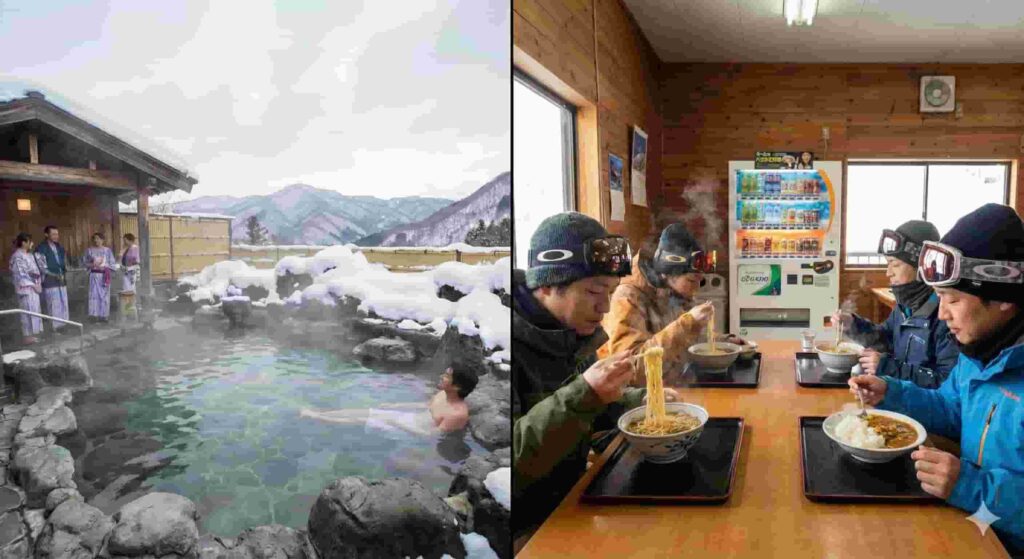
In Western culture, “Après-ski” usually means drinking beer at a bar immediately after skiing. In Japan, the culture is a little different and very relaxing!
1. The Magic Hot Water (Onsen)
After being in the freezing cold snow, Japanese skiers love to jump into an Onsen (natural hot spring).
- Naked Bathing: This surprises many children and foreigners! You do not wear a swimsuit. You wash your body thoroughly first, then sit in the hot volcanic water to warm up your bones.
- Quiet Time: It is a time to be quiet and relax, not to swim or splash. It heals your tired leg muscles instantly!
2. Slopeside Dining (Gere-shoku)
Food at ski resorts in America is often just burgers and fries. In Japan, “Gere-shoku” (slope food) is delicious!
- Curry Rice: A thick, warm stew with rice. It gives you lots of energy.
- Ramen: Hot noodle soup that warms you from the inside out.
- Katsu: Fried pork cutlets.
- Vending Machines: You will even find hot chocolate and corn soup in vending machines right on the mountain!
Why Is Safety Changing in Japan?
While we started by saying Japanese people don’t wear helmets, this is changing fast. Why?
The Influence of Inbound Tourism
As more visitors from Australia, Europe, and the US come to Japan, local skiers see them wearing helmets. It is becoming “cool” to look like a professional skier, and pros wear helmets.
Increased Awareness of Accidents
High-profile accidents in backcountry areas have made the news in Japan. Parents are starting to buy helmets for their children, even if the parents still wear beanies. Ski schools are now requiring helmets for kids in lessons, which is a big step forward.
Backcountry Popularity
More Japanese skiers are moving from the groomed runs to the wild “backcountry” seeking fresh powder. Because this is more dangerous (trees, rocks, avalanches), safety gear like helmets, beacons, and shovels is becoming standard equipment for serious enthusiasts.
Conclusion: Safety First, Style Second
Japan offers arguably the best snow experience on the planet. The culture is polite, the food is incredible, and the powder is unmatched. While you may look around and see a local population that prefers knit beanies over hard-shell helmets, do not let that lower your safety standards.
The “When in Rome” rule applies to eating sushi and taking shoes off indoors, but it should not apply to your brain safety. The snow in Japan can be deep, and tree runs are common.
Summary of Key Takeaways:
- Wear a Helmet: Even if locals don’t, you should.
- Respect the Ropes: Never duck ropes; it risks your pass and your safety.
- Enjoy the Culture: Embrace the quiet lift lines, the onsen after-party, and the delicious slope-side curry.
- Gear Up: Bring fat skis/boards for the powder.
Enjoy the Japow, stay safe, and have the trip of a lifetime!
Next Step
Want to discover the charm of spring in Japan? Click here!