

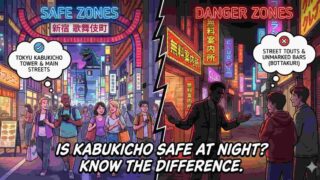
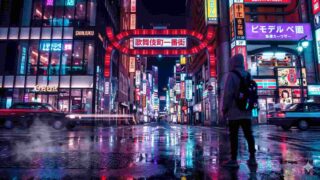

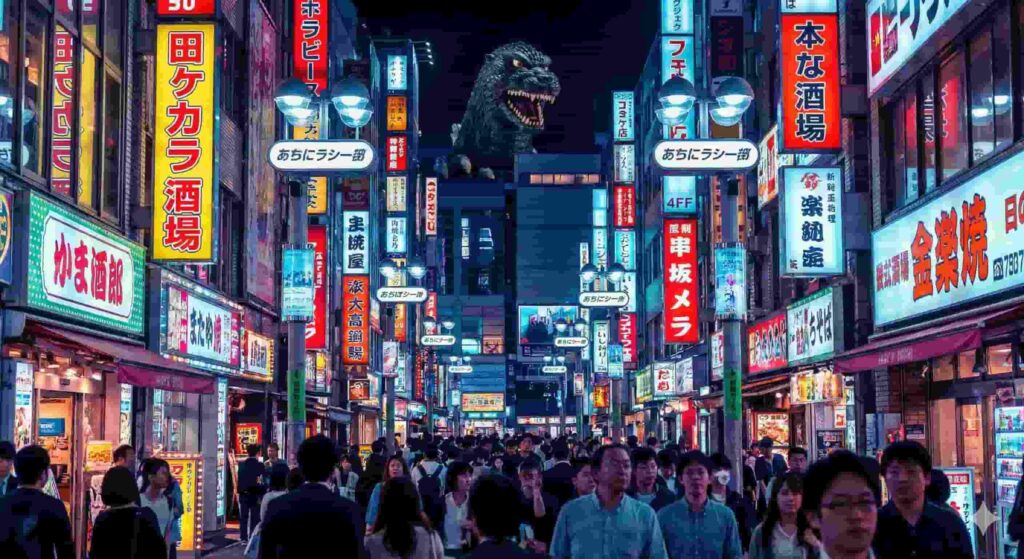
Japan is universally praised as one of the safest countries on Earth. It is a place where you can leave a wallet on a train and have it returned with the cash intact, where children take the subway alone, and where violent crime is statistically negligible. However, there is a shadow side to this safety—a specific, contained, yet dangerous underbelly found in the neon-lit nightlife districts of Tokyo.
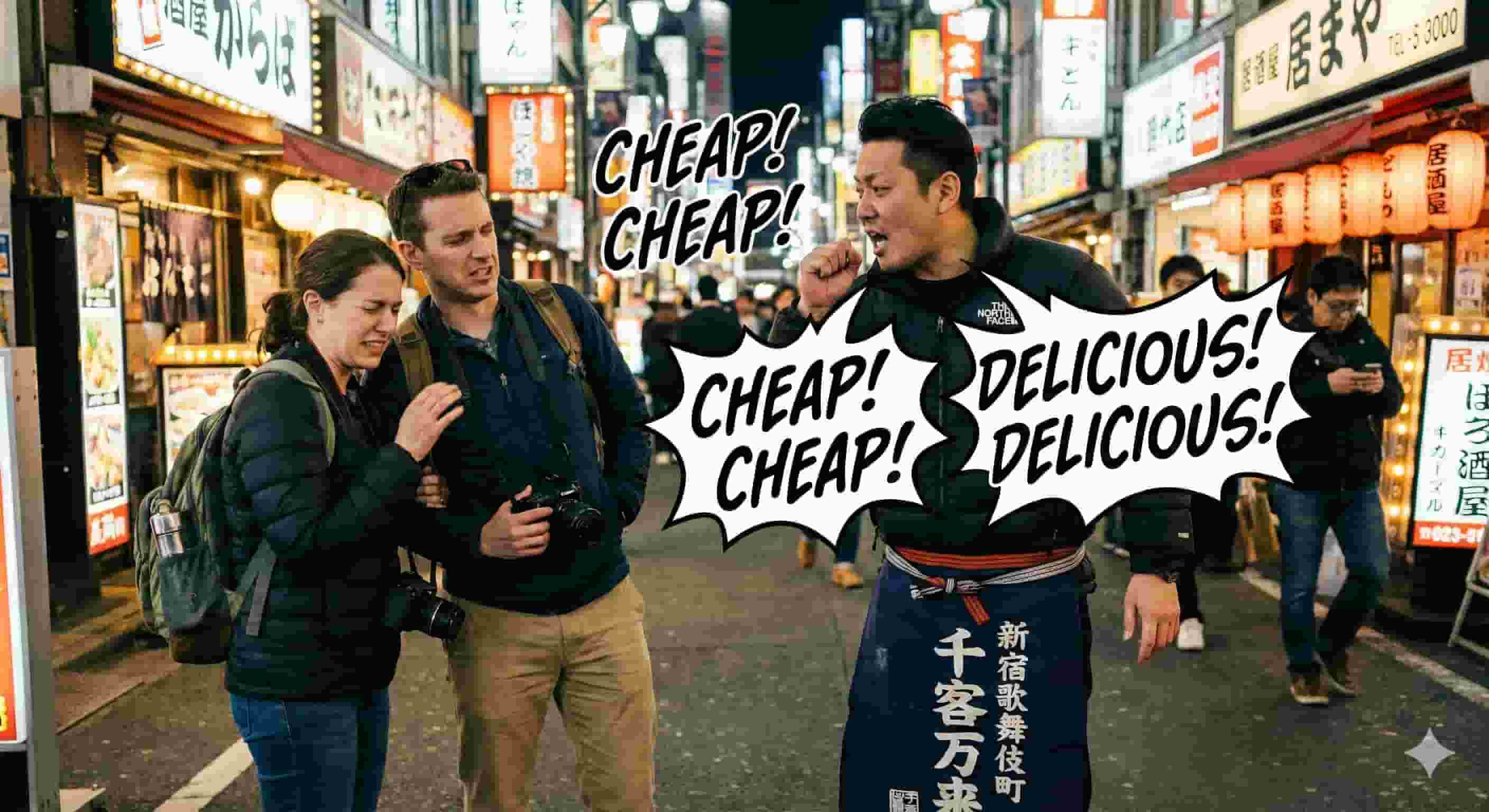
If you are reading this, you are likely planning a trip to Tokyo or are already here, looking to explore the legendary nightlife of Shinjuku, Shibuya, or Roppongi. You are the ideal target for a specific type of predator: the “Kyaku-hiki” (Customer Puller) or Tout.
This is not a generic travel advisory. This is an elite-level, comprehensive safety dossier designed to save you thousands of dollars and ensure your physical safety. We will dismantle the mechanics of the “Bottakuri” (rip-off) scam, expose the psychological tricks used by street touts, and provide you with a tactical roadmap to enjoying Tokyo’s world-class nightlife without becoming a statistic.
Want to survive Shinjuku’s wildest district? Check the full guide here.
👉 Kabukicho Survival Guide 2026: Safety Rules, Best Izakaya & Hidden Gems
- The “Bottakuri” Reality: What You Need to Know
- Anatomy of the Scam: How They Catch You
- Danger Zones: District-Specific Breakdown
- Tactical Defense: How to Spot a “Bottakuri” Menu
- What To Do If You Are Scammed
- Safe Alternatives: Enjoying Nightlife Without Fear
- Advanced Tips for Solo Travelers
- Conclusion: Awareness is Your Best Defense
The “Bottakuri” Reality: What You Need to Know
The term “Bottakuri” (ぼったくり) loosely translates to “ripping off” or charging exorbitant fees. In the context of Tokyo nightlife, it refers to bars—often run by semi-legal or criminal organizations—that lure tourists in with promises of cheap drinks, only to hit them with bill totals ranging from $500 to $50,000 USD for a single hour.
Why It Happens in “Safe” Japan
The Japanese police (local Koban officers) often view these disputes as “civil matters” between a customer and a business. If you consumed the drink, you technically owe the money. Scammers exploit this legal grey area, knowing that tourists have flights to catch and lack the language skills to fight back.
The Golden Rule of Tokyo Nightlife
Before we dive into the details, memorize this single rule. If you follow only one piece of advice from this 5,000-word guide, let it be this:
NEVER, under any circumstances, follow a tout (street promoter) into a bar, club, or restaurant. No exceptions.
Anatomy of the Scam: How They Catch You
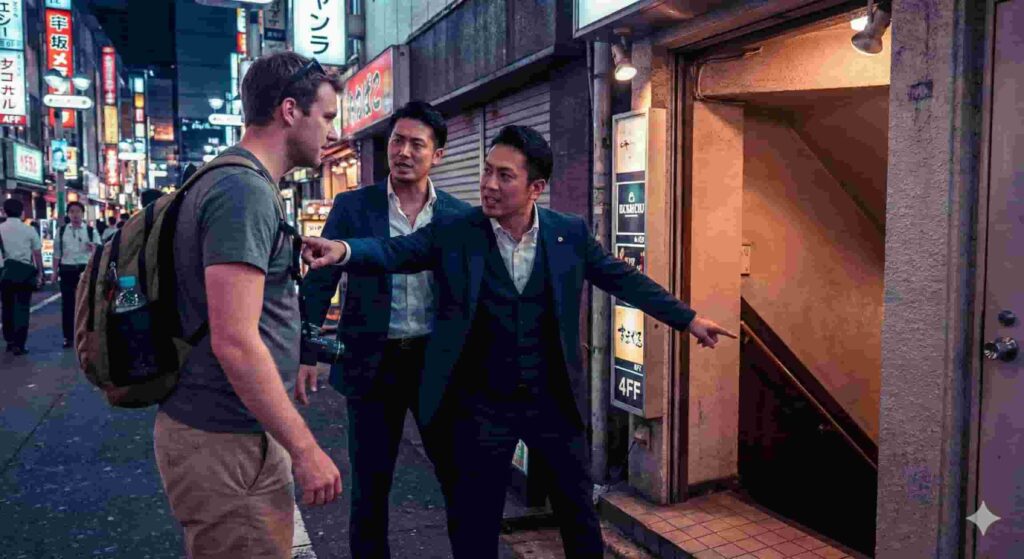
To avoid the trap, you must understand the bait. The scams in Kabukicho (Shinjuku) and Roppongi have evolved. They are no longer just aggressive men dragging you into clubs; they are sophisticated social engineering operations.
1. The “Friendly Local” Tout
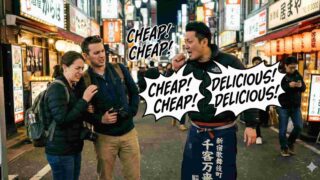
The Scenario: You are walking through Kabukicho. A well-dressed, smiling man (often African or Japanese) approaches you. He speaks perfect English.
The Pitch: “Hey boss! Looking for a drink? My bar has a happy hour, no cover charge, just 1,000 Yen all-you-can-drink for 60 minutes. We love tourists!”
The Trap: You enter a dimly lit bar. You drink cheap whiskey. When you ask for the check, the bill is 50,000 Yen ($350).
The Scam: The fine print on the menu (which you never saw or was snatched away) lists a “weekend charge,” “ice charge,” “seat charge,” and “staff interaction charge.”
2. The “Girls Bar” Lure
The Scenario: A young, attractive woman stands on the street holding a sign. She looks harmless, perhaps even a bit shy.
The Pitch: “Massage?” or “Girls Bar, cheap drinking?” She smiles and points to a building elevator.
The Trap: These are often fronts for aggressive rip-off joints. The “all-you-can-drink” implies you can drink, but the girl will order “ladies’ drinks” for herself that cost 5,000 Yen each. You are socially pressured to buy them.
3. The “Dating App” Setup
The Scenario: You match with a cute local on Tinder or Bumble. They suggest meeting in Kabukicho or Roppongi.
The Pitch: “I know a great bar that acts like a hideout! Let’s meet there.”
The Trap: The date is an accomplice (a “shill”). They lead you to the specific bottakuri bar. You order drinks. The bill arrives for $1,000. Your date pretends to be shocked or offers to “split” it, but the credit card terminal “only works for your card.” Once you pay, they disappear.
4. The “Spiked Drink” Nightmare
The Scenario: Mostly reported in Roppongi. You are at a bar (often one you were led to).
The Trap: Your drink is spiked with a sedative (like Rohypnol). You black out.
The Result: You wake up hours later on the street or in a hotel room, groggy. Your wallet is empty, and your credit card has been maxed out with charges for “champagne” at a club you don’t remember visiting.
Danger Zones: District-Specific Breakdown
Not all of Tokyo is dangerous. In fact, 99% of it is incredibly safe. The danger is hyper-concentrated in specific “Red Light” and nightlife districts.
Kabukicho (Shinjuku)
- The Vibe: The “Sleepless Town.” Neon lights, Godzilla head, thousands of bars.
- The Risk Level: EXTREME regarding touts.
- Specific Threat: The main street (Central Road) and the side streets near the Batting Center are filled with aggressive touts.
- Red Flags: Any bar located on an upper floor of a multi-tenant building that doesn’t have a clear website or Google Maps presence.
Roppongi
- The Vibe: Expat central. High-end clubs mixed with shady dive bars.
- The Risk Level: HIGH for drink spiking.
- Specific Threat: African touts are very common here. They will promise “beautiful girls” and “hip hop clubs.”
- Red Flags: Offers of “Free entry” to clubs that usually charge.
Ikebukuro (West Gate)
- The Vibe: Gritty, local entertainment district.
- The Risk Level: MODERATE.
- Specific Threat: Chinese mafia-run massage parlors and semi-legal gambling dens.
- Advice: Stick to the major department stores and well-lit izakayas.
Shibuya (Center-Gai)
- The Vibe: Youth culture, scrambling crossing.
- The Risk Level: LOW to MODERATE.
- Specific Threat: Less organized crime, more “religious cult” solicitation disguised as friendly locals wanting to practice English or go for tea.
Tactical Defense: How to Spot a “Bottakuri” Menu
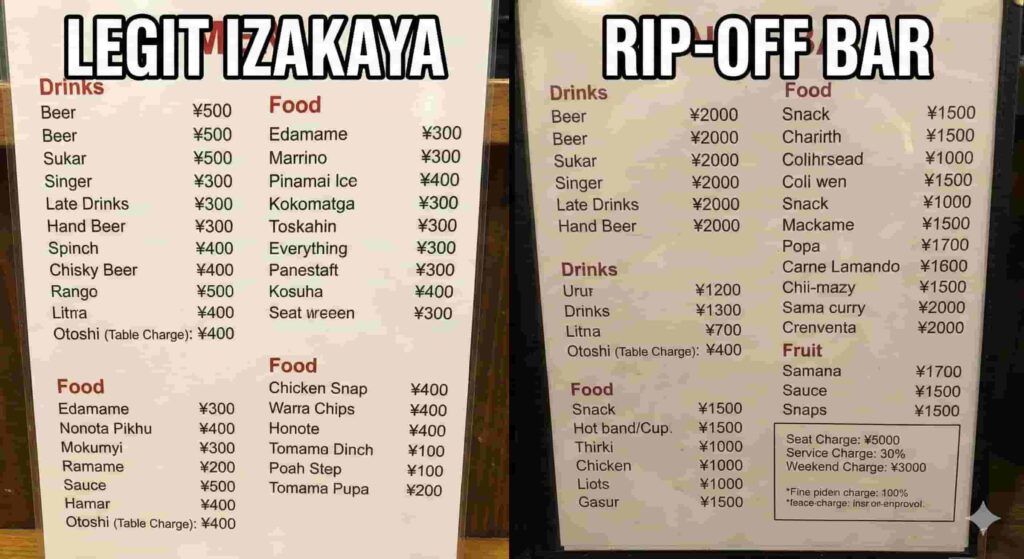
If you do find yourself in a bar and are unsure if it’s legitimate, ask to see the menu immediately. Look for these specific warning signs.
| Legit Izakaya | Bottakuri (Rip-Off) Bar |
| Otoshi (Table Charge): Clearly stated, usually ¥300-¥500 per person. Comes with a small appetizer. | Seat Charge: ¥3,000 – ¥10,000 per person. Hidden in small print or not mentioned until the end. |
| Tax: Standard 10% consumption tax. | Service Charge: 20% – 50%. |
| Weekend Charge: Rare, or very small (¥200). | Weekend/Holiday Charge: Massive surcharges (e.g., +¥5,000). |
| Ice/Water: Usually free or cheap. | Ice Charge: ¥1,000 per glass. |
| Staff Drinks: Not on the menu usually. | Ladies Drink: ¥2,000 – ¥5,000 per drink. Staff will aggressively beg for them. |
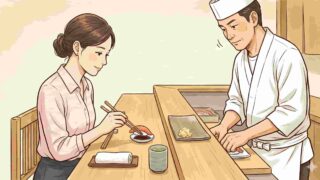
The “Otoshi” Confusion
Do not confuse the Japanese custom of Otoshi with a scam. In legitimate Izakayas, you are charged a small seating fee (300-500 Yen) and given a small bowl of food. This is cultural and normal. A scam is when that fee is 5,000 Yen and you get a single stale cracker.
Check this out, learn more about “Otoshi”!!
The ‘Otoshi’ Trap: Why You Got an Appetizer You Didn’t Order at Izakaya
What To Do If You Are Scammed
You followed a tout. You drank the beer. Now two large men are standing over you demanding 100,000 Yen ($700). What do you do?
1. Do Not Sign Anything
Do not sign the credit card receipt. Once you sign, the credit card company often views it as an authorized transaction, making a chargeback difficult (though not impossible).
2. The “Cash Only” Bluff
If you can, say you have no credit card. Offer to pay a “fair” amount (e.g., 5,000 Yen) in cash for what you actually consumed. Place it on the table and attempt to leave.
3. Call the Police (110)
This is your nuclear option. Even though police dislike civil disputes, scammers hate police attention.
- Dial 110.
- Say: “I am in Kabukicho. I am being threatened. Bottakuri.”
- If the bar staff sees you dialing the police, they will often (but not always) cut the bill down to a reasonable amount just to get you out. They operate in the shadows; flashing blue lights are bad for business.
4. Run (If Safe)
If you are physically close to the door and not physically blocked, leave. They are unlikely to chase you down the street where cameras and witnesses are present. However, assess the physical threat carefully.
5. The Nearest “Koban” (Police Box)
If you escape, go immediately to the nearest Koban. Report the incident. Even if you don’t get your money back, it creates a record.
[Essential Emergency Numbers & Phrases for Tourists in Japan]
Safe Alternatives: Enjoying Nightlife Without Fear
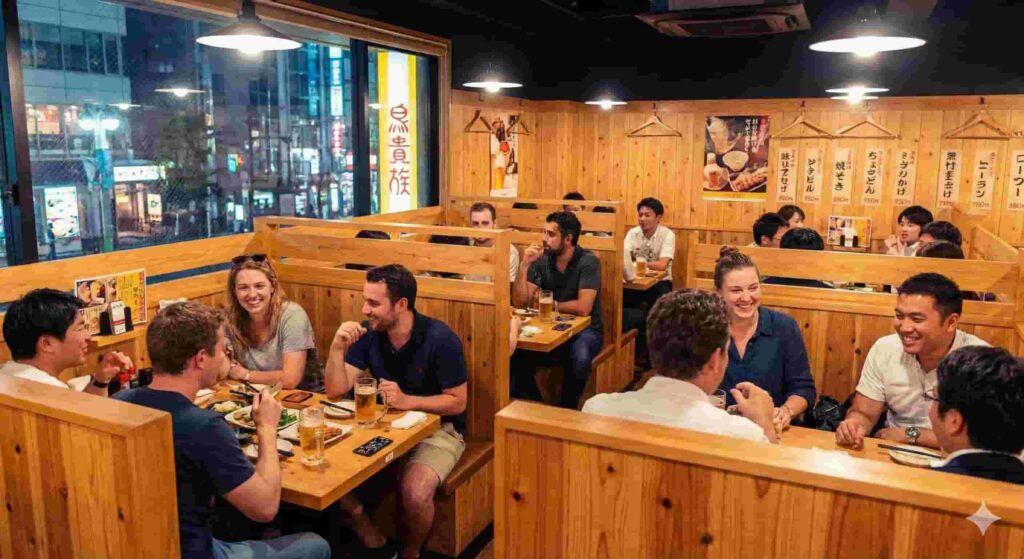
You don’t have to lock yourself in your hotel room at 8 PM. Tokyo nightlife is amazing! You just need to know where to go.
1. The “Golden Gai” Strategy
Golden Gai in Shinjuku is a collection of over 200 tiny bars. It is historically safe, though very touristy now.
- Tip: Look for bars with prices posted clearly outside.
- Etiquette: Many bars have a cover charge (¥500-¥1000). This is legit, not a scam.
2. Hub Pubs (The British Style Savior)
“The Hub” is a chain of British-style pubs all over Tokyo.
- Why it’s safe: Pay-as-you-go (COD). You pay for every drink at the counter as you order it. No surprise tabs at the end.
- Bonus: Great place to meet other travelers and locals.
3. Chain Izakayas
While less “authentic” than a hole-in-the-wall, big chains are 100% safe.
- Torikizoku: Everything is roughly ¥370. No surprises.
- Watami / Isomaru Suisan: reliable, clear picture menus, tablets for ordering.
4. Booking Tours
If you are nervous, book a guided bar-hopping tour.
- Magical Trip or Airbnb Experiences offer guided tours through Shinjuku and Shibuya. You pay a flat fee upfront, and a local guide navigates the shady streets for you.
[Top 5 Safe & Affordable Izakaya Chains in Tokyo]
Advanced Tips for Solo Travelers
Solo travelers, particularly men, are the primary targets for touts.
- Walk with Purpose: Do not look at your phone while standing still in Kabukicho. Walk fast, like you know where you are going.
- The “No” Hand Gesture: When a tout approaches, do not engage verbally. Just raise your hand in a “stop” gesture and keep walking. Do not say “Maybe later” or “No thank you.” Silence is your best shield.
- Share Your Location: If you are meeting a Tinder date, send a live location drop to a friend.
Conclusion: Awareness is Your Best Defense
Tokyo remains a dazzling, electrifying city that demands to be explored at night. The neon canyons of Shinjuku and the bustling crossings of Shibuya are sights you will cherish forever. The existence of these scams should not deter you from visiting; rather, it should empower you to visit smartly.
The formula for safety is simple: Ignore the touts. Verify the prices. Trust your gut.
By adhering to the advice in this guide, you ensure that your memories of Tokyo will be of sushi, sake, and sunsets—not police stations and credit card disputes.
Next Step
Are you planning your Shinjuku itinerary right now? Check out our comprehensive The Ultimate 1-Day Shinjuku Walking Itinerary: From Neon Nights to Quiet Shrines to fill your nights with safe, unforgettable experiences.
Stay safe, travel smart, and enjoy Japan!