

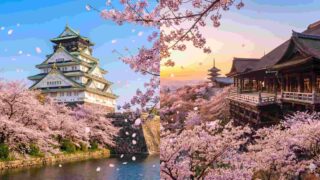



Spring is arguably the most magical time to visit Japan. The world-famous cherry blossoms (sakura) paint the country in shades of pink, festivals fill the streets, and the food scene shifts to delicious seasonal delicacies.
However, packing for a spring trip to Japan is notoriously difficult.
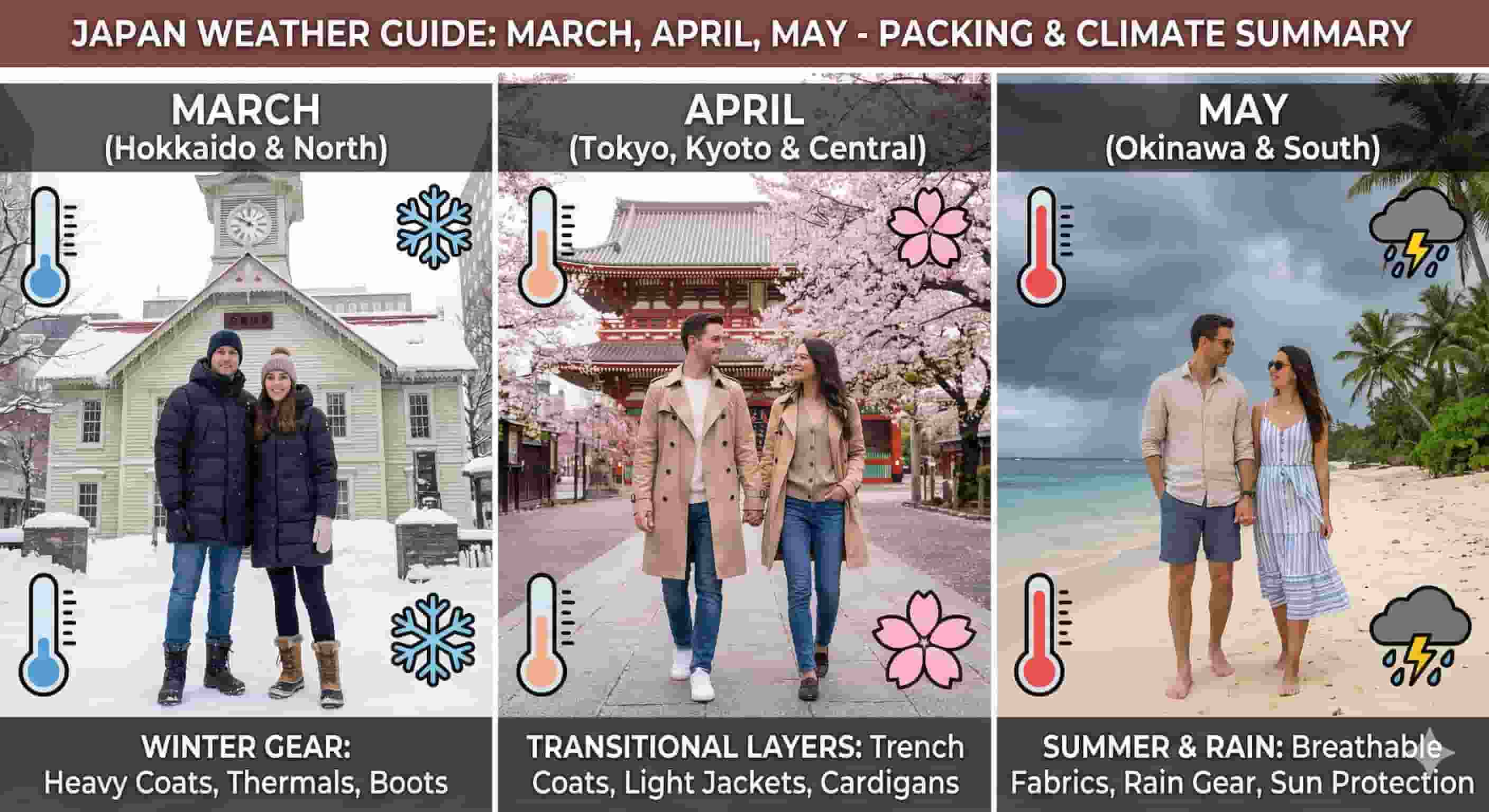
Why? Because Japan is an archipelago that stretches over 3,000 kilometers from northeast to southwest. While it might be a snowy winter wonderland in Hokkaido, it could be beach weather in Okinawa on the exact same day.
If you are traveling between March and May, you cannot pack a single wardrobe. You need a strategy.
In this comprehensive guide, we translate local meteorological data into actionable advice. We will break down the temperature differences across four major regions—Hokkaido, Tokyo, Kyoto/Osaka, and Okinawa—and provide you with the ultimate packing list so you are prepared for everything from snowstorms to humidity.
Planning the rest of your trip? This article is just one part of the season. To get the full picture—including the 2026 Cherry Blossom Forecast, Golden Week survival tips, and Skiing advice—check out my main guide:
👉 Read the Ultimate Guide to Spring in Japan 2026
Overview: The “Three Climates” of Japanese Spring
Before we dive into the specific packing lists, it is crucial to understand the progression of the season. In Japan, spring is not a static event; it is a transition.
- March: A battle between winter and spring. In Tokyo and Kyoto, this is known as San-kan Shi-on (三寒四温), meaning “three cold days, four warm days.” The temperature fluctuates wildly.
- April: The “Golden Month.” This is generally the most comfortable time to travel on the mainland (Honshu). The air is crisp, the blossoms are out, and the bitter cold has mostly receded.
- May: The gateway to summer. By late May, the humidity begins to rise, and Okinawa enters its rainy season.
Quick Reference: Spring Temperature Chart (Average High/Low)
Below is the average temperature data for Japan’s major tourist hubs. Note the drastic difference between North (Hokkaido) and South (Okinawa).
| Area | March | April | May |
| Hokkaido (Sapporo) | 4°C / -4°C (39°F / 25°F) | 11°C / 3°C (52°F / 37°F) | 17°C / 8°C (63°F / 46°F) |
| Tokyo (East) | 13°C / 5°C (55°F / 41°F) | 19°C / 10°C (66°F / 50°F) | 23°C / 15°C (73°F / 59°F) |
| Kyoto/Osaka (West) | 13°C / 5°C (55°F / 41°F) | 20°C / 10°C (68°F / 50°F) | 25°C / 15°C (77°F / 59°F) |
| Okinawa (South) | 23°C / 17°C (73°F / 63°F) | 25°C / 20°C (77°F / 68°F) | 28°C / 23°C (82°F / 73°F) |
Region 1: Hokkaido (Sapporo, Otaru, Hakodate)
The Frozen North: Winter Lingers On
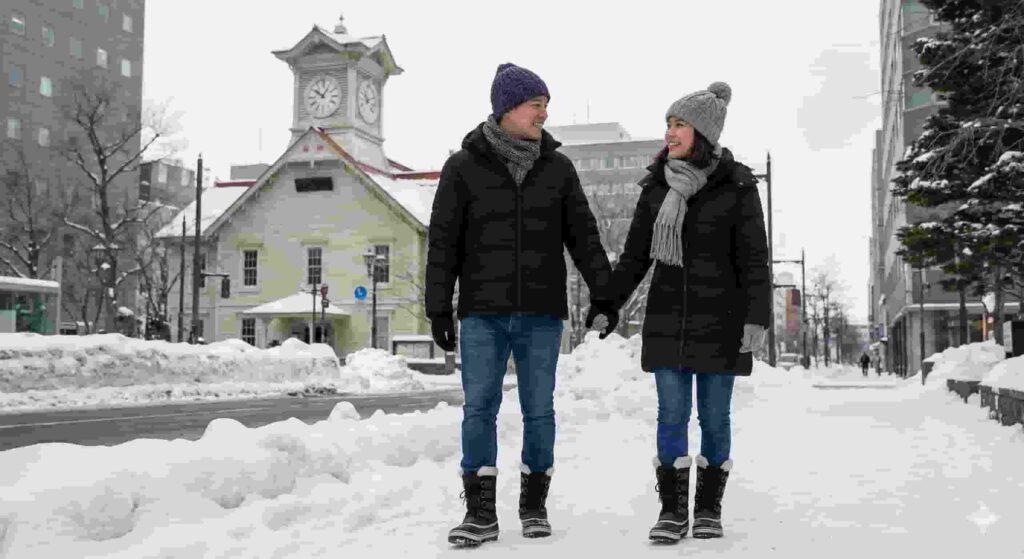
If your itinerary includes skiing in Niseko or visiting the beer breweries of Sapporo, do not be fooled by the calendar. In Hokkaido, March is still very much winter.
Climate Characteristics:
- March: Snow is common, and snow piles will still line the streets. Roads can be icy.
- April: The “thaw” begins. The snow melts, creating slushy streets, but the wind remains biting cold. It can feel as cold as Tokyo in January.
- May: Finally, spring arrives. The Cherry Blossoms (Somei Yoshino) usually bloom here during Golden Week (early May), a full month later than Tokyo.
What to Wear in Hokkaido:
- March:Full Winter Gear. You need a heavy down coat, thermal underwear (top and bottom), a wool scarf, gloves, and a beanie.
- Pro Tip: Wear shoes with deep treads or removable spikes. The sidewalks are slippery.
- April: Winter/Spring Hybrid. A thick coat or a heavy windproof jacket is still necessary. Evenings require thick sweaters.
- May: Light Winter. A lighter trench coat or fleece jacket is appropriate. Bring long-sleeved shirts. Layering is key because while the sun feels warm, the shade is cold.
Traveler’s Rule for Hokkaido: Always pack “one extra layer” more than you think you need. Nighttime temperatures in May can still drop to single digits (Celsius).
Region 2: Tokyo (Kanto) & Kyoto/Osaka (Kansai)
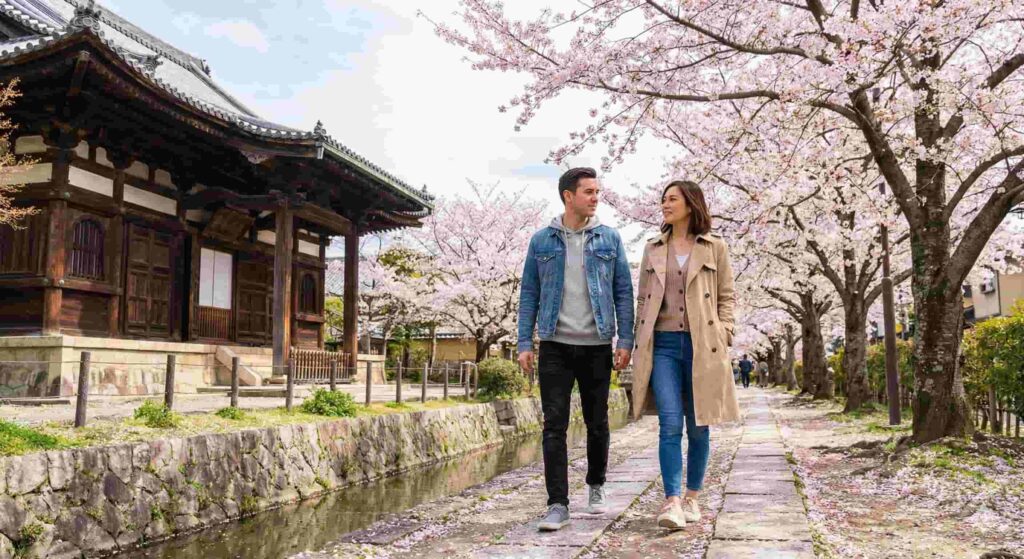
The Golden Route: Cherry Blossoms and Temperamental Skies
Most travelers spend the majority of their time in these areas. The weather here is lovely but unpredictable.
Climate Characteristics:
- March: As mentioned, the “Three Cold, Four Warm” pattern dominates. You might need a winter coat one day and just a hoodie the next. The cherry blossoms usually begin to open (Kaika) in late March.
- April: The most pleasant month. Mornings and evenings are cool (requiring a jacket), but days can be sunny and mild.
- May: The “Fresh Green” (Shinryoku) season. It becomes warm enough to sweat during the day. This is widely considered the most comfortable month for sightseeing.
What to Wear in Tokyo & Kyoto:
- March: Transitional Winter. A wool coat or a trench coat with an inner down vest (Uniqlo’s Ultra Light Down is a favorite among locals) is perfect.
- April: Classic Spring Layers. A trench coat, denim jacket, or sturdy cardigan. You can survive without a jacket at noon, but you must carry one for the evening.
- May: Early Summer Vibes. Long-sleeved shirts, blouses, or thin cardigans. On sunny days, short sleeves are fine, but keep a light layer for air-conditioned trains and cool mornings.
Traveler’s Rule for The Golden Route: The key word is “Layering.” Indoors (trains/shops) can be overheated, while the wind outside can be chilly. Avoid heavy, bulky sweaters that you can’t take off; opt for cardigans and zip-ups.
Region 3: Okinawa (Naha, Ishigaki)
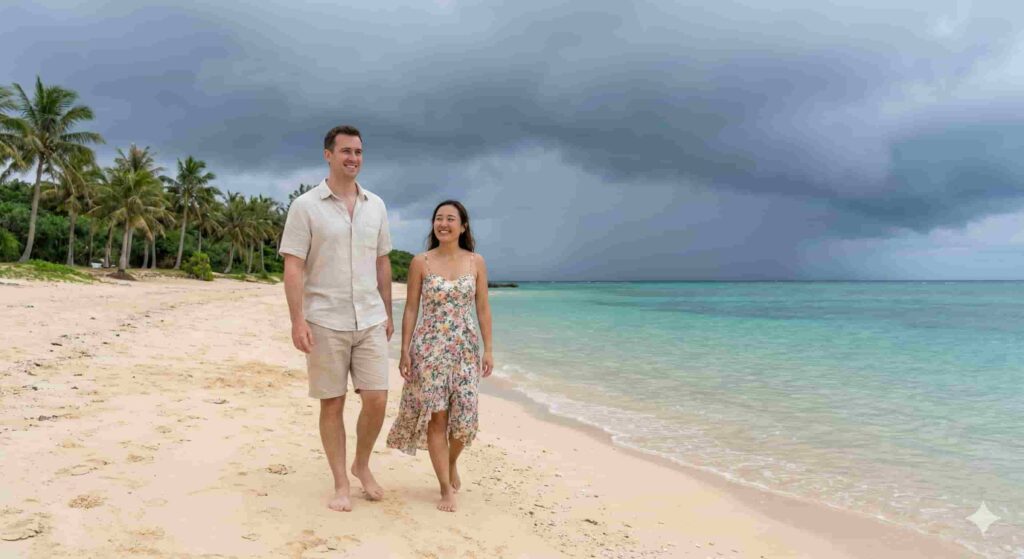
The Tropical South: Early Summer and The Rainy Season
Okinawa is a different world. While Hokkaido is shoveling snow, Okinawa is opening its beaches.
Climate Characteristics:
- March: Feels like early summer on the mainland. Beach season officially kicks off with “Umi-biraki” (sea opening) festivals in late March.
- April: Warm and humid. The sun begins to get intense—UV protection is mandatory.
- May: The Rainy Season (Tsuyu) begins. Unlike the mainland which sees rain in June, Okinawa enters the rainy season in early May. Expect high humidity, heaviness in the air, and frequent showers.
What to Wear in Okinawa:
- March: Long-sleeved T-shirts and hoodies. The wind off the ocean can be cool, so a windbreaker is highly recommended.
- April: Short pants and T-shirts are acceptable during the day. However, carry a thin long-sleeved shirt for sun protection and aggressive air conditioning.
- May:Summer Gear. Short sleeves, sandals, and breathable fabrics (linen/cotton).
- Critical: You must have rain gear. A high-quality poncho or compact umbrella is essential.
Traveler’s Rule for Okinawa: Prioritize “Humidity and Rain Control.” In May, synthetic fabrics that dry quickly are better than thick cottons that absorb moisture and stay damp.
Essential Spring Packing List for Japan
To help you organize your suitcase, here is a checklist that covers the nuances of Japanese travel.
Clothing Essentials
- The “Easy-Off” Coat: A trench coat or light down jacket that can be easily folded into a bag.
- The Capsule Wardrobe: Stick to neutral colors that can be layered.
- Clean Socks: You will take your shoes off frequently at temples, ryokans (inns), and fitting rooms. Ensure your socks are hole-free and clean.
- Smart Casual Outfits: Japanese people tend to dress neatly. Avoid oversized sweatpants or yoga pants for city touring if you want to blend in.
Footwear
- Walking Shoes: You will likely walk 15,000+ steps a day. Prioritize comfort over style.
- Slip-ons: Lace-up boots are a hassle when visiting temples where shoes must be removed.
Miscellaneous Must-Haves
- Handkerchief: Many public restrooms in Japan do not have paper towels. Locals carry small hand towels.
- Coin Purse: Japan is still a cash-heavy society, and you will accumulate many coins.
- Plastic Bag: Trash cans are rare in public. You will need to carry your trash with you until you find a bin or return to your hotel.
Special Topic: Navigating Golden Week
If you are traveling in late April to early May (April 29 – May 5), you are hitting Golden Week. This is a series of four national holidays occurring within one week.
- Crowds: Trains, theme parks, and major tourist spots will be at maximum capacity.
- Prices: Accommodation prices skyrocket.
- Booking: You must book Shinkansen (Bullet Train) tickets in advance.
Our Advice: If possible, plan your itinerary to stay in one city during this week to avoid the travel chaos, or head to “minor” destinations away from the standard Tokyo-Kyoto route.
Conclusion: Preparation is the Key to Comfort
Japan in the spring offers a diversity of experiences that few other countries can match. You can ski in Hokkaido in the morning and dive into the ocean in Okinawa the next day—but only if you pack correctly.
To summarize the strategy:
- Hokkaido: Winter is not over. Bring the down coat.
- Tokyo/Kyoto: Layering is your best friend. Be ready for the “Three Cold, Four Warm” cycle.
- Okinawa: Prepare for humidity and the early arrival of the rainy season in May.
By respecting the regional differences and packing versatile layers, you ensure that the only thing taking your breath away is the beauty of the cherry blossoms, not the freezing wind.