
















Stepping into a high-end sushi-ya (sushi shop) can feel like entering a sanctuary. The air is quiet, the cedar counter is pristine, and the Itamae (chef) moves with the precision of a surgeon. For the uninitiated, this atmosphere can be intimidating. Questions race through your mind: Do I use chopsticks or my hands? Is it rude to mix wasabi in the soy sauce? What do I do with the towel?
Sushi is more than just raw fish on rice; it is a discipline steeped in centuries of tradition, precision, and the philosophy of shokunin (artisan spirit). However, true etiquette is not about rigid rules or elitism—it is about respect. Respect for the ingredients, respect for the chef’s effort, and respect for your fellow diners.
This comprehensive guide will walk you through every nuance of sushi etiquette, from the moment you enter the restaurant to the final bow. Whether you are grabbing a quick lunch or sitting down for a $300 Omakase, this guide will ensure you dine like a true connoisseur.
- The Philosophy of Sushi: Why Etiquette Matters
- Arrival and Seating: The First Impressions
- The Tools of the Trade: Chopsticks and Fingers
- The Holy Trinity: Shoyu, Wasabi, and Gari
- Eating the Sushi: Order and Technique
- Mastering the Omakase Experience
- Beverage Etiquette: Sake and Tea
- The “Don’ts”: Quick Reference Checklist
- Conclusion: It’s About Enjoyment
The Philosophy of Sushi: Why Etiquette Matters
Before diving into the “dos and don’ts,” it is crucial to understand the why. Japanese cuisine (Washoku) focuses heavily on the natural flavors of the ingredients.
In a traditional sushi setting, the chef has spent decades perfecting the balance of the Shari (vinegared rice) and the Neta (topping). When a diner drowns a piece of fish in soy sauce or pulls the toppings off the rice, it disrupts the delicate balance the chef has created. Following proper sushi dining rules ensures you experience the food exactly as the master intended.
The Itamae Relationship
The relationship between the diner and the chef is paramount. In Western dining, the chef is often hidden in the kitchen. In sushi dining, the chef is right in front of you. Your reaction, your pacing, and your manners are visible. Good etiquette is a silent conversation that says, “I appreciate your craft.”
Arrival and Seating: The First Impressions
Your sushi experience begins the moment you walk through the curtain (Noren).
1. Greetings (Aisatsu)
You will likely be greeted with a loud “Irasshaimase!” (Welcome!). A simple nod or a smile in return is sufficient. If you want to impress, a polite “Konbanwa” (Good evening) sets a respectful tone.
2. The Counter vs. The Table
For the full experience, always request the counter (Tsuke-ba). This is where the action happens.
- Don’t: Wear strong perfume or cologne. Sushi is a delicate sensory experience, and strong scents can overpower the subtle aroma of the fish and the vinegar in the rice, ruining the meal for you and your neighbors.
- Do: Remove your watch and jewelry if sitting at a wooden counter. High-end counters are often made of Hinoki (cypress) wood, which is soft and easily scratched.
The Oshibori (Hot Towel)
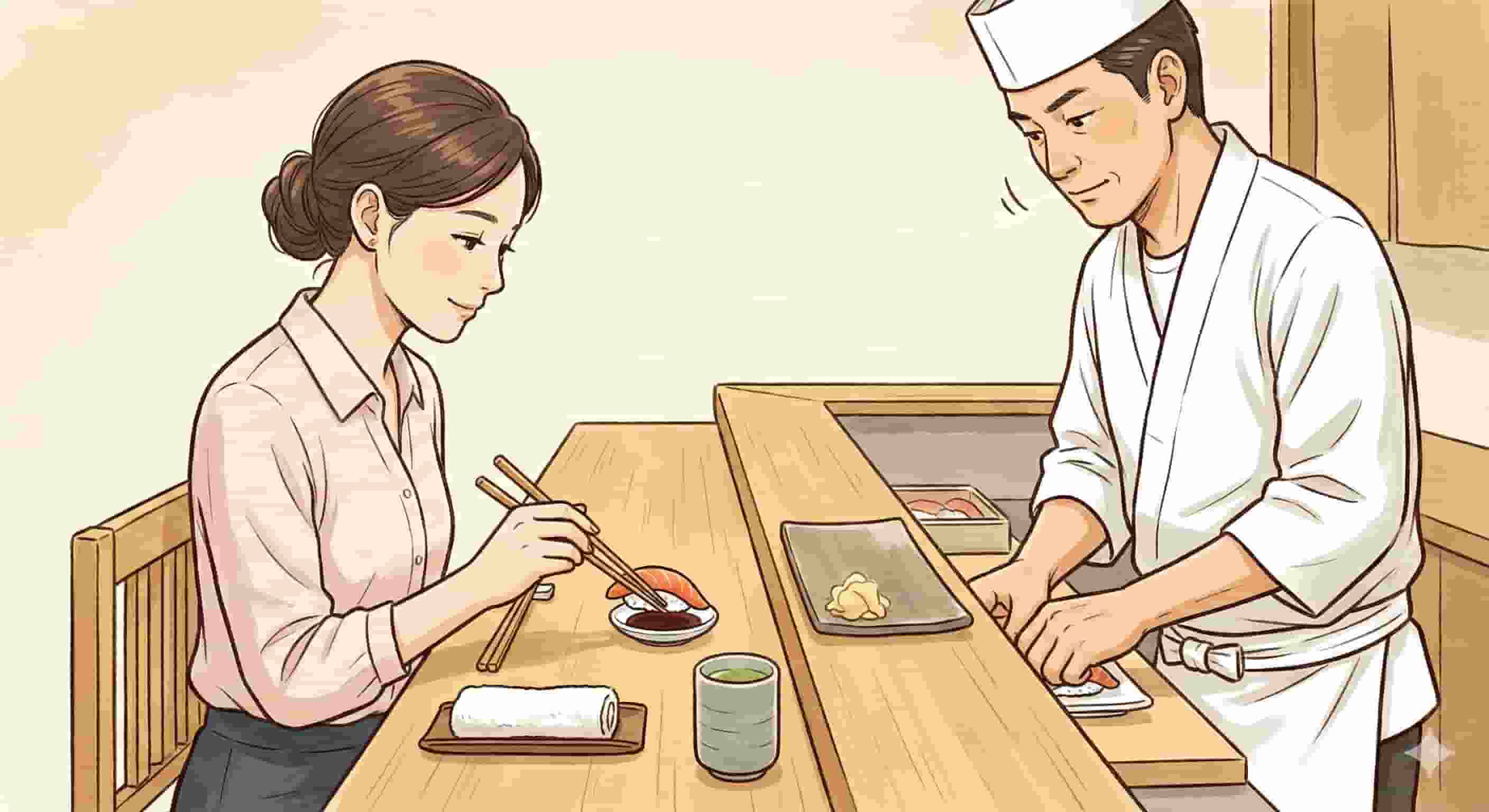
Upon seating, you will be presented with a hot wet towel called an Oshibori.
- Usage: Use this to clean your hands before the meal.
- Etiquette: After wiping your hands, fold it neatly and place it back on its tray. Never use the Oshibori to wipe your face, neck, or the table. It is strictly for your hands.
The Tools of the Trade: Chopsticks and Fingers
One of the most debated topics in how to eat sushi properly is the utensil choice. The answer might surprise you.
Hashi (Chopsticks)
If you are eating Sashimi (slices of raw fish without rice), chopsticks are mandatory.
- Resting: When not in use, place chopsticks on the hashioki (rest), parallel to the counter edge.
- Rubbing: Never rub your disposable chopsticks together. This implies the restaurant provides cheap, splintery utensils and is considered an insult.
- Passing: Never pass food from chopstick to chopstick. This mimics a funeral rite involving cremated bones. If you must share, move the plate closer to the other person.
Te (Hands)
Can you eat sushi with your hands? Yes, and it is often preferred. Traditional Edomae style sushi (Nigiri) is meant to be eaten with fingers. The warmth of the hand and the texture of the rice are part of the experience.
- Technique: Use your thumb and middle finger to pick up the Nigiri gently from the sides, with your index finger resting on top of the fish to hold it in place.
- Hygiene: This is why the Oshibori is provided. You can clean your fingertips between bites.
Pro Tip: While Nigiri can be eaten with hands, Sashimi must always be eaten with chopsticks. Ginger should also be eaten with chopsticks.
The Holy Trinity: Shoyu, Wasabi, and Gari
This is where most beginners make critical errors. The condiments are enhancers, not main characters.
1. Shoyu (Soy Sauce) Dipping Technique
Soy sauce is seasoning, not a bath.
- The Dip: Turn the sushi piece upside down (or tilt it) so that only the fish (Neta) touches the soy sauce.
- The Rice Rule: Never dip the rice into the soy sauce. The rice is porous; it will soak up too much sodium, overpowering the fish and causing the rice ball to disintegrate into a messy sludge in your dish.
- The Brush: In high-end Omakase, the chef will often brush the soy sauce (or Nikiri, a sweet soy glaze) onto the fish for you. In this case, do not dip at all. Eat it exactly as served.
2. The Wasabi Trap
- Don’t Mix: Do not mix wasabi into your soy sauce to create a muddy soup. This is known as “wasabi terrorism” by purists. It destroys the nuanced heat of fresh wasabi and the clarity of the soy sauce.
- The Chef’s Job: In Nigiri, the chef places the exact amount of wasabi between the rice and the fish. Trust their judgment.
- Adding More: If you truly need more spice for Sashimi, place a tiny amount of wasabi directly onto the fish, then dip the fish in soy sauce.
3. Gari (Pickled Ginger)
That pile of pink or yellow ginger is not a salad or a topping.
- Purpose: It is a palate cleanser.
- When to eat: Eat a slice of ginger between different types of sushi (e.g., switching from Tuna to Salmon) to reset your taste buds.
- Mistake: Do not eat ginger simultaneously with the sushi. It is too overpowering.
Eating the Sushi: Order and Technique
If you are ordering à la carte, the order in which you eat matters.
Progression of Flavors
To maximize your tasting experience, follow a gradient from light to heavy:
- White fish (e.g., Flounder, Snapper, Squid) – Subtle, delicate flavors.
- Silver fish (e.g., Mackerel, Sardine) – Stronger, oilier tastes.
- Red fish (e.g., Tuna, Bonito) – Rich and iron-heavy.
- Fatty fish (e.g., Otoro, Salmon belly) – Heavy, creamy textures.
- Sweet/Cooked items (e.g., Eel, Egg/Tamago) – Usually the dessert of the sushi course.
The “One Bite” Rule
Sushi pieces are designed to be the perfect mouthful.
- Do: Eat the entire piece in one bite.
- Don’t: Bite a piece of Nigiri in half and place the rest back on the plate. It ruins the structural integrity. If the pieces are too big, you may ask the chef to make the rice (Shari) smaller.
Gunkan (Battleship Sushi)
For sushi wrapped in nori with loose toppings (like sea urchin or salmon roe), dipping is impossible without spilling.
- The Cucumber Trick: Take a slice of ginger, dip the ginger in soy sauce, and use it as a brush to paint the sauce onto the Gunkan toppings.
Mastering the Omakase Experience
Omakase etiquette is the pinnacle of sushi dining. “Omakase” translates to “I leave it up to you.” You are surrendering control to the chef.
1. Don’t Order Off-Menu
In an Omakase, the chef has curated a flow based on the morning’s market catch. Asking for a “California Roll” or “Spicy Tuna” in a traditional Omakase setting is disrespectful.
2. Pace Yourself
The chef times the sushi preparation to your eating speed.
- The 10-Second Rule: Japanese logic dictates that sushi is best eaten immediately after it is placed on your plate or counter. Temperature matters. The rice is body temperature; the fish is cool. Waiting too long alters this harmony.
3. Interaction
It is polite to ask the chef what fish you are eating if you don’t know.
- Phrases to know: “Oishii” (Delicious) is the highest compliment you can pay verbally.
- Photography: Ask for permission before taking photos. Many chefs allow photos of the food, but not of the staff or other customers. Flash is strictly forbidden.
Alt Text: A beautiful selection of Omakase sushi pieces served on a ceramic plate, showcasing variety and freshness.
Beverage Etiquette: Sake and Tea
Sake Rules
If you are drinking sake with companions:
- Oshaku: Never pour your own drink. Pour for your neighbors, and hold your cup with two hands when they pour for you.
- Kanpai: When toasting, say “Kanpai!” (Cheers).
Agari (Green Tea)
At the end of the meal, you will be served hot green tea (Agari). This signals the conclusion of the course and aids in digestion. It is usually extremely hot, so sip carefully.
The “Don’ts”: Quick Reference Checklist
To ensure you avoid common pitfalls, here is a summary of actions to avoid:
- Don’t stick chopsticks upright in a bowl of rice (resembles an offering to the dead).
- Don’t separate the fish from the rice.
- Don’t shake soy sauce off your sushi like it’s a wet umbrella.
- Don’t pay the chef directly. The chef handles food, not dirty money.
Conclusion: It’s About Enjoyment
While the rules of sushi etiquette for beginners may seem extensive, they ultimately serve one purpose: to heighten the enjoyment of the meal. By following these guidelines, you show the Itamae that you value their hard work. In return, you will likely receive warmer service, perhaps better cuts of fish, and a deeper cultural experience.
Sushi is ephemeral. It exists for a moment on the plate and then is gone. Eating it properly honors that moment.
External Links: