







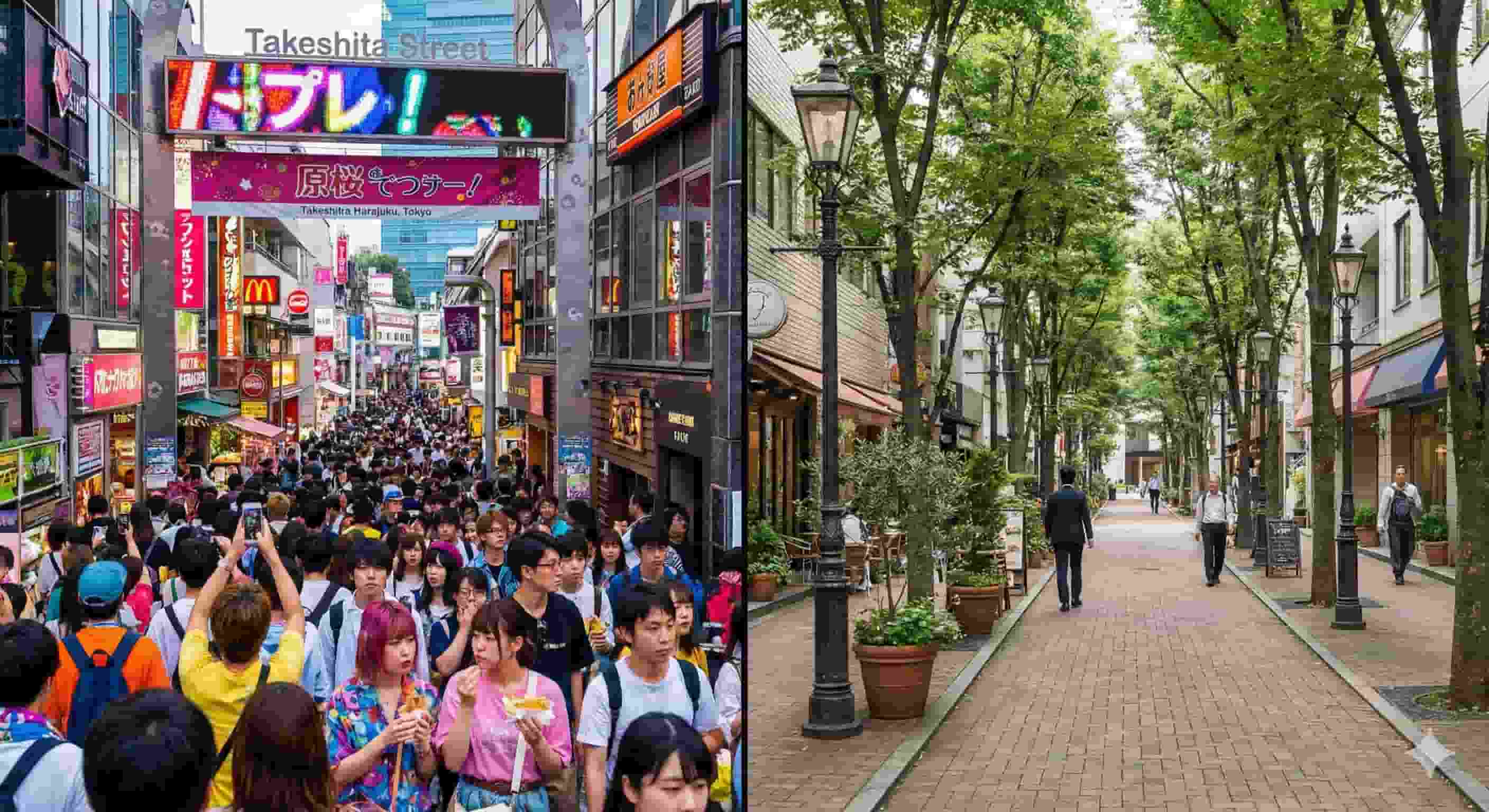
Let’s be real for a second: You didn’t fly 10 hours to Tokyo just to get elbowed in the ribs by a thousand people while trying to eat a rainbow grilled cheese. We’ve all seen the TikToks of Takeshita Street—it’s iconic, it’s loud, and honestly? It’s a sensory overload nightmare if you don’t know what you’re doing.
But what if I told you there is a “Shadow Harajuku”? A parallel universe just one street over where the brick roads are quiet, the cafes serve actual food (not just sugar), and you can walk without touching strangers? Harajuku was originally a quiet residential area, and if you know where to look, you can still find that sophisticated, European vibe hidden in plain sight.
Whether you are a solo traveler avoiding the “mitsu” (crowds/density) or a couple looking for a chill date spot, this guide is your cheat sheet to the “Ura-michi” (backstreets).
💡 Key Takeaways (TL;DR): * Escape the Crush: Use Brahms Path and Fontaine Street, the European-style brick lanes running parallel to Takeshita Street. * Budget Eats: Skip the tourist traps and hit Taishu Shokudo BEETLE for a legit Japanese set meal under ¥700. * Retro Vibes: Visit Christie, a 1980s-style tea house that feels like time-traveling, right behind the chaos. * The Route: You can walk all the way from Harajuku to Shibuya via Cat Street’s back alleys without fighting the main street mobs. * Pro Tip: Use the coin lockers at Noah Cafe (Takeshita entrance) to dump your bags before you start walking.
The “Musical” Streets: Your Escape Route
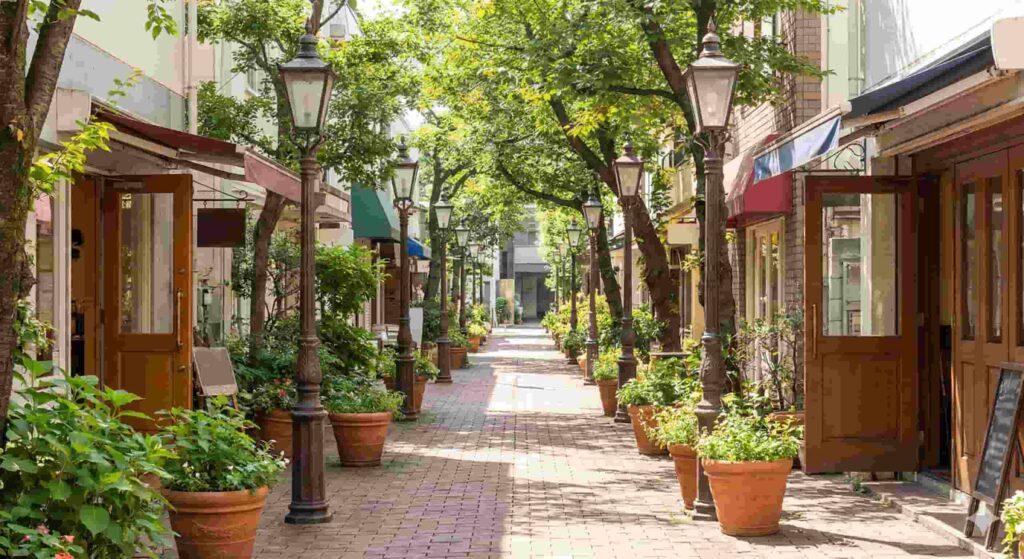
Most tourists get sucked into the main Takeshita flow like zombies. Don’t be them. The secret to surviving Harajuku is knowing the “Musical Streets.” These are three specific backstreets named after classical composers—Brahms, Mozart, and Fontaine—that offer a completely different atmosphere.
1. Brahms Path (Brahms no Komichi)
If you turn right at the crepe shop corner on Takeshita Street and walk just a few meters, you will find the entrance to the backstreets. Suddenly, the noise disappears. You are now on Brahms Path.
This is a stone-paved, brick promenade that feels more like a side street in Europe than Tokyo. It’s lined with antique-style streetlamps and greenery. It’s so quiet here that you might forget you are in the middle of one of the world’s busiest fashion districts.
- Vibe: Romantic, quiet, photogenic.
- Why go: It’s the perfect parallel shortcut. You can move geographically alongside Takeshita Street without the physical crush of people. It’s ideal for “Sanpo” (strolling) when you want to take aesthetic photos without 50 people in the background.
2. Fontaine Street & Mozart Street
Keep moving past Brahms Path, and you’ll hit Fontaine Street. This area is known for its European-style buildings and a high concentration of beauty salons, giving it a mature, fashionable atmosphere.
- The Photo Spot: There is a fountain here (hence the name “Fontaine”) that makes for a killer Instagram shot. Sit on the edge, strike a pose, and capture a vibe that screams “I know Tokyo better than you”.
- The Connection: This street eventually connects to Mozart Street, which leads you toward the church area and eventually out to the main Omotesando avenue.
Hidden Gourmet: Where to Eat (Without the Line)
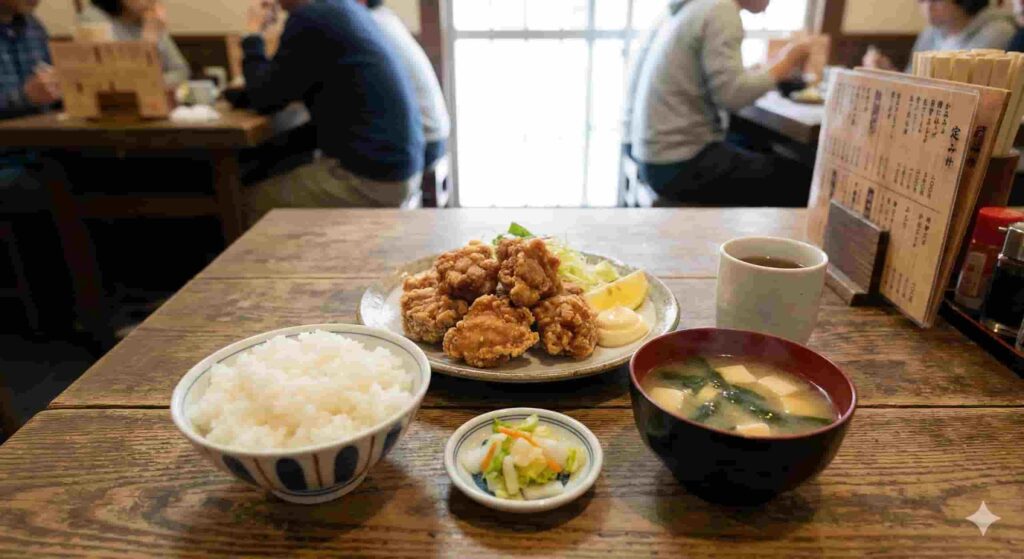
Takeshita Street food is fun, but sometimes you want to sit down and eat something that isn’t made of cotton candy. The backstreets are home to “hole-in-the-wall” spots that locals love.
The Budget King: Taishu Shokudo BEETLE
Located on Mozart Street, this is a shocking find in expensive Harajuku. Taishu Shokudo BEETLE is a modern take on the classic Japanese “cafeteria” or pub.
- The Food: They serve classic Teishoku (set meals). We’re talking Ginger Pork (Shogayaki) sets for 680 yen or Fried Chicken (Karaage) sets for 600 yen.
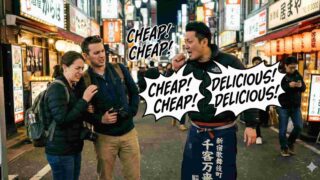
- Why it rules: It comes with rice, miso soup, and a small side dish. It’s cheap, fast, and delicious—the “holy trinity” of budget travel. You can even drink alcohol here during the day if you want to turn your walk into a pub crawl.
The Retro Tea Room: Christie
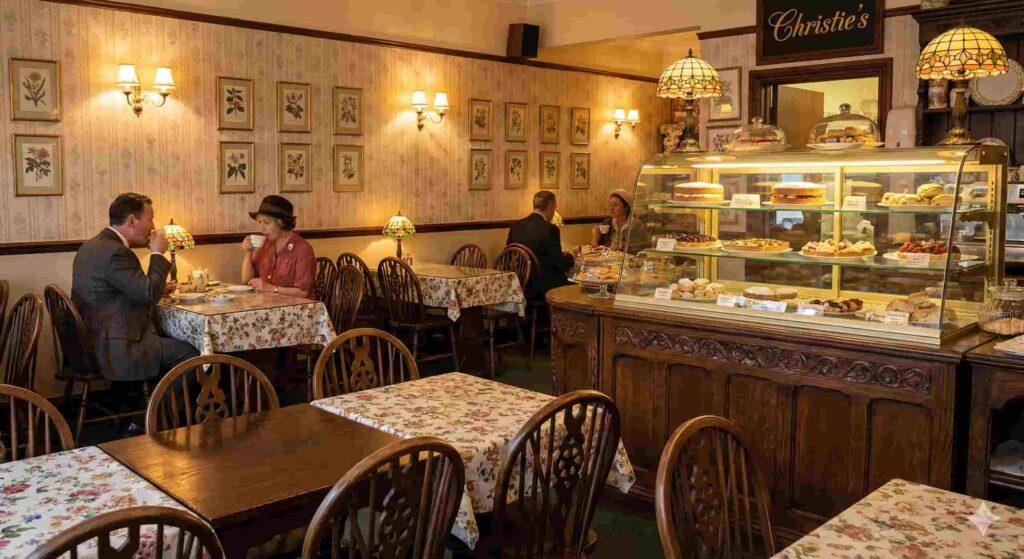
If the “kawaii pop” culture is too loud for you, retreat to Christie. Established in 1980, this tea and cake shop is located just one street behind Takeshita, but it feels like it’s frozen in time.
- The Menu: They have over 100 types of tea.
- The Vibe: It’s an authentic, old-school English-style tea room. It’s the perfect place to disconnect and rest your legs in a space where time flows slowly.
The Korean Trend: MUUN Seoul (Flagship)
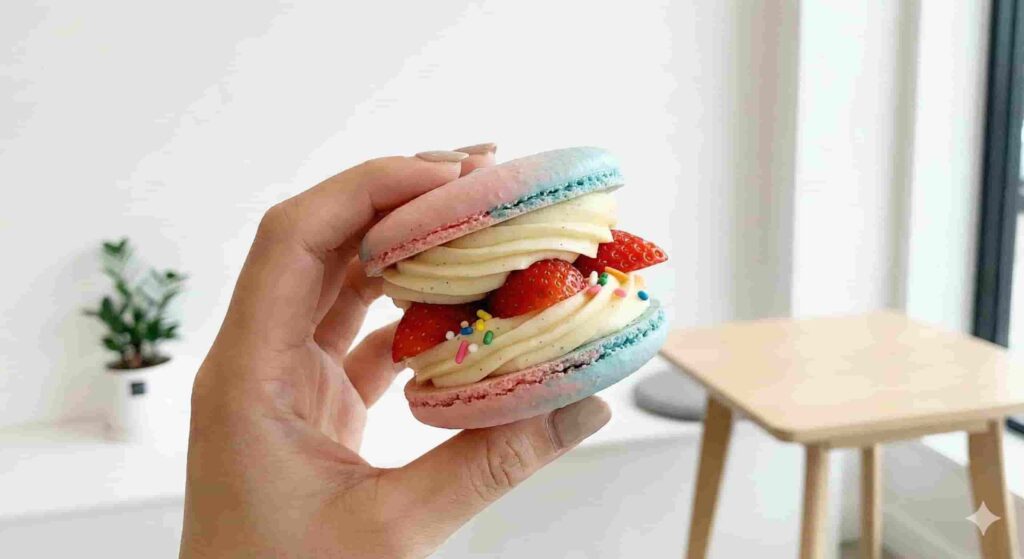
Since the popular Malu Cafe has closed, head straight to the source. MUUN Seoul is the flagship store for the viral “Tung-carons” (fat macarons) that took Tokyo by storm.
- The Vibe: Tucked away in the Jingumae backstreets, this 3-story cafe is the definition of “Instagrammable.” It features a white minimalist interior, hanging swings, and a rooftop terrace with orange trees that makes you feel like you’re in a K-Drama.
- The Sweet: Obviously, get the Macarons (approx. 400-500 yen), but the Croffle (Croissant x Waffle) with brown cheese is the new local favorite.
- Pro Tip: It uses a buzzer system, so you can grab a seat upstairs while you wait for your order instead of standing in line.
The Open Terrace: Blue Garden
If you need fresh air, head to Blue Garden. It’s a hidden restaurant located up a set of stairs in the backstreets.
- The Feature: It has a wide, open terrace surrounded by greenery—a rarity in Tokyo.
- The Deal: Lunch runs until 17:00 (5 PM!), and includes a salad buffet and free refills on coffee/tea. It’s a “house garden” atmosphere where you can easily lose track of time.
ALSO READ: Stop Just Watching Sakura: The Japan Spring Food Guide You Actually Need
Art & Culture: The Omotesando Connection
Once you’ve navigated the backstreets of Harajuku, you can pop out onto the sophisticated streets of Omotesando. This transition from “Teen Pop” to “Adult Chic” is what makes the area so cool.
The Concrete Gallery: The Mass
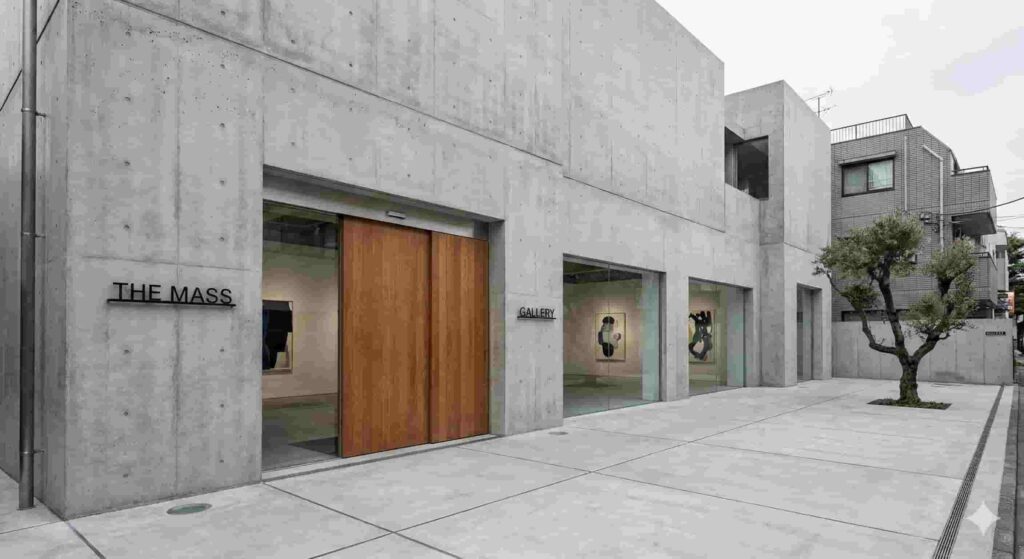
Located along Cat Street (towards the Omotesando side), you’ll find a striking concrete building. This is The Mass, a contemporary art gallery.
- The Experience: The entrance—a heavy wooden door—opens automatically, revealing a stark, stylish art space.
- Pro Tip: There is a coffee stand inside that only serves black coffee and cafe lattes. It’s inorganic, cool, and very “Tokyo High Culture”.
The Hidden Chapel Lane
Near the Apple Store on Omotesando, there is a small path leading to the Anniversaire Omotesando chapel. It’s incredibly quiet and romantic, totally shielded from the noise of the main avenue.
- Shopping Tip: Nearby is the Sodateru Towel Showroom. Japanese towels are world-famous for quality. Here, you can touch and feel towels that are designed to get fluffier the more you wash them. It’s a great souvenir that isn’t a plastic keychain.
Logistics: How to Walk Smart
1. Ditch the Baggage
You cannot enjoy the backstreets if you are dragging a suitcase.
- Where: There is a massive coin locker spot at Noah Cafe, right at the entrance of Takeshita Street (1 minute from the station).
- Details: They have 93 lockers and accept Suica/Pasmo. It’s monitored by security cameras, so it’s safe.
2. The “Secret” Route to Shibuya
Did you know you can walk from Harajuku to Shibuya almost entirely through backstreets?
- The Course: Start at Harajuku Station -> Cut through With Harajuku -> Cross to Omohara/Harakado -> Enter the backstreets of Cat Street (Urahara) -> End at Miyashita Park in Shibuya.
- Why do it: You avoid the “Mits” (density) and discover small vintage shops and streetwear brands that don’t exist on Google Maps. It takes about 3 hours if you walk slowly and browse.
ALSO READ: The Perfect 1-Day Harajuku Itinerary: A Step-by-Step Route for Beginners
Be a Traveler, Not a Tourist
Harajuku is dual-layered. The top layer is the loud, crowded Takeshita Street that everyone sees. But the bottom layer—the Backstreets (Uramichi)—is where the real culture lives. It’s where the locals drink tea, eat cheap ginger pork, and enjoy the silence of a brick path.
Next time you exit JR Harajuku Station, don’t just follow the herd. Turn right, find the narrow entrance to Brahms Path, and walk your own way.
ALSO READ: First Time in Harajuku: The Complete Beginner’s Guide to Tokyo’s Kawaii Hub