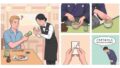












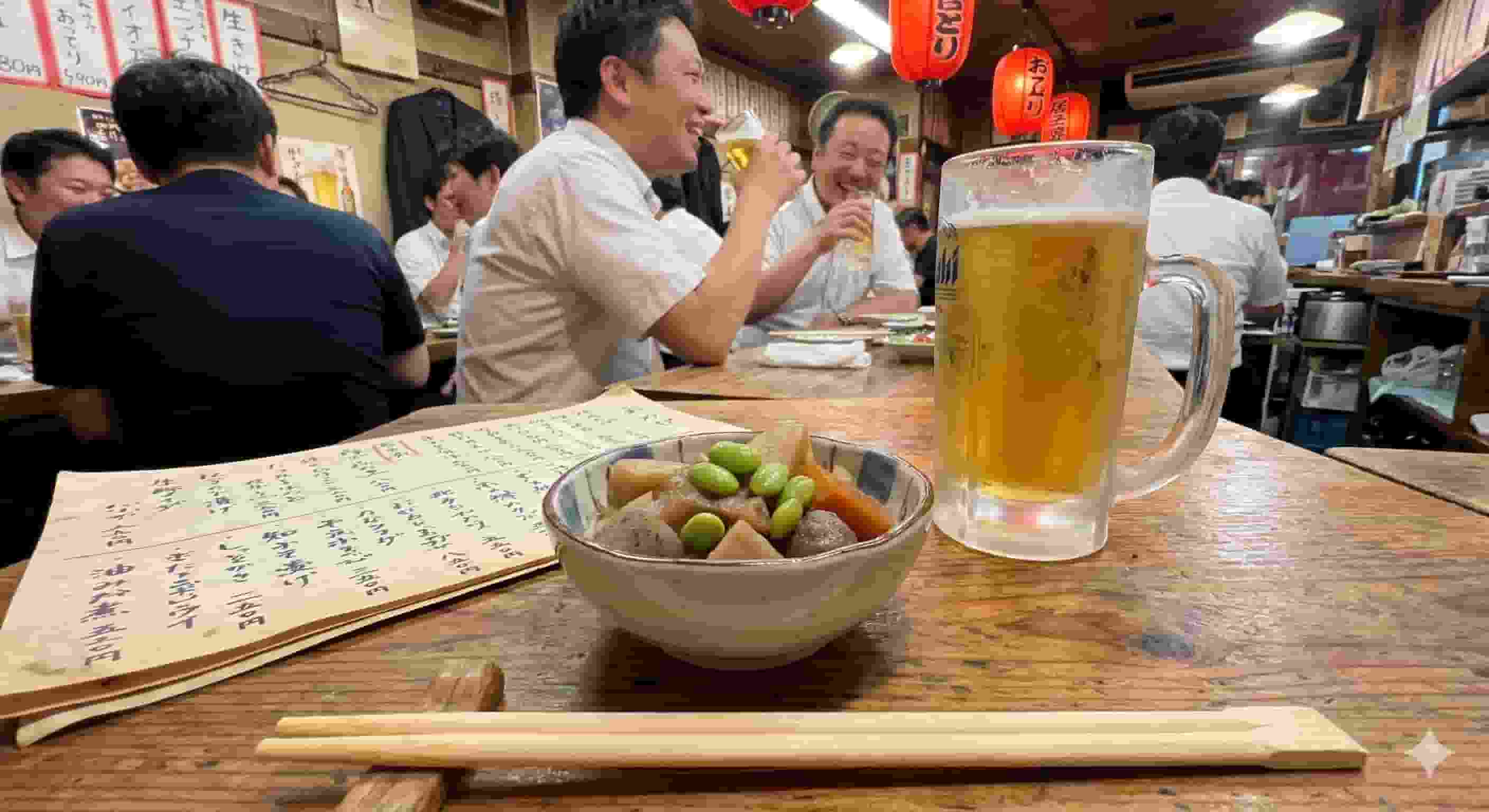
Picture this: You have just arrived in Tokyo. The neon lights of Shinjuku are reflecting off the pavement as you duck into a lively, lantern-lit izakaya (Japanese pub). You haven’t even looked at the menu yet, but a server places a small bowl of edamame or pickled vegetables in front of you.
“Free service!” you think, delighted by Japanese hospitality.
Fast forward to the end of the night. You check the bill and notice a line item for 400 yen per person that you don’t recognize. You ask the staff, and they point to that tiny bowl of appetizers. You feel cheated. You feel like you fell into a tourist trap.
Welcome to the world of Otoshi.
For millions of travelers visiting Japan, this small dish is the source of significant confusion and friction. Is it a scam? Is it a mandatory tip? Can you send it back?
This comprehensive guide will demystify the ‘Otoshi’ trap, transforming your confusion into cultural mastery. By the end of this 5,000-word deep dive, you will not only understand what you are paying for but also how to navigate Japanese dining etiquette like a seasoned local.
Related Posts
[Stop Tipping! Why it’s Actually Rude in Japan (And What to Do Instead)]
- What Exactly is Otoshi?
- The Economics of Otoshi: Scam or Service?
- Common Otoshi Dishes You Will Encounter
- Can You Refuse Otoshi? The “Otoshi Cut” Debate
- How to Spot an Otoshi Charge Before You Sit Down
- The Tourist Guide to Izakaya Etiquette (Beyond Otoshi)
- Case Study: The “Shinjuku Trap” vs. The “Local Gem”
- Conclusion: Reframing the Otoshi Experience
- Next Step
What Exactly is Otoshi?
At its core, Otoshi (お通し) is a small appetizer served immediately after you are seated at an izakaya or bar. It is brought to your table before you have even placed your first food order, usually accompanying your first drink.
However, unlike the free bread baskets in France or the complimentary chips and salsa in the United States, otoshi is not free.
It is a mandatory appetizer that functions as a table charge or seating fee. If you sit down, you pay for it, regardless of whether you eat it or not.
The Etymology: “Passing Through”
The word otoshi comes from the Japanese verb toosu (通す), which means “to let pass” or “to put through.” In the context of a restaurant, it signifies that your order has been “passed through” to the kitchen.
Historically, because izakaya food can take time to prepare (especially grilled items like yakitori), the otoshi was a way to give the customer something to nibble on immediately while they waited. It served as a physical confirmation that the staff had acknowledged your presence and your order was in motion.
Otoshi vs. Tsukidashi: A Regional Divide
If you are traveling through Japan, you might hear this charge referred to by a different name depending on your location.
- Kanto Region (Tokyo, Yokohama): It is almost exclusively called Otoshi.
- Kansai Region (Osaka, Kyoto, Kobe): It is often called Tsukidashi (突き出し).
Tsukidashi literally translates to “pushed out,” implying that the dish is simply pushed out to the customer automatically. While the function is identical—a mandatory appetizer fee—the terminology highlights the subtle cultural differences between the directness of Osaka and the indirect politeness of Tokyo.
The Economics of Otoshi: Scam or Service?
Many tourists instinctively react to otoshi with suspicion. If you didn’t order it, why should you pay for it? To understand why this system exists, we have to look at the unique economic structure of Japanese dining.
1. The “No Tipping” Trade-Off
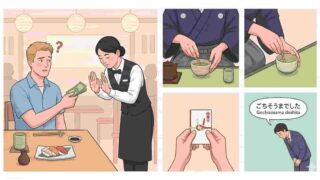
This is the most critical realization for any traveler: There is no tipping in Japan.
In the US or Europe, you might pay a 15-20% gratuity on top of your bill. In Japan, service is included in the price. However, restaurants still need to cover their overheads, napkins, oshibori (wet towels), and staff wages.
Think of the otoshi not as a “scam appetizer,” but as a flat-rate service charge.
- Average Otoshi Cost: ¥300 to ¥500 ($2.00 – $3.50 USD).
- Average Tip in the West: $10 – $20 on a $100 meal.
When viewed through this lens, the otoshi is actually a bargain. You are paying a nominal fee for service, and unlike a Western service charge, you actually get a physical product (food) in return.
2. The “Seat Hog” Deterrent
Izakayas are drinking establishments. Their business model relies on high turnover and alcohol sales. Occasionally, a customer might come in, order a single glass of water, and occupy a seat for two hours while reading a book.
Because there is no general “cover charge” to enter most izakayas, the otoshi acts as a minimum spend guarantee. It ensures that every seat generates at least a baseline of revenue, preventing loiterers from killing the restaurant’s profit margins.
3. The Hospitality Aspect (Omotenashi)
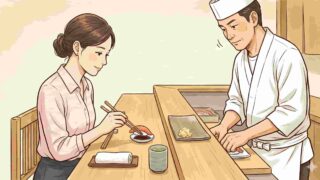
Japan prides itself on Omotenashi (wholehearted hospitality). To a Japanese host, leaving a guest sitting at an empty table with nothing to eat is considered poor service. The otoshi bridges the gap between arrival and the main meal, ensuring the guest is cared for the moment they sit down.
Common Otoshi Dishes You Will Encounter
The quality of otoshi varies wildly. It can range from a carelessly tossed bowl of cabbage to a meticulously simmered artisanal stew. It often depends on the quality of the establishment.
Here are the most common types of otoshi you will encounter in Japan:
The “Standard” Tier (Cheap Chains)
At large chain izakayas (like Torikizoku or Watami), the otoshi is often mass-produced and simple.
- Edamame: Boiled soybeans, usually lightly salted.
- Kyambetsu (Cabbage): Raw cabbage chunks served with a salty umami sauce or miso dip.
- Potato Salad: Japanese potato salad is creamier than Western versions, often mashed with cucumbers, carrots, and ham.
The “Traditional” Tier (Authentic Izakaya)
At family-run or mid-range places, the otoshi is a chance for the chef to show off their seasonal ingredients.
- Nimono: Simmered vegetables (lotus root, carrots, bamboo shoots) in a soy-dashi broth.
- Tsukemono: Assorted Japanese pickles.
- Kinpira Gobo: Braised burdock root and carrots in sweet soy sauce and sesame.
- Nanbanzuke: Fried fish marinated in vinegar and vegetables (similar to escabeche).
The “Advanced” Tier (Acquired Tastes)
Be warned: sometimes the otoshi is a delicacy that challenges the Western palate.
- Shiokara: Fermented squid guts. It is salty, fishy, and slimy—perfect for sake, but tough for beginners.
- Shirasu: Tiny raw or boiled whitebait fish, often served atop grated daikon radish.
- Mozuku: A slimy, vinegar-marinated seaweed.
Pro Tip: If you have allergies (e.g., seafood, nuts, gluten), you must declare them immediately upon entering. While you cannot usually choose your otoshi, chefs will almost always swap it for something safe if they know about an allergy.
Can You Refuse Otoshi? The “Otoshi Cut” Debate
This is the most contested question in Japanese travel forums. Can you refuse the table charge?
The short answer: Technically yes, but generally you shouldn’t.
The Concept of “Otoshi Cut” (Refusal)
Some modern izakayas, particularly in tourist-heavy areas or younger districts, are becoming more flexible. The phrase to use is:
“Otoshi wa katto dekimasu ka?” (Can I cut the otoshi?)
When You CAN Refuse:
- Large Chains: Some massive corporate chains allow you to decline it if you ask immediately before they serve it.
- Tourist-Centric Hubs: In areas like Roppongi or Dotonbori, staff are used to foreigners confusing the system and may waive it to avoid an argument.
- If You Are Not Drinking Alcohol: Some places only charge otoshi to patrons ordering alcohol. If you are just eating dinner, they may waive it (though this is rare in dedicated izakayas).
Why You Should NOT Refuse:
- It Creates Tension: Refusing a cultural norm immediately creates an “us vs. them” dynamic with the staff. It signals that you are a difficult customer.
- It is Often the Seat Charge: Even if they take the food away, they may still charge you a Sekiryo (seat charge). Now you are paying the money but getting no food—a lose-lose situation.
- It Misses the Point: Traveling is about experiencing local culture. Otoshi is the local culture. Refusing it over $3.00 creates stress that isn’t worth the savings.
The Golden Rule: If you see a sign that says “Table Charge” or “Otoshi” at the entrance, you have agreed to the contract by entering. Do not argue the bill later.
How to Spot an Otoshi Charge Before You Sit Down
If you are a budget traveler counting every yen, or if you simply hate the principle of mandatory appetizers, you can learn to spot these charges before you commit to a table.
1. Check the Entrance Signage
Look for small print on the menu board outside.
- Table Charge: テーブルチャージ (Te-buru cha-ji)
- Seat Charge: 席料 (Sekiryo)
- Appetizer Fee: お通し (Otoshi)
The sign will often say something like: Otoshi: 300 yen.
2. Look at the Clientele
- Ramen Shops: Never charge otoshi.
- Family Restaurants (e.g., Denny’s, Saizeriya, Gusto): Never charge otoshi.
- Fast Food (Yoshinoya, Matsuya): Never charge otoshi.
- Standing Bars (Tachinomi): Rarely charge otoshi (since you aren’t using a chair).
If the place looks like a bar where people are lingering over drinks, expect an otoshi. If it looks like a place where people eat and leave quickly, you are likely safe.
3. Ask Before You Sit
The most respectful way to handle this is to ask the staff at the door.
“Table charge arimasu ka?” (Is there a table charge?)
If they say yes, you can smile, say “thank you,” and walk away. This is perfectly polite and saves everyone from an awkward bill dispute later.
The Tourist Guide to Izakaya Etiquette (Beyond Otoshi)
Mastering the otoshi is just step one. To truly rank as an elite traveler, you need to understand the wider ecosystem of the izakaya.
1. The “One Drink” Rule
In Japan, an izakaya is not just a restaurant; it is a bar that serves food. It is generally expected that every adult will order at least one drink.
- Alcohol: Draft beer (Nama biiru), Highball, Sake, Sour.
- Non-Alcohol: Oolong tea (Uroncha), Ginger Ale.
Sitting in an izakaya and drinking only free tap water is considered rude and hurts the business’s bottom line.
2. The “Sumimasen” Shout
In Western restaurants, you wait for the waiter to make eye contact. In a busy Japanese izakaya, you will starve if you do this. The correct etiquette is to raise your hand and loudly call out:
“Sumimasen!” (Excuse me!)
Do not be shy. The staff expects it. In fact, they are waiting for your signal.
3. Shoes: On or Off?
Look at the entrance. If there is a distinct step up and a row of lockers or shelves for shoes (called getabako), you must take your shoes off.
- Pro Tip: Wear nice socks. Walking around an izakaya in socks with holes is a common traveler embarrassment.
4. Splitting the Bill (Warikan)
Japanese groups often split the bill evenly. However, cashiers prefer not to run five different credit cards for one table.
- Best Practice: Collect cash from everyone at the table and pay the cashier in one lump sum.
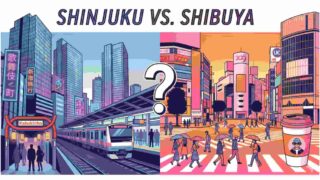
Case Study: The “Shinjuku Trap” vs. The “Local Gem”
To illustrate the difference, let’s compare two common scenarios travelers face.
Scenario A: The Shinjuku Tout
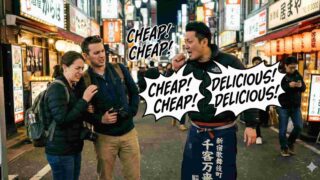
You are walking in Kabukicho. A friendly guy on the street approaches you with a laminated menu. “Cheap drink! No cover charge! Come in!”
- The Trap: You follow him. You sit down. The otoshi is ¥1,000 per person. The “cheap drink” requires a minimum order of two food items. There is a “weekend surcharge” of 10%.
- The Lesson: NEVER follow a street tout. Good izakayas do not need to drag people in off the street.
Scenario B: The Neighborhood Akachochin
You find a small place with red lanterns (akachochin) in a residential area. The menu is handwritten on the wall. The owner speaks no English.
- The Experience: You sit down. The owner gives you a bowl of homemade potato salad (otoshi: ¥300). It is delicious. You order a beer and some yakitori. The bill is transparent.
- The Lesson: This is where otoshi shines. It feels like a home-cooked welcome gift, not a tax.
Conclusion: Reframing the Otoshi Experience
Is the otoshi a trap? It certainly feels like one if you aren’t expecting it. But once you peel back the layers of cross-cultural confusion, it reveals itself as a unique solution to the economics of hospitality.
It allows Japan to maintain its high service standards without the ambiguity of tipping. It allows chefs to welcome you with a seasonal bite. And yes, it ensures the restaurant stays in business.
The next time you are served that mystery bowl of bamboo shoots or edamame, don’t look at it as a hidden fee. Look at it as your entry ticket to the authentic world of Japanese nightlife.
Summary of Key Takeaways:
- Otoshi is a mandatory appetizer acting as a table charge.
- Cost: Usually ¥300 – ¥500 per person.
- No Tipping: Otoshi replaces the need for gratuity.
- Refusal is difficult: It is better to accept it or ask about it at the door.
- Alert: Avoid street touts who use hidden otoshi fees to gouge tourists.
Next Step
Heading to Japan soon? Don’t let language barriers or etiquette anxiety hold you back from the best food of your life.