




If you are planning a trip to Japan’s capital, you likely have “panoramic city view” on your bucket list. While famous spots like Tokyo Skytree and the newly iconic Shibuya Sky offer breathtaking vistas, they come with a hefty admission fee and often require booking weeks in advance. Enter the Tokyo Metropolitan Government Building (known locally as Tocho).
Located in the heart of the soaring Shinjuku skyscraper district, this architectural marvel offers one of the best free views in Tokyo. Standing 202 meters above the ground, its twin observation decks provide a 360-degree look at the world’s most populous metropolis—all without spending a single yen.
In this comprehensive guide, we will dive deep into everything you need to know to master your visit: from the best time to spot Mt. Fuji to the hidden “Kusama Piano” and the architectural secrets of the building itself.
Why the Tokyo Metropolitan Government Building is a Must-Visit
When people search for a free observation deck in Tokyo, the Shinjuku Metropolitan Government Building is invariably the top recommendation. But “free” doesn’t mean “low quality.” In fact, many travelers prefer Tocho over paid alternatives because of its location. Being in Shinjuku puts you right in the middle of the “skyscraper forest,” providing a unique perspective of the city’s density that you can’t get from the outskirts.
A Masterpiece of Japanese Architecture
Before you even step inside, the building itself is a sight to behold. Designed by the legendary Pritzker Prize-winning architect Kenzo Tange, the complex was completed in 1990. The design is a fascinating blend of the modern and the traditional; Tange intended the twin-tower split to resemble a Gothic cathedral, while the facade’s lattice patterns evoke the look of a computer chip—symbolizing Tokyo’s status as a global tech hub.
The Twin Towers: North vs. South Observatory
One of the most common questions is: “Which tower should I go up?” The building consists of the Main Building No. 1, which splits into the North and South Towers at the 33rd floor. Both have observation decks on the 45th floor.
| Feature | North Observatory | South Observatory |
| Best For | Night views & panoramic photos | Day views & the “Kusama Piano” |
| Operating Hours | Typically 9:30 AM – 5:30 PM* | Typically 9:30 AM – 10:00 PM |
| View Highlights | Skytree, Tokyo Tower, Mt. Fuji | Odaiba, Tokyo Tower, Mt. Fuji |
>Note: Hours often rotate or extend if the South tower is closed for maintenance. Always check the Official TMG Website before heading out.
How to See Mt. Fuji from the Shinjuku Metropolitan Government Building
Seeing the snow-capped peak of Mt. Fuji from the Tokyo Metropolitan Government Building is the “holy grail” for visitors. However, the mountain is famously shy. To maximize your chances, you need to plan around the season and the time of day.
The Best Season: Winter is King
The best months to see Mt. Fuji are December, January, and February. During these months, the air is cold, crisp, and has very low humidity, which minimizes the haze that usually obscures the mountain.
The Best Time of Day: The Early Bird Gets the View
Statistics show that Mt. Fuji is most likely to be visible in the early morning (around 9:30 AM – 11:00 AM). As the day warms up, clouds often form around the base or peak, hiding it by midday. If you are a photographer, arriving right when the doors open is your best strategy.
Which Direction to Look?
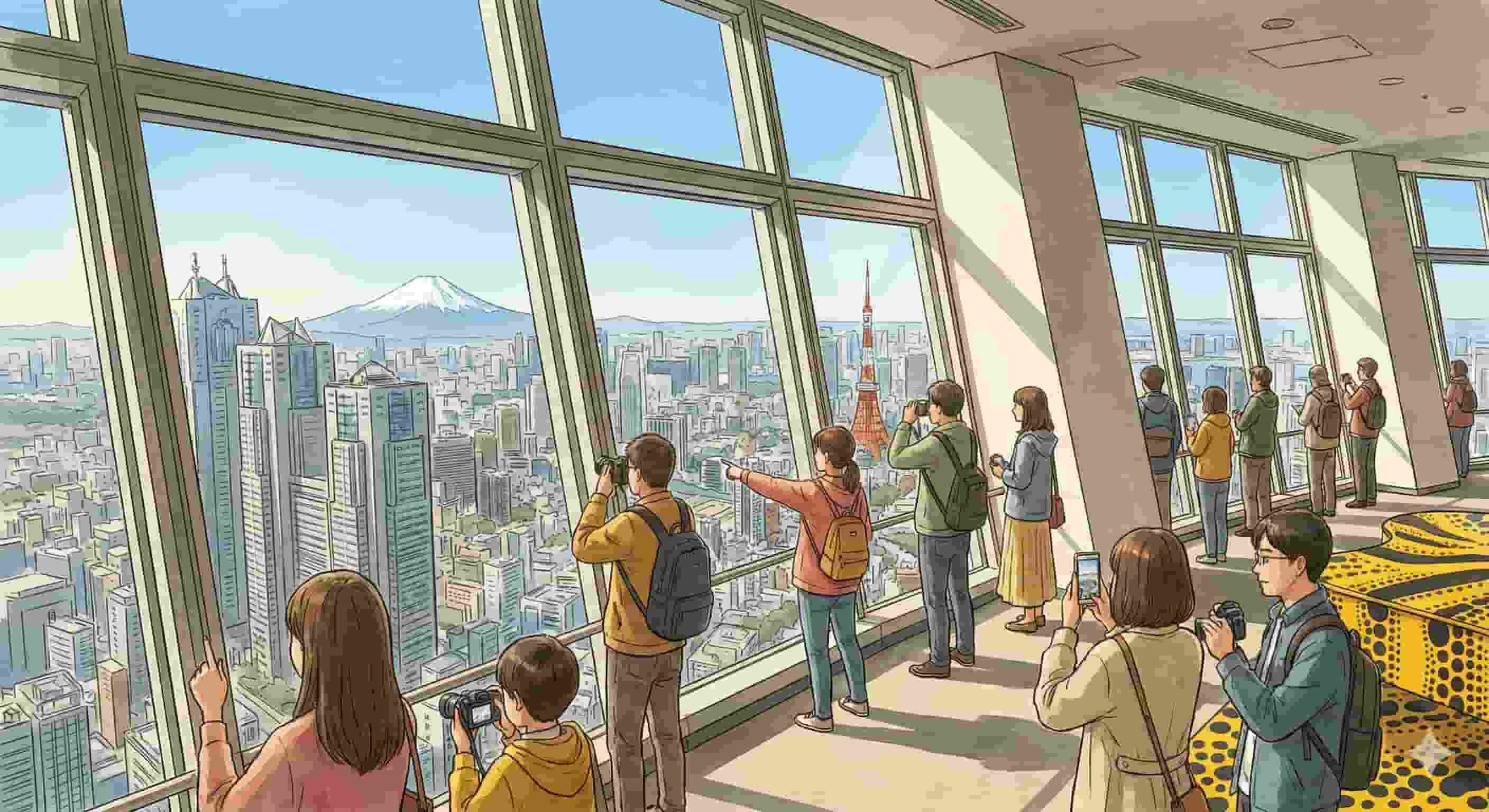
Once you are on the 45th floor, look toward the West/Southwest. There are helpful photographic panels above the windows that identify major landmarks, making it easy to spot the silhouette of Fuji-san against the horizon.
Inside the Observation Decks: More Than Just a View
The Tokyo Metropolitan Government Building observation deck isn’t just a hallway with windows; it’s a cultural experience.
The “Metropolitan Government Memorial Piano” (Kusama Piano)
In the South Observatory, you will find a stunning yellow and black grand piano designed by world-renowned artist Yayoi Kusama. It is part of a “street piano” project where anyone—from professional musicians to tourists—can sit down and play. Hearing live music while gazing out over the Tokyo skyline is a magical, serendipitous experience.
Local Specialty Fairs
One of the “insider” secrets of Tocho is the rotating local product fairs. Since this is a government building, they often host pop-up shops featuring crafts and snacks from different prefectures across Japan. It’s a great place to pick up unique regional souvenirs that you won’t find in typical tourist shops in Shibuya or Ginza.
Cafes and Souvenir Shops
Both towers have a cafe where you can grab a coffee or a light meal with a view. While slightly more expensive than a convenience store, the “scenery tax” is minimal compared to the entry fees of other towers.
Practical Information for Your Visit
To ensure your visit to the Shinjuku Metropolitan Government Building is seamless, keep these logistics in mind.
1. Entrance and Security
To access the observatories, you must go to the 1st floor of Main Building No. 1. Look for signs that say “Observation Deck.” Before boarding the high-speed elevator (which takes you to the 45th floor in just 55 seconds), you will go through a quick baggage check. Large suitcases are generally not allowed, so use the lockers at Shinjuku Station if you are traveling with heavy gear.
2. Getting There: Access via Tochomae Station
The building is incredibly accessible via public transport:
- Toei Oedo Line: Get off at Tochomae Station. The station is located directly beneath the building.
- JR Shinjuku Station: Take the West Exit. It is about a 10–15 minute walk. If it’s raining, you can use the underground “Moving Walkway” that connects the station to the government district.
3. Admission and Closures
- Cost: Always free.
- Closed Days: * South Tower: 1st and 3rd Tuesday of every month.
- North Tower: 2nd and 4th Monday of every month.
- Both towers close during the New Year period (Dec 29–31 and Jan 2–3).
Comparing Other Free Views in Tokyo
While the Tocho building is the most famous, there are other free observation decks in Tokyo worth considering if you want to avoid the crowds:
- Bunkyo Civic Center: Offers a unique view where Tokyo Skytree and Mt. Fuji can be framed together in the same shot.
- Caretta Shiodome: Located on the 46th/47th floors, offering a stunning view of Tokyo Bay and the Rainbow Bridge.
- Asakusa Culture Tourist Information Center: An 8th-floor terrace with an incredible bird’s-eye view of Senso-ji Temple and the Nakamise shopping street.
- Ebisu Garden Place Tower: Located on the 38th floor, perfect for a romantic night view of the city and Tokyo Tower.
Conclusion: Is it Worth It?
The Tokyo Metropolitan Government Building remains the gold standard for Shinjuku city views. Whether you are a budget traveler looking to save your yen for sushi or a professional photographer chasing the perfect sunset silhouette of Mt. Fuji, Tocho delivers a world-class experience at zero cost. It perfectly captures the essence of Tokyo: a harmonious blend of massive scale, meticulous government order, and surprising moments of artistic beauty.
Pro Tip Summary:
- Visit the South Tower for the Kusama Piano and daytime views.
- Visit the North Tower for the best evening glow and night photography.
- Arrive early in Winter if your goal is to see Mt. Fuji.
- Check the calendar to ensure the tower you want is actually open.
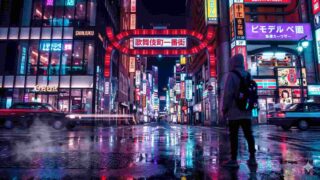
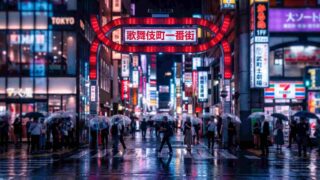
Next Step: Are you planning a full day in Shinjuku? I can help you create a 1-day Shinjuku walking itinerary that starts at the Metropolitan Government Building and takes you through Shinjuku Gyoen National Garden and the neon lights of Kabukicho. Would you like me to draft that for you?

