









Bright neon lights and electronic sounds shine brightly on Japan’s city streets. This is the uniquely evolved world of Japan’s Game Centers. Even in the age of smartphone gaming, the immersive experience of arcade games and the excitement of crane games can only be found here.
- Major Japanese Game Center Brands
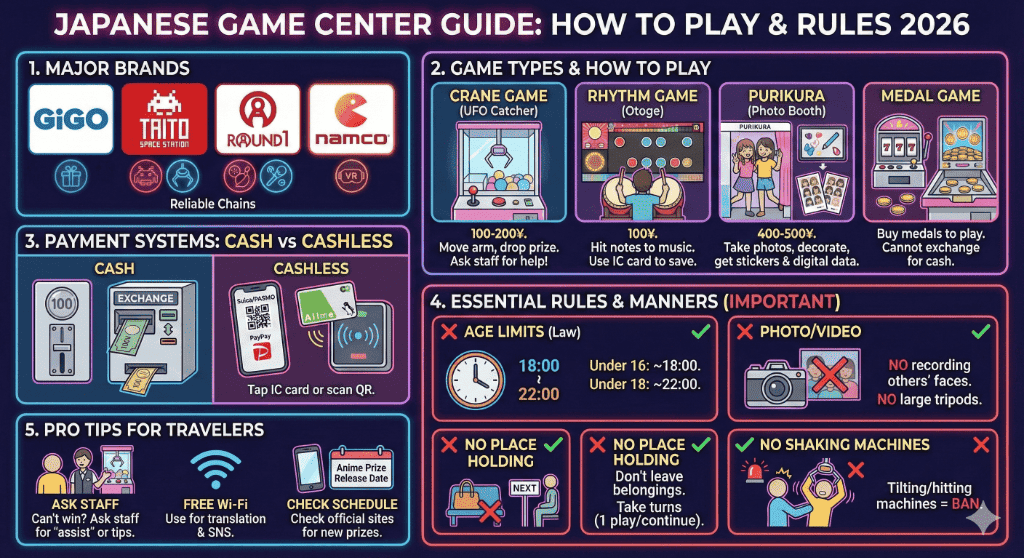
- Major Game Categories and How to Play
- Payment Systems in 2026: Cash vs. Cashless
- Essential Rules and Etiquette (Important)
- Pro Tips for Gen Z Travelers
- Conclusion: Japanese Game Centers are “Polite Playgrounds”
Major Japanese Game Center Brands
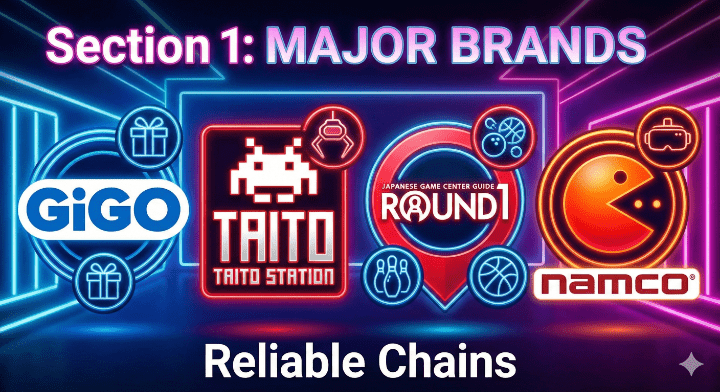
First, let’s get familiar with the reliable major chains you often see around town. Brand Name Features
GiGO
Inherited former SEGA locations. Abundant anime collaborations and latest prizes.
Taito Station
Red Invader logo is the trademark. Famous for its crane game “Crane Game Hall of Fame”.
ROUND1
Features bowling and karaoke. Offers extensive medal games and sports-themed “SPOTCHA!”
Namco
Part of the Bandai Namco Group. Focuses on family-friendly options and the latest VR activities.
Major Game Categories and How to Play
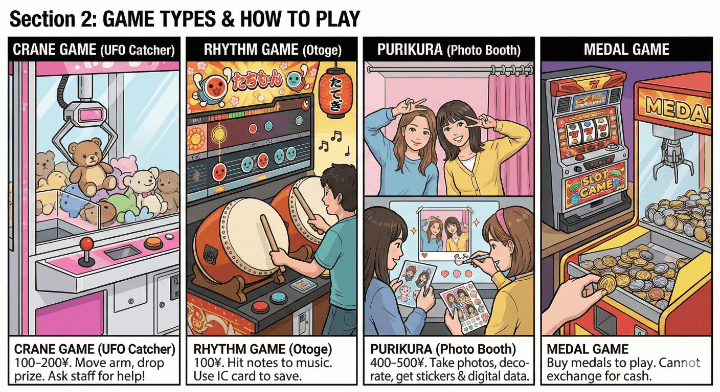
A key feature of Japanese game centers is that game types are often separated by floor level.
① Crane Games (UFO Catcher)
Also called “Prize Games.” You can win Japan-exclusive prizes like stuffed animals, figures, and snacks.
How to Play: 100-200 yen per play. Use buttons to move the claw and guide the prize to the drop zone.
Point: As of 2026, more locations offer app-linked “Assist” (a feature where staff help make retrieval easier).
② Rhythm Games (Music Games)
Play titles like Taiko no Tatsujin or maimai by pressing buttons or panels in time with the music.
How to Play: Play several songs for 100 yen. Scores can often be saved using the “IC cards” mentioned later.
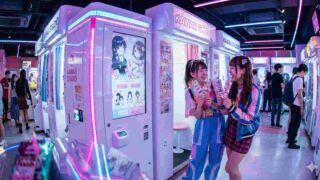
③ Purikura (Photo Sticker Machines)
Experience Japan’s unique “embellishment” culture with these photo sticker machines.
How to play: 400-500 yen per session. Decorate photos with a digital pen after shooting, then print stickers. Latest models typically send data directly to smartphones.
④ Medal Games
These have a casino-like atmosphere but do not offer cash payouts. Players deposit earned medals at the shop, creating a “social gathering spot for adults” where medals can be used for future play.
Payment Systems in 2026: Cash vs. Cashless
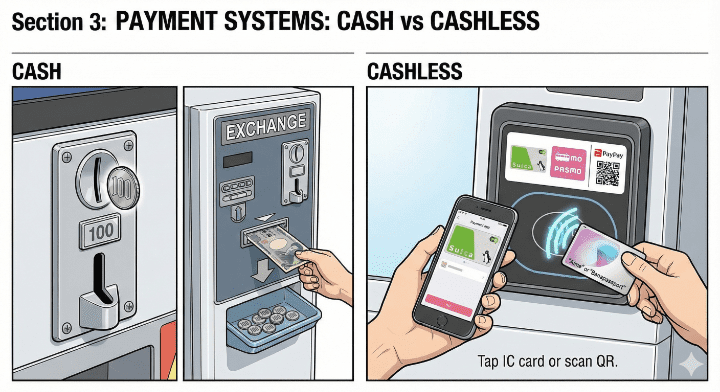
While 100-yen coins were once essential, full cashless payment is now the norm.
Electronic Money: Transportation IC cards like Suica and PASMO, along with QR code payments such as PayPay, work on nearly all machines.
IC Cards (Aime, Banapassport, etc.): Dedicated cards for saving game progress and scores. Available for purchase at vending machines inside the arcade.
Currency Exchange Machines: Cash users can rest assured. Use machines labeled “Exchange” to break 1000-yen bills into 100-yen coins.
Essential Rules and Etiquette (Important)
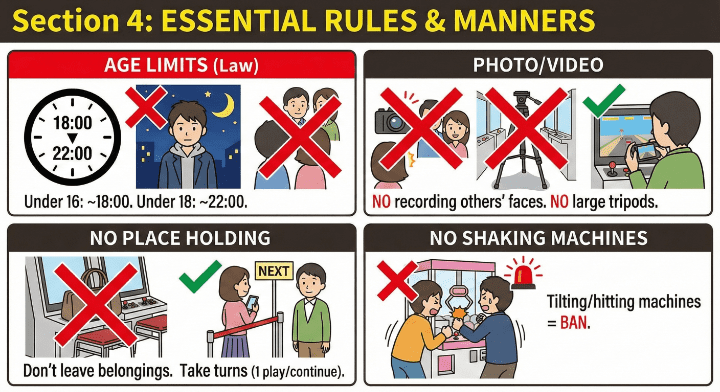
Japanese game centers enforce strict rules based on law and etiquette. Failure to follow these may result in warnings from staff.
① Age-Based Entry Restrictions (Adult Entertainment Business Law)
This is Japanese law, not the store’s own policy.
Under 16: Until 6 PM (Many stores allow until 10 PM with a guardian).
Under 18: Until 10:00 PM.
Point: As of 2026, some municipalities are relaxing ordinances, but as a rule, minors staying late at night is strictly prohibited.
② Photo and Video Recording Etiquette
Strictly no filming others: When recording gameplay videos, take extreme care to ensure other customers’ faces are not visible.
Tripod Usage: Many establishments prohibit large tripods that block aisles.
③ Machine Reservation (Holding Spots)
Do not leave belongings unattended: Leaving wallets or smartphones to reserve a spot risks theft and inconveniences other players.
“Rotation System” Rule: When queuing, it’s an unspoken rule to let the next person play after one game (or one continue).
④ Prize-related “banning” offenses
Shaking or hitting the machine: Forcibly shaking the machine to drop prizes can trigger an alarm and result in a ban from the premises.
Pro Tips for Gen Z Travelers
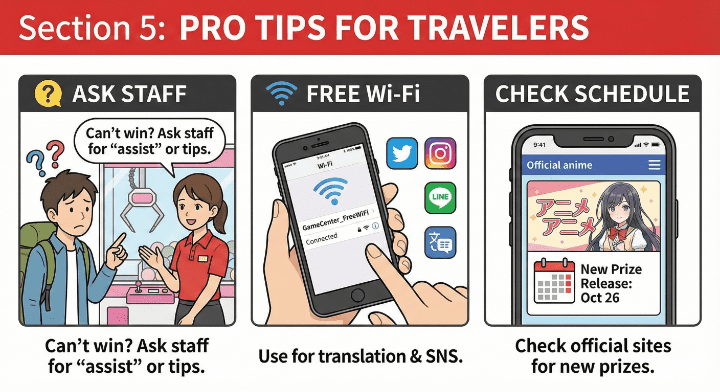
Ask Staff for Help: When you just can’t get a prize in a crane game, try asking the staff, “Tips, please.” They might adjust the position slightly for you.
Use Free Wi-Fi: Major chains offer free Wi-Fi, handy for posting on social media or using translation apps.
Check Limited-Edition Prizes: Prizes rotate based on anime broadcast schedules, so checking the official website for “release dates” beforehand is how the pros play.
Conclusion: Japanese Game Centers are “Polite Playgrounds”
Japanese game centers aren’t just places to play games; they’re community spaces where people with shared interests gather. By following the rules and etiquette, you too can become part of this wonderful culture.